The UPSC Civil Services Examination pattern is changing fast. UPSC Prelims 2026 shows a clear trend of questions coming directly or indirectly from government websites, PIB releases, policy reports, international organisation websites, environment and science portals, UPSC CSE Test Series Programs and Current Affairs Sources.
This means UPSC is now asking more source-based and document-based questions, not just from standard books. Candidates who are preparing for UPSC CSE 2027 Prelims must focus on official reports, government updates and current affairs materials to answer both fact-based and analytical questions.
Note: You can first go through the UPSC CSE 2026 Prelims Questions, Answers and Explanations available on the IASGYAN website.
Table: Fully Verified Sources of UPSC Prelims 2026 Questions
| Source of Questions | Number of Questions (UPSC Prelims 2026) |
| Government Websites & Official Sources | 78 Questions |
| UPSC CSE Test Series of APTI PLUS Website | 35 Questions |
| IASGYAN Website | 40 Questions |
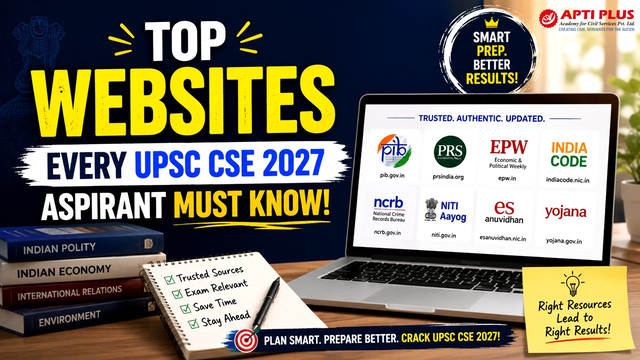
Best Websites for UPSC CSE 2027 Preparation
UPSC CSE 2027 preparation requires a strong reliance on authentic, updated and analytical sources rather than scattered study material. The right websites help aspirants stay aligned with current affairs and subject-wise conceptual clarity. Platforms that integrate static syllabus with dynamic current developments play a crucial role in improving accuracy in Prelims and depth in Mains. Choosing the right digital sources ensures better retention, reduced redundancy and exam-oriented preparation strategy.
Do you know?
78 questions came from Government Websites and Official Sources.
1. PIB (Press Information Bureau)
PIB is a high-yield source for UPSC CSE 2027 as it provides authentic updates on government schemes, Cabinet decisions, international agreements and key developments in economy, environment, IR, S&T and social justice. UPSC often frames questions directly or indirectly from PIB content. Focus only on exam-relevant domains and avoid political news, routine inaugurations and party-related updates.
Numerous questions in 2026 directly came from PIB: such as the –
Bureau of Indian Standard (BIS) – 19445: 2025.
Rare Earth Elements (REEs) and Critical Minerals
Institute of Security and Law Enforcement Studies
… AND MANY MORE
2. OTHER GOVT WEBSITES, MINISTRIES AND NEWS PORTALS
Various government websites such as the Ministry of External Affairs, NITI Aayog, AIR News and departments like the Ministry of Science and Technology have emerged as important sources for UPSC questions, as evident in the 2026 Prelims paper.
Examples: Multidimensional Poverty Index from NITI AAYOG; HCL-Foxconn Joint Venture India Chip Ltd from newsonair; stealth technology from Defense Technical Information Center (DTIC); drone swarms from Drone Federation; National Quantum Mission (NQM) from Department of Science and Technology; District Hospital at Dickoya from AIR News; Colombo Process from AIR News; Abu Dhabi Dialogue from the Ministry of External Affairs so on and so forth.
| Important Ministry Websites for UPSC Preparation:
UPSC questions are increasingly sourced directly from official ministry portals and scheme documents. Key ministries include the Ministry of Environment, Forest and Climate Change, Ministry of Agriculture and Farmers Welfare, the Ministry of Education, the Ministry of Tribal Affairs and the Ministry of Women and Child Development. These websites are important for understanding schemes, definitions, beneficiaries and implementation details. UPSC often frames statement-based questions from such micro-details, making regular reading essential for Prelims accuracy. |
Students appearing for UPSC CSE 2027 must regularly follow authentic government portals, official reports, PIB, AIR News and institutional websites, as UPSC is increasingly asking questions directly and indirectly from such sources.
3. NEWSPAPERS OTHER THAN THE HINDU AND INDIAN EXPRESS
Earlier, The Hindu and The Indian Express were the primary sources for UPSC current affairs preparation. However, UPSC is now clearly diversifying its sources, with questions also drawing from Hindustan Times, Deccan Chronicle, Dainik Bhaskar, Down To Earth, The Economic Times, Tribune and other platforms.
For example, 2026 Prelims Questions like the Khasi Hills Community REDD+ project from Down To Earth, TREDS-related developments from Business Line and Business Standard, Aviation Hull insurance issues from The Economic Times, private participation in India’s space sector from Down To Earth, Jhulaghat Bridge from Dainik Bhaskar, Zero FIR from Deccan Chronicle, Rhynchostylis retusa (Foxtail orchid) from Tribune, SFIO-related developments from Hindustan Times, UNMISET from BBC and BIMSTEC Centre for Weather and Climate from Down To Earth.
Standard Sources Like “The Hindu” and The Indian Express Remain Too. Example Question on Abolition of Forced Labour Convention was from Indian Express.
Students preparing for the 2027 examination must also diversify their sources to align with this evolving and multi-dimensional exam pattern.
NASA and ISRORegularly, follow NASA and ISRO website for Science and Technology preparation as it provides reliable updates on space missions, satellite applications, navigation systems, launch vehicles and international collaborations. UPSC increasingly asks application-based questions, making this source essential for building conceptual clarity. |
4. IASGYAN Website and IAS Gazette Magazine
Students preparing for UPSC CSE 2027 are recommended to refer to IASGYAN Current Affairs Portal as more than 40+ questions in UPSC Prelims have been directly linked to its coverage, while 20+ questions were covered through the IAS Gazette Magazine.
The detailed source mapping and question overlap analysis can be found in the APTI PLUS Prelims Reflections 2026 PDF.
Some examples of UPSC Prelims 2026 Questions Reflecting Direct IASGYAN Coverage:
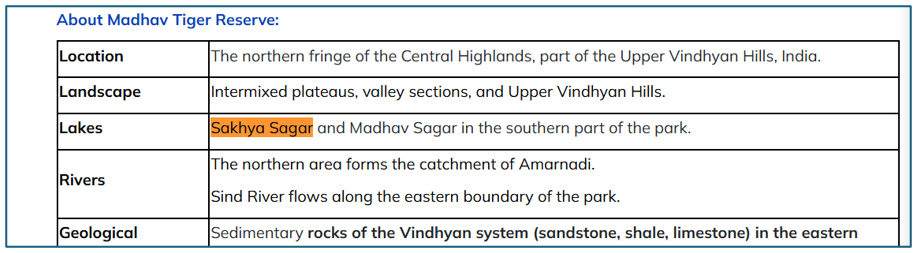
1) The Question on Madhav National Park. Just have a look at how precisely every statement in the question was already covered in our Current Affairs materials.
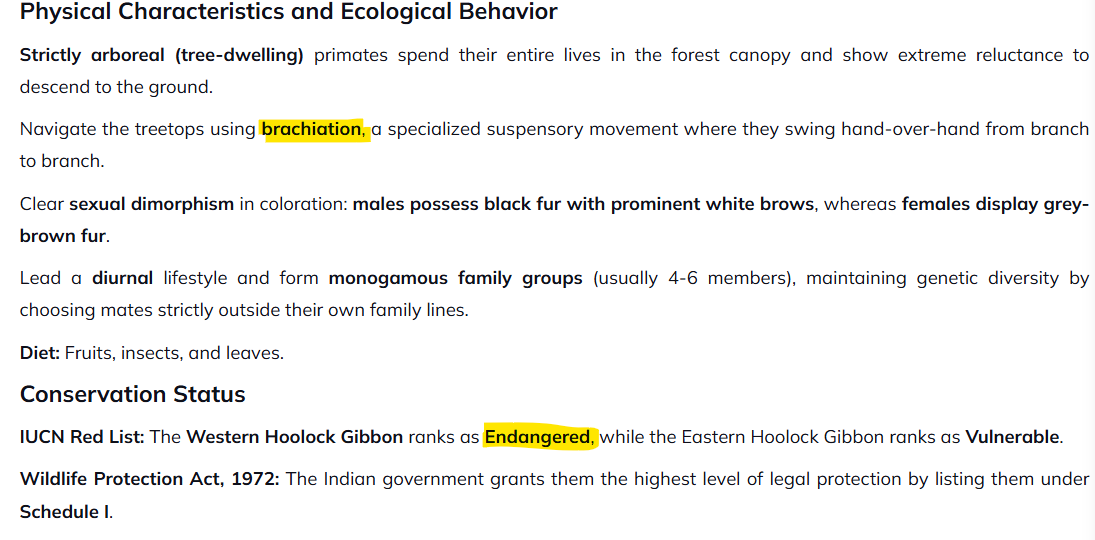
2) The Question on Western Hoolock Gibbons was directly from IASGYAN website.
3) Each and every statement of the Oeko-Tex Certification question can be directly traced to this IASGYAN Current Affairs article.
4) All types of INTERPOL Notices were explicitly covered by IASGYAN in its current affairs coverage.
5) Direct Question on ‘Open Network for Digital Commerce’ (ONDC) initiative.
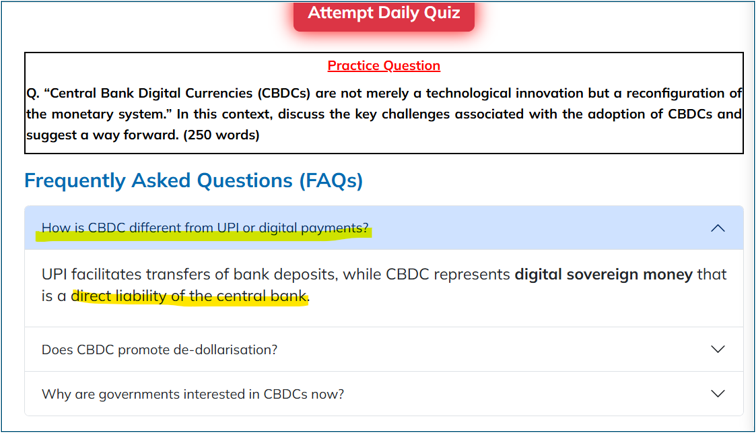
6) Direct Question on UPI and CBDC from IASGYAN Website.
7) You can easily solve the question on NBFCs if you have atleast once read this IASGYAN article on Non-Banking Financial Companies (NBFCs).
8) Each and every statement of National Mission for Sustainable Agricultu
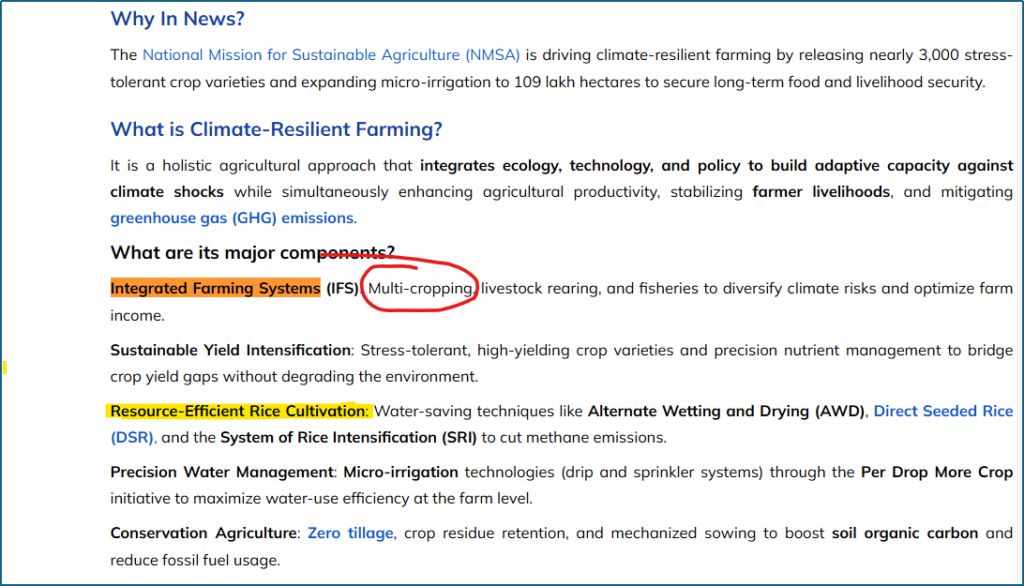
re (NMSA) appeared from IASGYAN Current Affairs Article.
9) Question on Moidams was covered by IASGYAN website in detail.
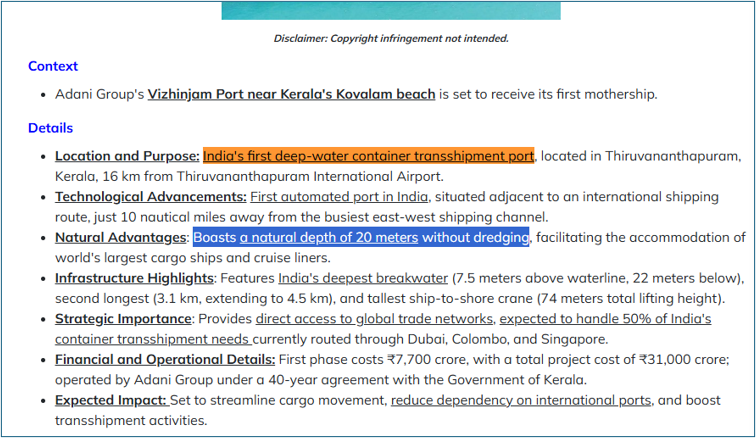
10) All the statements of Vizhinjam International Seaport Question were directly from this current affairs article of IASGYAN.
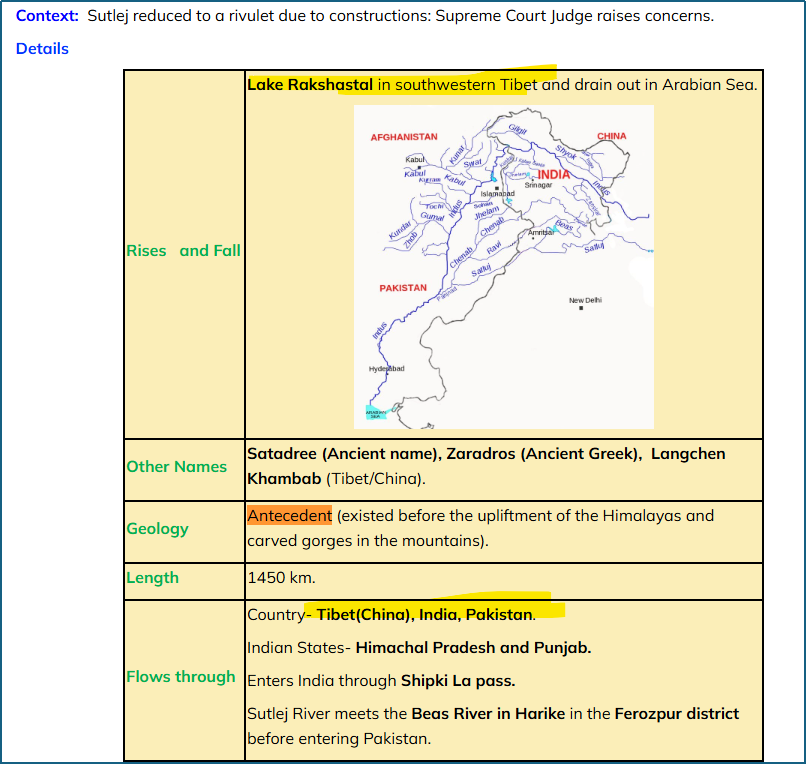
11) The question on: An antecedent river originating from the Tibetan Plateau, flowing through three countries, important for irrigation and not forming distributaries – could be solved easily using this current affairs article on Sutlej River by IASGYAN.
We have shown examples of only 10 questions here. More than 40 questions have directly appeared from the IASGYAN website. Example: The Questions on:
- Economic Committees like Malegam and Malhotra
- NIRANTAR PLATFORM
- Chancellor of the Federal Republic of Germany visited India
- BHARAT FORECAST SYSTEM
- Crowding Out Effect
- Black Boxes
- Private Entities in India’s Space Programme
- Drone Swarms
- GenomeIndia Project
SOME MORE QUESTIONS IN 2026 UPSC CSE PRELIMS THAT HAD VERY HIGH SIMILARTY WITH CONTENT COVERED BY IASGYAN IN ITS CURRENT AFFAIRS:
- Formation of Forward Bloc (1939)
- Lake Turkana (Africa geography + UNESCO World Heritage Site)
- Mangrove ecosystems and climate resilience
- Amur Falcon migration at Doyang Lake (Nagaland conservation success)
- India’s LT-LEDS (Long-Term Low Emission Development Strategy)
- India’s BUR-4 (Biennial Update Report, GHG emissions data)
- Net-zero framework (2070 climate targets)
- Crowdfunding (digital finance, SMEs, startup funding model)
- Rainfed agriculture climate resilience strategies
- Rights of Persons with Disabilities Act (RPwD Act)
- Sugamya Bharat Abhiyan (Accessible India Campaign)
- NDFDC / Disability welfare institutions
- Mission Sudarshan Chakra (air defence + missile defence system)
- Indigenous defence manufacturing (Su-30 MKI, T-90 tanks, Akula submarine)
- ASEAN connectivity projects:
- Kaladan Multi-Modal Transit Transport Project
- IMT Trilateral Highway
- Agartala–Akhaura Rail Line
- India’s neighbourhood development assistance:
- Mangdechhu Hydroelectric Project (Bhutan)
- Afghanistan reconstruction projects (Stor Palace)
- Sri Lanka / Maldives infrastructure diplomacy
- UN agencies and Nobel Prize recognition (UNICEF, WFP, UNHCR, ILO)
- Revamped Rashtriya Gram Swaraj Abhiyan (RGSA)
- Panchayati Raj capacity building and SDG localisation
- European Union membership identification (EU geography + polity mapping)
- Financial Inclusion Index
- Real-World Assets (RWA) Tokenization
- Green Bond
- Large Language Models
- Green Hydrogen
- National Quantum Mission
- Climate of Andaman and Nicobar Islands
- Archaeological Findings in Harappan towns
- Tai-Ahom kingdom
- Rare Earth Elements (REEs) and Critical Minerals
- Mission Sudarshan Chakra
- Maitri Setu
- AI Impact Summit, 2026
SO ON AND SO FORTH ….
Students preparing for UPSC CSE 2027 Prelims are advised to regularly go through the IASGYAN Current Affairs Portal, as it provides clear, exam-focused and updated coverage of important current affairs and helps in both Prelims and Mains preparation.
5. INTERNATIONAL WEBSITES
Many questions in UPSC Prelims 2026 were also directly or indirectly linked to international organisation websites and global institutional reports. Examples include Global Forum for Migration and Development and International Organization for Migration (IOM) reports, FAO’s theme of “Better Production, Better Nutrition, Better Environment and Better Life,” NASA’s coverage of Tungurahua Volcano and heritage conservation topics such as the restoration of Stor Palace.
Therefore, students preparing for UPSC CSE 2027 must systematically follow important international organisations, scientific institutions and authentic global policy platforms as part of their regular preparation strategy.
Important international organisation websites such as the World Bank, International Monetary Fund, United Nations Educational, Scientific and Cultural Organization, World Health Organization and United Nations Environment Programme are crucial for UPSC preparation.
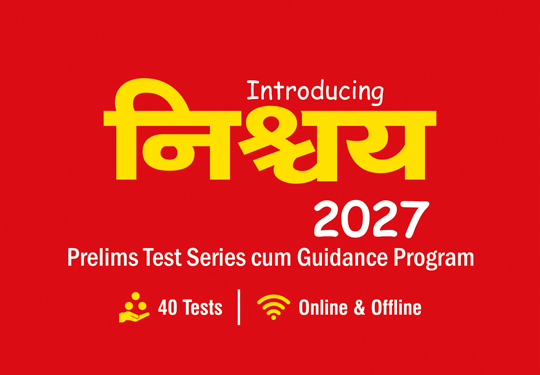
6. NISCHAY TEST SERIES FROM APTI PLUS WEBSITE
In UPSC Prelims 2026, more than 30+ questions were covered in the Nischay UPSC CSE Prelims Test Series of APTI PLUS.
Aspirants are advised to enroll in a good test series, as it provides extensive practice through thousands of questions and helps in effective revision of high-probability areas for Prelims.
| UPSC Prelims 2026 Questions that appeared in Nischay Test Series Program
§ NISCHAY 18 (Q94) → Blockchain technology / decentralisation / immutability / distributed systems § NISCHAY 30 (Q82) → Financial Inclusion Index / RBI / Access–Usage–Quality framework § NISCHAY 33 (Q4) → Central Bank Digital Currency / Digital Rupee / UPI vs CBDC comparison § FLT 32 + NISCHAY 16 → Rare Earth Elements / Critical Minerals / National Critical Mineral Mission § NISCHAY 12 + NISCHAY 21 + PRELIMS MIRROR 2 → Non-Banking Financial Companies / RBI regulations / payment system restrictions § PRELIMS MIRROR 3 (LLM coverage) → Large Language Models / Machine Learning / bias / probabilistic prediction § NISCHAY 16 + 18 → Green Hydrogen / renewable electrolysis / National Green Hydrogen Mission § NISCHAY 29 + IAS Gyan Source → National Quantum Mission / qubits / quantum communication / T-Hubs § NISCHAY 18 + NISCHAY 35 + IAS Gyan → Deep Ocean Mission / Matsya-6000 / Samudrayaan / seabed exploration § NISCHAY 10 → Parliament procedure / Starred vs Unstarred Question § NISCHAY 12 + NISCHAY 21 → Zero FIR / BNSS 2023 / jurisdiction & procedural criminal law § NISCHAY 25 → Investigation agencies / nodal ministries / governance structure matching § NISCHAY 35 → AI Impact Summit 2026 / AI governance / Democratic Diffusion framework § FLT 32 → Colombo Process / Abu Dhabi Dialogue / GFMD / labour migration governance |
Key Observations and Recommendation for 2027
UPSC Prelims 2026 witnessed several unconventional and seemingly arbitrary questions. For example: “‘X’, born in the UK, was conferred the Nobel Prize in 2025. He was a professor in an American university when this prize was announced. Identify ‘X’.”
Further, many questions reflected themes related to Public Administration, governance, decision-making and Ethics, indicating a growing overlap between Prelims and Mains. Therefore, students must adopt an integrated and long-term preparation strategy. Preparing Prelims and Mains together is now essential, as short-term preparation and crash courses may no longer be sufficient.
Final Strategy for UPSC CSE 2027 Aspirants
Aspirants should follow limited but authentic sources, prioritise government websites and maintain consistent current affairs reading. Strong emphasis must be on integrated Prelims and Mains preparation, regular revision and Test Series based practice. UPSC now tests understanding, analytical ability, ethical reasoning and interdisciplinary thinking, so success depends on depth, not volume. The real goal is not information collection, but becoming a clear and critical interpreter of information.
- Best UPSC Strategy: Combine newspaper analysis, PIB/government sources, quality test series and concise revision notes.
- Follow the principle of “Limited Sources, Multiple Revisions.” Lateral and peripheral knowledge gained from conceptual clarity help in solving unfamiliar questions and clear the cut-off.
Prioritize:
- Government Websites
- PIB Releases
- UPSC Current Affairs Websites
- Quality Prelims and Mains Test Series
- Integrated Prelims-Mains Preparation
Start Your UPSC CSE 2027 Preparation Early with India’s Top Faculty at APTI PLUS
Explore our UPSC Courses | Book Free Demo Class Now
FAQs
1. Is it actually possible to keep track of all these government websites or should I just focus on one or two?
You absolutely don’t need to track every single ministry website daily. That’s a recipe for burnout. Instead, treat your UPSC syllabus as a master checklist. Focus on 3–4 “high-yield” portals like the PIB (for policies/schemes), NITI Aayog (for strategic reports) and your relevant line ministries (e.g., MoEFCC for Environment). The trick is to visit these only when a major issue hits the news. If a topic doesn’t have a direct link to your syllabus, it’s not worth your time.
2. Is it better to read raw government reports or stick to summarized magazines?
Think of it as a “Hybrid Strategy.” Don’t try to read 100-page reports cover-to-cover; that’s overkill. Read the Executive Summary and Key Findings of raw reports – these are gold for your Mains answers. Then, use monthly magazines to catch those tiny, obscure data points or facts you might have missed. Magazines are your “safety net” for Prelims, while raw reports are your “value-addition” tools for Mains.
3. How can I practically integrate current affairs with my static GS subjects?
Avoid “siloed” learning by using a “Syllabus-Indexed” filing system. Whether you use digital folders or physical notebooks, organize your notes by GS Paper and then by specific syllabus sub-headings (e.g., GS-III: Environment -> Climate Change -> Green Hydrogen Policy). Whenever you read a current update, append it directly into the relevant static notes folder. This turns your static notes into a living, “always-updated” document that ensures you are revising concepts and their contemporary applications together.
4. How do I maintain consistency when the syllabus feels never-ending?
Abandon the goal of “covering everything.” Adopt the “Limited Sources, Multiple Revisions” principle: define a core, trusted set of materials (e.g., one newspaper, one specialized current affairs portal and standard static books) and stick to them. It is far more effective to know 80% of the syllabus perfectly than to struggle with 100% of it superficially. Trusting your chosen, high-quality sources significantly reduces the “fear of missing out” and keeps your study sessions focused, manageable and consistent.
5. How do I effectively filter “exam-relevant” news from government portals to avoid being overwhelmed?
Focus strictly on policy outcomes and institutional updates rather than administrative news (e.g., routine inaugurations). Use the official UPSC syllabus as your primary filter: if a news item, report, or government scheme does not map directly to a static syllabus topic (like Economy, Environment, or Polity), it is likely “noise.” Bookmark the “Press Releases” or “Reports” sections of key ministries (like MoEFCC, NITI Aayog or DST) and review them weekly to extract only the core policy objectives and implementation details.
6. I read news daily, but I can’t recall the specific facts in the exam – how do I make it stick?
You’re likely suffering from “passive reading.” Stop just reading the news and start “Active Linking.” Instead of just noting an event, link it to a static concept. For example, if you read about a new RBI directive, don’t just note the directive – quickly revise your static notes on “Monetary Policy” or “Inflation Targeting.” When you connect new facts to a concept you already know, your brain retains it much better than if you try to memorize it in isolation.
7. How much time should I spend on newspapers versus static subjects?
Aim for a 60/40 split in favour of static subjects, especially early in your prep. Static knowledge is the “skeleton” of your preparation; without it, current affairs won’t make sense. As the exam approaches, your newspaper time should decrease and your revision time for your static notes (enriched with current examples) should increase. Remember: newspapers are meant to supplement your static knowledge, not replace it.
| About the Author
Ankita Roy is a Gold Medallist with over 10 years of experience in UPSC CSE exam preparation and strategic mentorship. She has mentored and curated content for numerous toppers in UPSC CSE and State Civil Services examinations, including WBCS and OCS. She has also contributed to academic publications, including papers associated with Cornell University. |