Why In News?
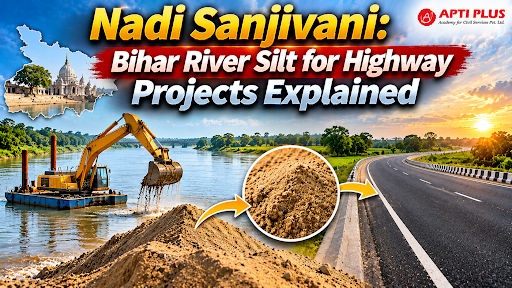
The Centre and Bihar signed an MoU under the "Nadi Sanjivani" initiative to desilt rivers and water bodies in Bihar and use the excavated silt in National Highway projects.
What Is The Nadi Sanjivani Initiative?
-
Dual Purpose: It combines river restoration and flood management with highway construction.
-
MoU Signing: It was signed in New Delhi in the presence of Union Road Transport Minister Nitin Gadkari and Bihar Chief Minister Samrat Choudhary.
-
Implementing Agency: The National Highways Authority of India (NHAI) will extract the silt using modern, scientific methods.
-
Conditional Use: Silt for future projects is subject to technical suitability and required approvals.
-
Scientific Assessment: Desilting will be done only after technical assessment of each identified water body.
What Is Desilting?
Desilting is the process of removing accumulated silt, sand, mud, and fine debris from water bodies and drainage systems—such as rivers, lakes, dams, reservoirs, sewers, and canals.
Why Desilting Matters
-
Restores Capacity: Over time, sediment settles at the bottom of water systems, reducing their depth and water-holding capacity.
-
Reduces Floods: Clearing channels allows rainwater and river currents to flow freely, lowering the risk of overflowing banks and severe floods.
-
Improves Infrastructure: In local developments—such as the recent Bihar Water Resources Restoration and Sediment Management Policy—excavated river silt is repurposed as construction material for National Highways, reducing reliance on topsoil and lowering project costs.
-
Supports Water Supply: Desilting reservoirs and dams protects drinking water quality and ensures steady water for irrigation and power generation.
How It Is Done
-
Mechanical & Manual Excavation: Using heavy machinery like excavators and dredging equipment to dig out dried or wet sediment from riverbeds and lake floors.
-
High-Pressure Jetting & Vacuum Extraction: Commonly used in urban drainage and sewer networks to clear out fine sand and sludge from underground pipes.
-
Dam & Reservoir Techniques: Including drawdown flushing, sediment bypassing, and sluicing.
Why Is Desilting Important For Bihar?
Heavy Silt Load
-
Clogged Rivers: Silt has built up to depths of up to 10 metres in several Bihar rivers, reducing water flow and storage capacity.
-
Himalayan Sediment: Rivers such as the Kosi, Gandak and Bagmati bring huge sediment loads from the young, fragile Himalaya.
Flood Vulnerability
-
Most Flood-Prone State: Bihar is one of India's most flood-prone States, especially north Bihar, which faces floods almost every year.
-
Shallower Channels: Silt-filled riverbeds overflow more easily, worsening floods and causing rivers to change course.
-
Example: In 2008, the Kosi breached its embankment at Kusaha in Nepal and shifted course, flooding large parts of north Bihar and affecting millions of people. Heavy silt build-up made the river unstable.
What Are The Expected Benefits?
Environmental Benefits
-
Better River Flow: Scientific desilting improves drainage and water-holding capacity.
-
Save Fertile Soil: Highway builders will rely less on digging agricultural land and hills for earth.
Economic Benefits
-
Lower Construction Cost: Free or cheap silt reduces the cost of highway embankments.
-
Faster Construction: Ready local material can speed up projects.
Circular Economy
-
Waste To Resource: The initiative turns accumulated silt, a problem, into a construction resource.
-
Example: Under the "Buldhana pattern" in Maharashtra, highway contractors desilted ponds and dams to obtain construction material. By 2020, this had excavated over 225 lakh cubic metres of material while increasing local water storage, without public spending on desilting.
What Is The Legal And Policy Framework?
Laws And Guidelines
-
Minor Minerals: River sand and similar material are minor minerals under the Mines and Minerals (Development and Regulation) Act, 1957, and are regulated by State governments.
-
Environmental Clearance: Large-scale riverbed extraction needs environmental clearance under the EIA Notification, 2006.
-
Sand Mining Guidelines: The Sustainable Sand Mining Management Guidelines, 2016 and the Enforcement and Monitoring Guidelines for Sand Mining, 2020 set rules for scientific, monitored extraction.
Sediment Policy
-
National Framework for Sediment Management (2022): The Ministry of Jal Shakti released this framework, which treats sediment as a resource and promotes basin-level management.
What Are The Key Challenges?
Ecological Risks
-
Habitat Damage: Dredging can destroy riverbed habitats and disturb aquatic life.
-
Example: The Vikramshila Gangetic Dolphin Sanctuary near Bhagalpur in Bihar protects the endangered Gangetic river dolphin, India's National Aquatic Animal. Poorly planned dredging in such stretches can harm dolphin habitat.
-
Changing River Behaviour: Removing too much sediment can deepen channels, erode banks and affect downstream areas.
Technical And Economic Hurdles
-
Harder Than Ponds: Desilting large rivers is far more complex than clearing lakes and small water bodies.
-
Transport Costs: High costs of extracting and moving silt over long distances could make the plan unviable.
-
Material Quality: Not all silt is suitable for road embankments, so testing is essential.
Temporary Relief
-
Silt Returns: Himalayan rivers keep carrying fresh sediment, so desilting gives only temporary relief unless combined with catchment treatment.
Governance Risks
-
Illegal Mining Cover: Desilting could be misused as cover for illegal sand mining without strict monitoring.
Way Forward
Scientific Sediment Management
-
Basin-Level Planning: Plan desilting across whole river basins, not isolated stretches.
-
Catchment Treatment: Reduce soil erosion in upstream areas through afforestation and soil conservation.
-
Monitoring Technology: Use drones, satellite imagery and GPS-tracked vehicles to monitor extraction and prevent illegal mining.
Protect River Ecology
-
Avoid Sensitive Zones: Exclude dolphin sanctuaries, breeding grounds and wetlands from desilting.
-
Room For Rivers: Combine desilting with nature-based flood management.
-
Example: The Netherlands' "Room for the River" programme lowered floodplains and widened riverbeds to give rivers more space, cutting flood risk while restoring natural habitats.
Cooperation With Nepal
-
Transboundary Approach: Since most Bihar rivers originate in Nepal, joint India–Nepal action on sediment and flood control is essential.
Conclusion
Nadi Sanjivani turns Bihar's river silt from a flood risk into a construction resource, saving fertile land and cutting highway costs. Its success depends on scientific, basin-level desilting that protects river ecology, prevents illegal mining and works with Nepal to manage Himalayan sediment.
Source: INDIANEXPRESS
|
PRACTICE QUESTION Q. Can desilting rivers solve Bihar’s flood problem? Examine its benefits and limitations. (10 Marks, 150 Words) |