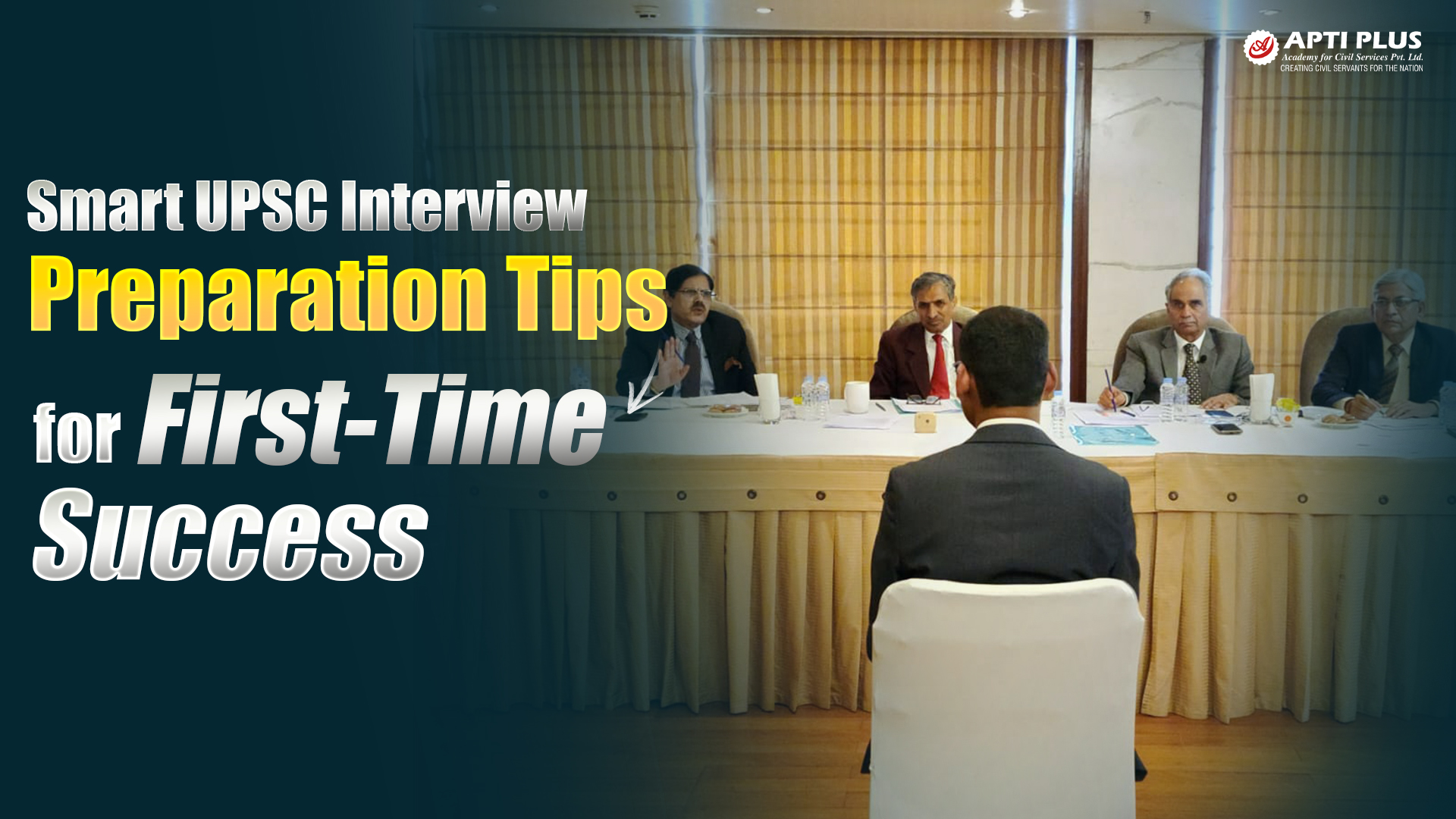
Smart UPSC Interview Preparation Tips for First-Time Success

Cracking the UPSC interview on the first try is difficult but not impossible with the right approach, mindset, and preparation. The final hurdle in the UPSC Civil Services Examination is the Personality Test, also known as the IAS Interview. The UPSC board conducts this stage to assess prospective IAS officers’ character, demeanor, and mindset. Those who have excelled in the UPSC Mains exam can now prepare to showcase their drive and readiness in the final round. Here are some tips to help you excel in the UPSC Civil Services Exam Interview and leave a lasting impression. Understanding The UPSC Interview Format Key Interview Components The UPSC interview, also known as the Personality Test, is intended to evaluate your personality, leadership abilities, and analytical skills. It is not a retest of your knowledge; the sam has already been tested in the mains exam. During the interview you will be asked about your background, hobbies, current events, and your Detailed Application Form (DAF). Duration and Structure The interview takes place between 3 and 4 months after the UPSC mains exam. The personality test or interview is worth 275 marks, which accounts for a significant portion of the overall score. The interview is usually around 30 minutes long, but this can vary. The panel is typically made up of a chairman and four other members. The purpose of the interview The primary goal of the UPSC interview is to determine your suitability for a career in civil service. The panel looks for mental alertness, critical assimilation abilities, clear and logical exposition, balance of judgment, variety and depth of interest, social cohesion and leadership skills, and intellectual and moral integrity. Understanding the format and purpose of the UPSC interview is critical to effective preparation. It allows you to focus on the right areas and develop the skills you need to succeed. Consider joining APTI PLUS, the best IAS coaching in Kolkata, for more in-depth guidance and mock interview practice. They provide comprehensive support to help you ace your UPSC interview. What Makes the UPSC Interview “Different”? The UPSC interview personality test is not a quiz. It’s a 30-minute real-time assessment of who you are, how you think, and whether you’re suited for the responsibilities of public service. Why It’s Unique: No defined syllabus: The unpredictability keeps even the best-prepared candidates on edge. Panel-dependent experience: One panel may be warm and conversational; another may push your mental resilience. It’s about you, not just your answers: The focus is on authenticity, reasoning, and emotional maturity. First-Timer Struggles: No exposure to panel settings Self-doubt due to lack of job experience or coaching Difficulty expressing nuanced thoughts under pressure How to analyze your DAF? The Detailed Application Form (DAF) is an important component of your UPSC interview preparation. It contains all of the personal and academic information that the interview panel will use to formulate questions. Understanding the significance of your DAF can mean the difference between a successful and unsuccessful interview. Make sure to go over everything you’ve written because questions can come from anywhere. Common Questions Based on the DAF Many questions in the UPSC interview are based on your DAF. These may include: Your place of birth Graduation stream Optional subject. Domicile College Profession Hobbies Extracurricular activities. Awards and Recognitions Being well-prepared for these questions can provide a significant advantage. How to Prepare Your DAF Read carefully. Review your DAF several times to ensure you understand every detail. Research: Conduct extensive research on all of the topics covered in your DAF. This includes your hometown, education, and hobbies. Current Affairs: Link your DAF information to current events. For example, if your hobby is reading about Artificial Intelligence, keep up with the latest developments in that field. Mock Interviews: Attend mock interviews to get a sense of the questions that may be asked based on your DAF. This will help you identify areas for improvement. Remember, the DAF is more than just a form; it reflects your journey and goals. Give it the importance it deserves. Advantages of UPSC mock interview for preparation UPSC mock interview preparation has several advantages, as discussed below: Assists Preparation: It helps aspirants understand the topics that need to be covered while preparing for the personality test round. Understand Question Framework: Over the years, it has helped candidates understand the types of questions asked about current events during the interview round. Develop a Robust Strategy: With the help of toppers’ UPSC Mock Interview analysis, candidates will be able to prepare for the most frequently asked UPSC Mock Interview questions and create a robust strategy to excel in this round. Feedback: By participating in the best interview preparation, UPSC Mock Interview, candidates will receive valuable feedback on their performance from the interview panel. This will also help them improve their weaknesses. Communication Skills: It improves aspirants’ communication skills, body language, and confidence levels, as well as their personalities. Confidence Booster: IAS candidates will also gain an understanding of the types of questions asked during the actual interview. This will help them improve their preparation level. Finally, candidates will be able to provide logical and unbiased responses to complex questions, concluding with genuine solutions to the issue. Simulating Stress: The actual UPSC mock interview can be stressful, and mock interviews try to replicate this stress to some extent. This helps candidates stay composed and handle pressure effectively during the actual interview. Time Management: Candidates are given a time limit for their responses in the UPSC Mock Interview. Mock interviews help them manage their time effectively and deliver comprehensive but concise responses. How UPSC Mock Interviews Help to Achieve Higher Scores A well-prepared candidate who has gone through several rounds of mock interviews typically performs better in the actual UPSC interview. Here’s how. Confidence Building: Repeated and multiple mock sessions can boost the candidate’s confidence and help them stay calm during the interview. Polishing Content and Delivery: Practicing responses multiple times will help candidates refine their answers and present them more clearly, which