Essay Paper at a Glance
250 marks. 3 hours. 8 topics — 4 in Section A, 4 in Section B. Write one essay from each section, 1000–1200 words each, 125 marks per essay. Section A is usually philosophical and abstract. Section B is usually about life, society and governance.
Topics of the Last Five Years
2021
|
No. |
Topic |
|
1 |
The process of self-discovery has now been technologically outsourced. |
|
2 |
Your perception of me is a reflection of you; my reaction to you is an awareness of me. |
|
3 |
Philosophy of wantlessness is Utopian, while materialism is a chimera. |
|
4 |
The real is rational and the rational is real. |
|
5 |
Hand that rocks the cradle rules the world. |
|
6 |
What is research, but a blind date with knowledge! |
|
7 |
History repeats itself, first as a tragedy, second as a farce. |
|
8 |
There are better practices to “best practices”. |
2022
|
No. |
Topic |
|
1 |
Forests are the best case studies for economic excellence. |
|
2 |
Poets are the unacknowledged legislators of the world. |
|
3 |
History is a series of victories won by the scientific man over the romantic man. |
|
4 |
A ship in harbour is safe, but that is not what a ship is for. |
|
5 |
The time to repair the roof is when the sun is shining. |
|
6 |
You cannot step twice in the same river. |
|
7 |
A smile is the chosen vehicle for all ambiguities. |
|
8 |
Just because you have a choice, it does not mean that any of them has to be right. |
2023
|
No. |
Topic |
|
1 |
Thinking is like a game, it does not begin unless there is an opposite team. |
|
2 |
Visionary decision-making happens at the intersection of intuition and logic. |
|
3 |
Not all who wander are lost. |
|
4 |
Inspiration for creativity springs from the effort to look for the magical in the mundane. |
|
5 |
Girls are weighed down by restrictions, boys with demands – two equally harmful disciplines. |
|
6 |
Mathematics is the music of reason. |
|
7 |
A society that has more justice is a society that needs less charity. |
|
8 |
Education is what remains after one has forgotten what one has learned in school. |
2024
|
No. |
Topic |
|
1 |
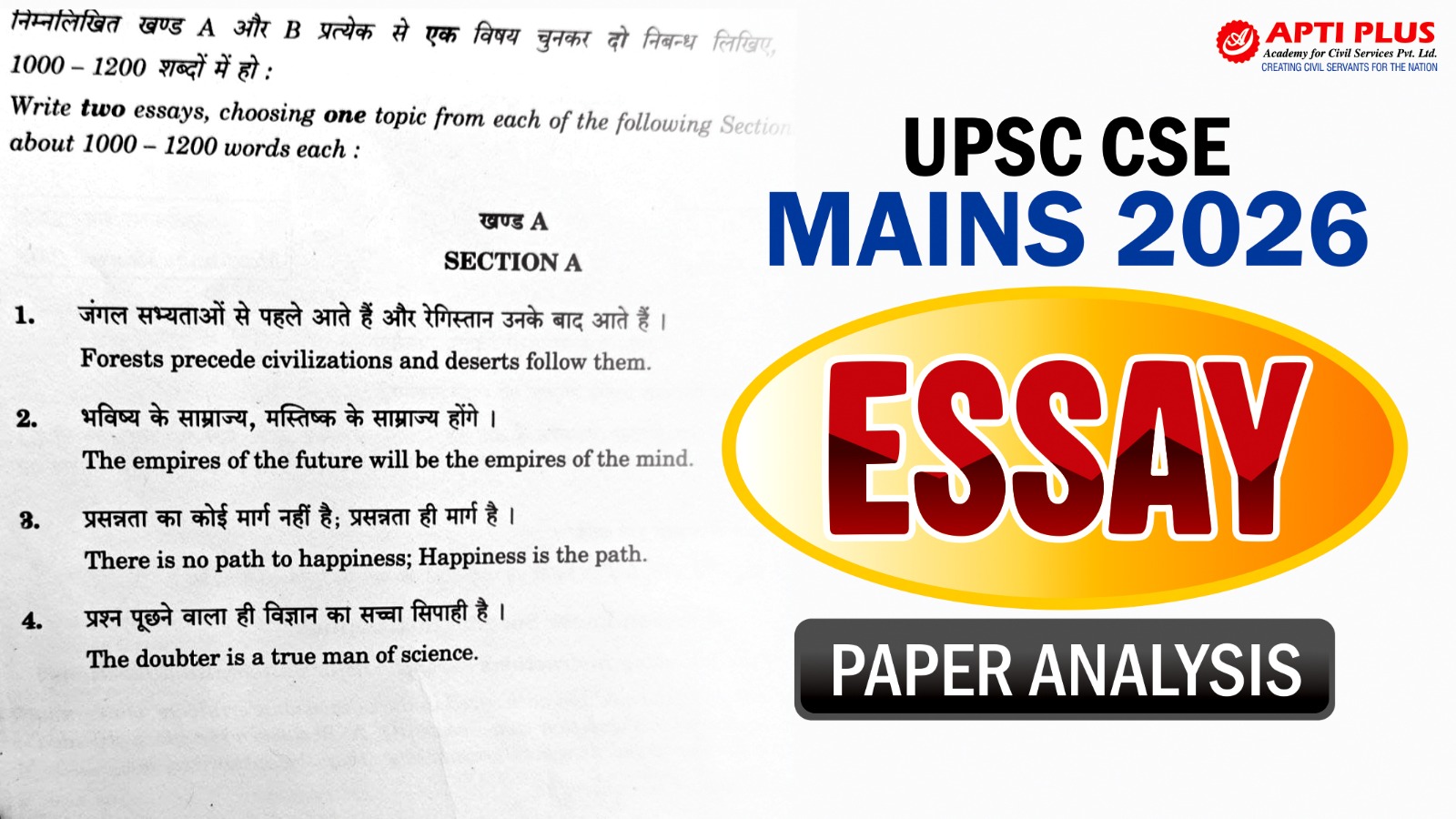
Forests precede civilizations and deserts follow them. |
|
2 |
The empires of the future will be the empires of the mind. |
|
3 |
There is no path to happiness; happiness is the path. |
|
4 |
The doubter is a true man of science. |
|
5 |
Social media is triggering ‘Fear of Missing Out’ amongst the youth, precipitating depression and loneliness. |
|
6 |
Nearly all men can stand adversity, but to test the character, give him power. |
|
7 |
All ideas having large consequences are always simple. |
|
8 |
The cost of being wrong is less than the cost of doing nothing. |
2025
|
No. |
Topic |
|
1 |
Truth knows no color. |
|
2 |
The supreme art of war is to subdue the enemy without fighting. |
|
3 |
Thought finds a world and creates one also. |
|
4 |
Best lessons are learnt through bitter experiences. |
|
5 |
Muddy water is best cleared by leaving it alone. |
|
6 |
The years teach much which the days never know. |
|
7 |
It is best to see life as a journey, not as a destination. |
|
8 |
Contentment is natural wealth; luxury is artificial poverty. |
Theme-wise Weightage
|
Theme |
2021 |
2022 |
2023 |
2024 |
2025 |
Total |
Share |
|
Philosophy / abstract life |
2 |
2 |
2 |
2 |
3 |
11 |
27.5% |
|
Ethics and character |
0 |
2 |
0 |
1 |
2 |
5 |
12.5% |
|
Governance and decisions |
1 |
1 |
1 |
1 |
1 |
5 |
12.5% |
|
Society, gender, justice |
1 |
0 |
2 |
1 |
0 |
4 |
10% |
|
Science and research |
2 |
0 |
1 |
1 |
0 |
4 |
10% |
|
Education and creativity |
0 |
1 |
2 |
1 |
0 |
4 |
10% |
|
History and IR |
1 |
1 |
0 |
0 |
1 |
3 |
7.5% |
|
Environment |
0 |
1 |
0 |
1 |
0 |
2 |
5% |
|
Economy |
1 |
0 |
0 |
0 |
1 |
2 |
5% |
Main Trends
• Topics are becoming more abstract. Topics with a clear current-affairs link: 3 in 2021, 2 in 2022, 3 in 2023, 2 in 2024 and none in 2025. The 2025 paper was fully philosophical.
• Topics are getting shorter. Earlier topics were full statements. Now they are short lines like “Truth knows no color.” The candidate has to build the meaning.
• More topics are direct quotes of famous thinkers — Sun Tzu, Lao Tzu, Emerson and Socrates all appeared in 2025 alone.
• Section B is no longer the easy section. Till 2024 it had one safe current-affairs topic. In 2025 it had none.
• Governance and decision-making has appeared every single year without a break.
• Themes come back in new words. Example: forests in 2022 and 2024; risk and inaction in 2022, 2024 and 2025; simple living in 2021 and 2025.
Difficulty Level
|
Year |
Level |
Reason |
|
2021 |
Hard |
Section A was very heavy, especially “the real is rational”. |
|
2022 |
Moderate–hard |
Section A had almost no easy option. Section B was comfortable. |
|
2023 |
Moderate |
Most balanced paper. Both sections had easy options. |
|
2024 |
Easy–moderate |
Friendliest paper. Section B was direct and current-affairs based. |
|
2025 |
Looks easy, scores hard |
All topics were attemptable, so marks depended fully on depth and structure. |
Topics of 2026
Paper held on 21 August 2026. Section A: Q1–Q4. Section B: Q5–Q8.
|
No. |
Topic |
Theme |
|
1 |
Oxymorons reflect the ironies of life. |
Philosophy / abstract |
|
2 |
A grateful mind is very beautiful. |
Ethics and character |
|
3 |
A thorn is a changed bud. |
Society and justice |
|
4 |
When two elephants fight, it is the grass that gets trampled. |
History and IR |
|
5 |
Nature is the symbol of the spirit. |
Environment |
|
6 |
A well-educated mind will always have more questions than answers. |
Education |
|
7 |
Shelving hard decisions is the least ethical course. |
Governance and ethics |
|
8 |
A good leader is one who follows the followers. |
Governance and leadership |
Comparison with Last Five Years
|
Point |
2026 |
|
Abstract topics (out of 8) |
8 — same as 2025. Second year in a row with 100% abstraction. |
|
Current-affairs topics |
None directly. But Q4, Q5, Q7 and Q8 link very easily to live issues. |
|
Themes repeated from 2021–2025 |
Nature (2022, 2024), questioning and education (2021, 2023, 2024), inaction vs action (2024, 2025), power and leadership (2023, 2024). |
|
New themes |
Oxymorons and irony, gratitude, reform of the offender, great-power rivalry hurting the weak. |
|
Famous quotes used |
At least three — Emerson (Q5), an African proverb (Q4), Gandhi's line on leadership (Q8). Q6 is attributed to Helen Keller. |
|
Nature of Section A |
Very literary and image-based — an oxymoron, a thorn, two elephants. Shortest topics in years. |
|
Nature of Section B |
More usable. Q7 and Q8 are almost straight ethics and governance topics. |
|
Difficulty vs 2025 |
Same character — easy to attempt, hard to score. |
|
Difficulty vs five-year average |
Easier to understand, harder to differentiate. |
|
Most attemptable topic |
Q7 (shelving hard decisions) and Q4 (two elephants) — both have ready material. |
|
Least attemptable topic |
Q1 (oxymorons) — easy to misread as a grammar topic. |
|
Overall verdict |
The abstraction trend has held for a second year. But the paper is thematically wider than 2025 — environment, education and leadership are all back. |
Topic-wise Analysis
Q1 (Section A): Oxymorons reflect the ironies of life.
|
Head |
Content |
|
Meaning |
An oxymoron puts two opposite words together — deafening silence, cruel kindness, open secret. The topic says life works the same way: opposites exist side by side, and that contradiction is the truth of life, not an error in it. |
|
Other readings |
Language mirrors life. We invented oxymorons because reality itself is contradictory. India is full of such contradictions — overflowing grain stores and hungry children, a data-rich country with a digital divide, growth without jobs. Contradiction is not a defect. Progress happens through the clash of opposites, as Hegel and the Buddhist middle path both suggest. |
|
Why relevant |
Jobless growth, poverty in a food-surplus country, loneliness in the most connected generation, a developing country with a space programme, sustainable development itself. |
|
Key dimensions |
Political: World's largest democracy, yet low awareness among many voters. Universal adult franchise from day one in a deeply unequal society. Economic: Jobless growth. Rich country, poor people. Food surplus with high malnutrition. Rising GDP with rising inequality. Social: Educated unemployment. Women commanding fighter jets while female labour force participation stays low. Progressive laws with regressive practice. Environmental: ‘Sustainable development’ is itself an oxymoron. Clean energy that needs destructive mining. Technological: The information age also being the misinformation age. Social media making people connected and lonely at once. International: Peacekeeping forces armed to the teeth. Fighting wars to secure peace. Climate summits reached by private jet. Personal: Bittersweet memories, tough love, painful growth. The parent who is strict because he cares. Counter-view: Not every contradiction is profound. Some are simply policy failure and should be fixed, not admired as irony. |
|
Quotes |
“It was the best of times, it was the worst of times.” — Charles Dickens | Amartya Sen on islands of California in a sea of sub-Saharan Africa | “Do I contradict myself? Very well then, I contradict myself.” — Walt Whitman |
|
Examples |
Full FCI godowns beside districts with high stunting (NFHS-5, Global Hunger Index). UPI leading the world in digital payments while lakhs stay offline. Highest number of engineering graduates with a skilling gap. |
|
Introduction |
Open with an image: a grain warehouse overflowing at night while a village nearby sleeps hungry. Two facts, both true, standing next to each other. Then say that language gave us a word for exactly this — the oxymoron — and that life keeps supplying the examples. |
|
Conclusion |
Return to the grain store. Say the aim of governance is not to remove all contradiction — that is impossible — but to make sure the contradictions that remain are not paid for by the poorest. End with the idea that a society matures when it can look at its own ironies honestly. |
|
Mistakes to avoid |
Turning it into an English grammar lesson on figures of speech. Listing ironies without explaining why they exist or how to reduce them. |
|
Link to old papers |
Close to 2023 Section A — ‘Thinking is like a game, it does not begin unless there is an opposite team.’ Both are about opposites producing meaning. |
Q2 (Section A): A grateful mind is very beautiful.
|
Head |
Content |
|
Meaning |
Gratitude means recognising what one has received from others. The topic says such a mind is beautiful — and the beauty meant here is inner and moral, not physical. |
|
Other readings |
Gratitude as a personal virtue — it produces contentment, humility and better mental health. Gratitude as social glue. Indian thought puts this at the centre through the idea of rin — the debts we owe to parents, teachers and society. Gratitude as public duty. A civil servant who remembers that every rupee spent is a citizen's money will behave differently. The other side — gratitude can be misused. Telling workers or women to ‘be grateful’ is often a way of denying them their rights. |
|
Why relevant |
The consumer culture that keeps us permanently dissatisfied, rising mental health problems among youth, the way society treated frontline workers during COVID, and the invisibility of sanitation workers, farmers and soldiers in daily life. |
|
Key dimensions |
Ethical: Gratitude is the base of humility and integrity. The ungrateful mind sees everything as an entitlement. Indian thought: Pitri rin, guru rin and deva rin. Matru Devo Bhava. The tradition of touching feet, of Guru Purnima, of thanking the soil before harvest. Psychological: Research in positive psychology links gratitude practice with lower anxiety and higher wellbeing. Gratitude is a treatment, not just a sentiment. Economic: Advertising works by removing gratitude — it must make you feel what you have is not enough. Consumerism and gratitude cannot coexist. Environmental: Gratitude to nature produces conservation; treating nature as a free input produces extraction. Sacred groves, Bishnoi tradition, Mission LiFE. Governance: A public servant grateful to the taxpayer is an accountable public servant. Gratitude turns into responsibility. Social: Recognising invisible labour — sanitation workers, ASHA workers, farmers, soldiers. Counter-view: Gratitude must not become servility. ‘Be thankful for what you have’ has been used to silence legitimate demands for rights and wages. |
|
Quotes |
“Gratitude is not only the greatest of virtues, but the parent of all others.” — Cicero | “Let us be grateful to the mirror for revealing to us our appearance only.” — Tagore | Gandhi's idea of trusteeship — wealth held in gratitude, not in ownership. |
|
Examples |
COVID-19 and the clapping for health workers — and how quickly it faded. Gratitude journalling in schools. Japan's culture of thanking. The Bishnoi community's gratitude to trees. Armed forces flag day. |
|
Introduction |
Begin with a small scene — a child eating a meal without once thinking of the farmer, the transporter, the cook. Then observe that a mind that does notice all this is a different kind of mind altogether, and that this noticing is what we call gratitude. |
|
Conclusion |
Come back to the meal. Say that a grateful mind is beautiful because it is a mind that sees clearly — it sees the hands behind the plate, the taxpayer behind the scheme, the earth behind the harvest. And a society of such minds needs far less policing to behave well. |
|
Mistakes to avoid |
Writing a motivational speech with no policy or ethical content. Ignoring the counter-view that gratitude can be weaponised. |
|
Link to old papers |
Directly linked to 2025 Section B — ‘Contentment is natural wealth; luxury is artificial poverty.’ The same material fits both. |
Q3 (Section A): A thorn is a changed bud.
|
Head |
Content |
|
Meaning |
The thorn and the bud grow from the same plant. What is sharp today was soft once. Nobody is born harmful — circumstances change them. |
|
Other readings |
Crime and violence are made, not born. Deprivation, neglect and injustice turn buds into thorns. The thorn is a defence. Hardness is usually the result of being hurt, not of being evil. Change works both ways. If a bud can become a thorn, a thorn can become a bud again. This is the entire basis of reform. |
|
Why relevant |
Juvenile justice debates, radicalisation of youth, Left Wing Extremism in deprived tribal districts, prison reform and overcrowded jails, rehabilitation of surrendered militants. |
|
Key dimensions |
Social: The pipeline from child labour and school dropout to petty crime. Broken homes, caste humiliation, poverty. Legal: Reformative theory of punishment. Juvenile Justice Act. Article 21 and prisoners' rights — Sunil Batra. Probation of Offenders Act. Governance: Prison reform, open jails in Rajasthan, Mulla Committee recommendations, police reform, counselling in observation homes. Political: Insurgency and extremism as symptoms of alienation — the Northeast, LWE districts, Aspirational Districts Programme, surrender-and-rehabilitation policies. Psychological: Trauma produces aggression. Adverse childhood experiences and later violence. International: South Africa's Truth and Reconciliation Commission. Rwanda's community courts. Norway's prison model. Ethical: Gandhi's distinction between the sin and the sinner. Restorative rather than retributive justice. Counter-view: Not every thorn can be turned back into a bud. Victims deserve justice, and some offences require firm punishment. Reform must not become an excuse. |
|
Quotes |
“Hate the sin and not the sinner.” — Mahatma Gandhi | “An eye for an eye makes the whole world blind.” — attributed to Gandhi | “No one is born hating another person.” — Nelson Mandela |
|
Examples |
Valmiki, who was a dacoit before he wrote the Ramayana. Angulimala transformed by the Buddha. Mandela after 27 years in prison. Tihar Jail reforms under Kiran Bedi. Open prisons in Rajasthan. |
|
Introduction |
Open with Angulimala — a man wearing a garland of fingers, stopped not by force but by a single question from the Buddha. Then say that every society must decide whether it sees a permanent thorn or a bud that went wrong. |
|
Conclusion |
Return to Angulimala. Say the real test of a civilisation is not how it punishes the thorn but whether it asks how the bud was changed — and whether it fixes the soil. |
|
Mistakes to avoid |
Sounding soft on crime by ignoring victims entirely. Writing only about criminals — the metaphor also covers bitterness in relationships, workplaces and communities. |
|
Link to old papers |
Connects to 2025 Section A — ‘Best lessons are learnt through bitter experiences’ — and to 2024 ‘Nearly all men can stand adversity’. |
Q4 (Section A): When two elephants fight, it is the grass that gets trampled.
|
Head |
Content |
|
Meaning |
An African proverb. When the powerful fight each other, it is the weak and uninvolved who suffer the damage. |
|
Other readings |
Geopolitics — rivalry between big powers hurts smaller states and the Global South most. Domestic — turf wars between ministries, between Centre and State, between political parties, all delay services to citizens. The proverb has a second half: when two elephants make love, the grass also gets trampled. Even cooperation among the powerful can crush the weak — cartels, trade blocs, technology monopolies. |
|
Why relevant |
The US–China rivalry and its effect on supply chains, the Russia–Ukraine war raising food, fuel and fertiliser prices for Africa and South Asia, chip and tariff wars, sanctions, and climate negotiations where big emitters bargain while small island states drown. |
|
Key dimensions |
International: Cold War proxy wars in Korea, Vietnam and Afghanistan. Today's bipolar drift. India's response through strategic autonomy, the Voice of Global South Summit, and bringing the African Union into the G20. Economic: Supply chain disruption, inflation exported to poor countries, dumping, sanctions hitting third parties, debt distress in Sri Lanka and African states. Environmental: Climate justice. Common but differentiated responsibilities. AOSIS and small island states. The Loss and Damage Fund. Social: Refugees and civilians. Women and children as the first casualties of every conflict. Domestic governance: Centre–State disputes stalling projects. Inter-departmental litigation. Political rivalry delaying local development. Historical: The Partition. 1971 and the refugee burden on India. Africa carved up at the Berlin Conference. Ethical: The responsibility that comes with power. Might is not right. Counter-view: The grass is not always helpless. NAM, ASEAN, the G77 and India's own non-alignment show that small and middle powers can organise and gain agency. |
|
Quotes |
“The strong do what they can and the weak suffer what they must.” — Thucydides | Nehru on non-alignment — refusing to be the grass between two herds | “When elephants fight, it is the grass that suffers.” — Kikuyu proverb |
|
Examples |
Ukraine war and wheat prices in Africa and Egypt. Sri Lanka's debt crisis. Semiconductor export controls and their effect on third countries. India's evacuation missions — Ganga, Kaveri. Small island states at COP. |
|
Introduction |
Open with a farmer in East Africa paying double for fertiliser because of a war fought thousands of kilometres away, on a matter he has no part in. Then introduce the proverb. |
|
Conclusion |
Return to the farmer. Say that a world order is judged not by how its strongest members treat each other but by what happens to those who were never in the fight — and that India's role has been to speak for that grass. |
|
Mistakes to avoid |
Writing only foreign policy and ignoring the domestic and personal application. Taking sides on live geopolitical disputes instead of writing analytically. |
|
Link to old papers |
Directly follows 2025 Section A — ‘The supreme art of war is to subdue the enemy without fighting.’ |
Q5 (Section B): Nature is the symbol of the spirit.
|
Head |
Content |
|
Meaning |
The line is from Emerson's essay Nature. It means the natural world is not merely matter to be used — it reflects deeper truths, and every natural fact stands for an inner or spiritual fact. |
|
Other readings |
Nature as teacher. The river teaches patience, the seed teaches faith, the seasons teach impermanence. The Indian view. Prakriti and Purusha, the five elements, rivers as mothers, sacred groves, the Isha Upanishad's instruction to enjoy through renunciation. The modern warning. When we lose nature we do not only lose a resource, we lose a way of seeing. Deep ecology versus shallow ecology. The other side. Treating nature as sacred can also be used to block development and to romanticise the poverty of those who live closest to it. |
|
Why relevant |
The climate crisis, Mission LiFE, the shift from an anthropocentric to an ecocentric view, rights granted to rivers, eco-anxiety among the young, and rapid urbanisation cutting people off from the natural world. |
|
Key dimensions |
Philosophical: Emerson and Thoreau's transcendentalism. Wordsworth. Tagore's open-air school at Santiniketan. Indian thought: Isha Upanishad. Buddhist and Jain ahimsa. The Bishnoi community. Chipko and Sunderlal Bahuguna. Sacred groves across India. Constitutional and legal: Article 48A and Article 51A(g). M.C. Mehta cases. The Godavarman case. The Uttarakhand High Court recognising the Ganga and Yamuna as living entities. Policy: Mission LiFE. Net Zero by 2070. Green Credit Programme. International Solar Alliance. Biodiversity targets. Economic: Natural capital accounting. Ecosystem services. Green GDP. The cost of treating clean air and water as free. Social: Tribal worldviews and the Forest Rights Act 2006. Communities who never needed a conservation policy because they had a conservation belief. Psychological: Nature and mental health. Forest bathing. Eco-anxiety among young people. Counter-view: Livelihood needs of forest dwellers. The development debate around large dams. Reverence alone does not clean a river — the Ganga is worshipped and polluted at the same time. |
|
Quotes |
“Every natural fact is a symbol of some spiritual fact.” — Ralph Waldo Emerson | “Earth provides enough to satisfy every man's need, but not every man's greed.” — Mahatma Gandhi | Isha Upanishad — enjoy through renunciation, do not covet |
|
Examples |
Chipko movement. Bishnois of Khejarli. Sacred groves in the Western Ghats and the Northeast. Ganga worshipped yet polluted. Mission LiFE at COP26. Tagore's Santiniketan. |
|
Introduction |
Open with the image of the Ganga — worshipped as a mother every morning and treated as a drain every afternoon. Then say Emerson's line asks a harder question: what does the state of our rivers say about the state of our inner life? |
|
Conclusion |
Return to the river. Say that cleaning a river is finally an inner project as much as an engineering one, and that a society which sees nature only as a resource will eventually see people that way too. |
|
Mistakes to avoid |
Writing a standard GS-3 environment answer full of schemes with no philosophical content. The opposite error — pure poetry with no data, law or policy. |
|
Link to old papers |
Third environment topic in five years — after 2022 ‘Forests are the best case studies for economic excellence’ and 2024 ‘Forests precede civilizations and deserts follow them’. |
Q6 (Section B): A well-educated mind will always have more questions than answers.
|
Head |
Content |
|
Meaning |
Real education does not fill a person with certainty. It makes them curious and willing to doubt. The more one learns, the more one realises how much is unknown. |
|
Other readings |
Education versus schooling. Schooling supplies answers for an exam; education produces questions for a lifetime. Scientific temper. Doubt is the engine of knowledge — nothing is accepted merely because it is old or official. Democracy needs questioning citizens. A population that cannot question is easy to mislead. The other side. Endless questioning without conclusion becomes paralysis. At some point one must decide and act. |
|
Why relevant |
NEP 2020's emphasis on critical thinking, the coaching and rote-learning culture, weak learning outcomes reported by ASER, artificial intelligence supplying instant answers and reducing curiosity, and misinformation that survives because people do not question sources. |
|
Key dimensions |
Educational: NEP 2020 and the National Curriculum Framework. Experiential and inquiry-based learning. The Socratic method. ASER findings on learning outcomes. Exam-oriented culture producing answer-collectors. Scientific: Article 51A(h) on scientific temper. The debate tradition of Nalanda and Takshashila. ISRO's method of learning from failure. Political: The Right to Information Act as institutionalised questioning. Parliamentary Question Hour. Dissent as the safety valve of democracy. Social: Superstition and blind faith. The work of rationalists such as Narendra Dabholkar. Questioning caste and gender customs. Technological: AI and search engines giving instant answers. The risk that convenience replaces curiosity. Deepfakes making verification a survival skill. Philosophical: Socrates knowing that he knows nothing. Nachiketa's questions to Yama in the Kathopanishad. The Buddha's Kalama Sutta asking followers not to accept anything merely on authority. Administrative: A questioning officer catches the flaw in the file. But a permanently questioning officer never clears it. Counter-view: Doubt must lead somewhere. Analysis paralysis, decision fatigue, and the cynic who questions everything and believes nothing. |
|
Quotes |
“The important thing is not to stop questioning.” — Albert Einstein | “Where the mind is without fear and the head is held high.” — Rabindranath Tagore | The Kalama Sutta — do not accept a thing merely because it is tradition or because a teacher said it |
|
Examples |
Nachiketa questioning Yama. Socrates and the Athenian trial. Galileo. ISRO's Chandrayaan-2 failure feeding Chandrayaan-3. RTI activists exposing scams. NEP 2020's shift away from rote learning. |
|
Introduction |
Open with a boy standing before the god of death, refusing three tempting offers and asking instead what happens after death — Nachiketa. Then say that the oldest image of the educated mind in Indian thought is not a mind that answers, but a mind that asks. |
|
Conclusion |
Return to Nachiketa. Say that a nation is not built by those who memorise the most answers but by those who ask the questions nobody else thought to ask — and that the job of an education system is to protect that instinct rather than examine it out of a child. |
|
Mistakes to avoid |
Attacking the education system for twelve pages without offering solutions. Forgetting the counter-view — that decisions eventually require closure. |
|
Link to old papers |
Very close to 2024 Section A ‘The doubter is a true man of science’, to 2023 ‘Education is what remains after one has forgotten what one has learned in school’, and to 2021 ‘What is research, but a blind date with knowledge!’ Three papers in five years have asked this. |
Q7 (Section B): Shelving hard decisions is the least ethical course.
|
Head |
Content |
|
Meaning |
Postponing a difficult decision is not a neutral act. Inaction is itself a choice, and it is often the choice that causes the most harm while looking the most harmless. |
|
Other readings |
Inaction has victims. A delayed judgment, a delayed reform and a delayed relief measure all have names and faces attached to them. Shelving is usually self-protective. The file is not delayed because the officer is thinking; it is delayed because deciding carries risk to his career. The other side, which the essay must handle. Sometimes deliberate delay is wise — to build consensus, to let tempers cool, to gather information. The 2025 paper itself asked whether muddy water is best cleared by leaving it alone. |
|
Why relevant |
Judicial pendency running into crores of cases, files pending across departments, policy paralysis caused by fear of investigating agencies, police reforms directed in 2006 and still incomplete, and climate action where delay has become the new form of denial. |
|
Key dimensions |
Administrative ethics: Sins of omission are still sins. Courage of conviction as a civil service value. The Nolan principles. Second ARC on accountability. Governance: Decision paralysis and the fear of the three Cs. Section 197 CrPC protection for honest officers. Mission Karmayogi. E-office and file tracking to expose delay. Judicial: Justice delayed is justice denied. Pendency of over five crore cases. Article 21 and speedy trial in Hussainara Khatoon. Undertrials in jail longer than their maximum sentence. Political: Tough reforms postponed because of electoral cost — subsidy rationalisation, labour codes, urban local body empowerment. Environmental: Delay as denial. Every year of postponed emission cuts raises the eventual cost. IPCC warnings. International: The delayed response to the Rwandan genocide. Stalled UN Security Council reform. Psychological: Status quo bias and loss aversion. The mind treats a bad outcome from action as worse than the same outcome from inaction. Counter-view: Prudent delay is real. GST took years of consensus building and was better for it. Federal negotiation takes time. The test is the motive — delay to deliberate is ethical, delay to avoid is not. |
|
Quotes |
“The only thing necessary for the triumph of evil is for good men to do nothing.” — attributed to Edmund Burke | Dante on the hottest places in hell being reserved for those who stay neutral in a moral crisis | The Gita's insistence on action over inaction |
|
Examples |
Prakash Singh judgment of 2006 on police reform, still awaiting full implementation. Undertrials languishing without trial. Delayed dam-safety and disaster warnings. GST as an example of good delay. Bhopal gas tragedy and delayed regulatory action. |
|
Introduction |
Open with an image of a file. Not a rejected file — a pending one, moving from one table to another for years, while the person it concerns grows old. Then say that the most damaging decisions in administration are often the ones never taken. |
|
Conclusion |
Return to the file. Say that ethics in public life is not only about refusing the wrong thing — it is about being willing to sign the difficult right thing, and that a system which punishes decisions more than it punishes delay will always produce officers who wait. |
|
Mistakes to avoid |
Making it an argument for hasty or reckless decisions. Ignoring the 2025 topic's opposite claim that leaving things alone can be wise. The best scripts will reconcile the two. |
|
Link to old papers |
A near-direct continuation of 2024 Section B — ‘The cost of being wrong is less than the cost of doing nothing.’ It is also the mirror image of 2025 ‘Muddy water is best cleared by leaving it alone.’ |
Q8 (Section B): A good leader is one who follows the followers.
|
Head |
Content |
|
Meaning |
The idea comes from Gandhi's remark that there go his people and he must follow them, for he is their leader. Leadership here is not commanding from above but listening, sensing and serving. |
|
Other readings |
Democratic leadership. In a democracy the leader holds power on trust and must remain accountable to those who gave it. Participatory governance. The best plans come from the Gram Sabha upward, not from the secretariat downward. Servant leadership. The leader's job is to remove obstacles for the team rather than to be obeyed by it. The essential counter-view. A leader who only follows becomes a populist. Ending untouchability, abolishing sati and opening the economy in 1991 were all unpopular at the time. Sometimes leadership means going against the crowd. |
|
Why relevant |
Populism worldwide, the freebies debate, policy being shaped by social media trends and opinion polls, participatory budgeting, and the growing emphasis on Jan Bhagidari and pre-legislative consultation. |
|
Key dimensions |
Political: The thin line between democracy and demagoguery. Freebies versus welfare. The Supreme Court's engagement with the freebies question. Governance: The 73rd and 74th Amendments. Gram Sabha powers under PESA. Social audit in MGNREGA. Kerala's People's Plan Campaign. Citizen charters and MyGov. Leadership theory: Greenleaf's servant leadership. Transformational versus transactional leadership. Collins's Level 5 leader who is humble and determined at once. Historical: Gandhi at Champaran, who listened to peasants for weeks before acting. Ambedkar leading against majority sentiment. Nehru pushing scientific temper on a largely traditional society. Ethical: Moral courage versus the desire to be liked. The leader who tells the truth that costs votes. Administrative: The collector who holds a public hearing before finalising a scheme. Feedback loops, grievance redress, Sevottam. Social: Movements led from below — Chipko, the RTI movement, self-help groups. Counter-view: Ambedkar's warning against bhakti in politics. The Constitution is deliberately counter-majoritarian. Following followers must mean following their interests, not their impulses. |
|
Quotes |
“There go my people. I must follow them, for I am their leader.” — attributed to Mahatma Gandhi | “A leader is best when people barely know he exists… they will say we did it ourselves.” — Lao Tzu | Ambedkar's warning that bhakti in politics is a sure road to degradation |
|
Examples |
Champaran. Ambedkar and the Hindu Code Bill. The 1991 reforms, unpopular then and accepted now. Kerala's People's Plan. Social audits in MGNREGA. Vaccination hesitancy overcome through local leaders rather than orders. |
|
Introduction |
Open with Gandhi at Champaran, recording thousands of peasant statements before he made a single demand. Then contrast it with the modern leader who checks a trending hashtag before forming an opinion, and ask which of the two is really following the people. |
|
Conclusion |
Return to Champaran. Say that Gandhi followed his people in order to lead them somewhere they had not yet imagined, and that this is the difference between a leader who listens and a leader who merely obeys the loudest voice. |
|
Mistakes to avoid |
Writing a one-sided essay in praise of listening, with no treatment of populism. Turning it into a management lecture with no Indian governance content. |
|
Link to old papers |
Connects to 2024 Section B ‘Nearly all men can stand adversity, but to test the character, give him power’ and to 2023 ‘Visionary decision-making happens at the intersection of intuition and logic.’ |