Why In News?
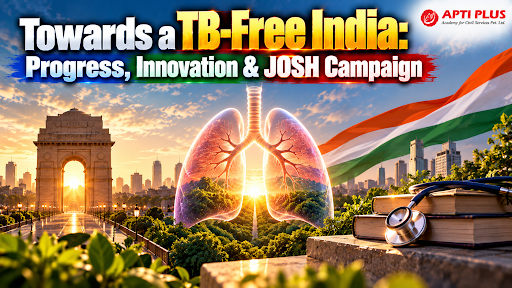
The Press Information Bureau (PIB) report highlights that India has achieved a 21% reduction in newly emerging Tuberculosis (TB) cases between 2015 and 2024—outperforming the global decline of 12%.
What Is Tuberculosis?
Tuberculosis (TB) is an infectious bacterial disease caused by Mycobacterium tuberculosis, discovered by Dr. Robert Koch on 24 March 1882 (commemorated annually as World TB Day).
Classification:
-
Pulmonary TB: Involves the lung parenchyma and constitutes the primary transmissible form of the disease.
-
Extra-Pulmonary TB: Involves extra-thoracic organs including the central nervous system (meninges), lymph nodes, kidneys, abdomen, spine, and joints. Extra-pulmonary TB is generally non-infectious.


Transmission Mechanism: Spread through airborne respiratory droplets released when an individual with active pulmonary TB coughs, sneezes, or speaks in poorly ventilated spaces.
-
It is not transmitted via physical contact, handshakes, shared food/utensils, or public toilets.
-
Patients with active lung TB generally cease to be contagious after two weeks of continuous, appropriate anti-TB treatment.
Latent vs Active Tuberculosis:
-
Latent TB Infection (LTBI): Individuals harbor dormant bacteria without clinical symptoms and cannot spread the infection. Approximately 40% of India's population carries LTBI, with a 10% lifetime risk of reactivation, which escalates under immunosuppressive conditions (HIV, diabetes, severe undernutrition).
-
Active TB Disease: Characterized by symptoms such as prolonged cough, fever, chest pain, hemoptysis (blood in sputum), night sweats, and weight loss.
Drug-Resistant Strains: Multi-Drug Resistant TB (MDR-TB, resistant to isoniazid and rifampicin) and Rifampicin-Resistant TB (RR-TB) require specialized, prolonged treatment regimens.
Vaccination: The Bacille Calmette-Guérin (BCG) vaccine (introduced in 1921) protects infants against severe disseminated and meningeal TB, but offers limited long-term protection against adult pulmonary TB.
Status of Tuberculosis
Global Burden: According to WHO estimates, global annual TB incidence stood at 10.6 million cases in 2022.
India's Share of Global Load: India carries the world's highest TB burden, accounting for nearly 27% of global TB incidence. In 2022, India recorded an estimated 2.82 million new cases (199 per 100,000 population) and 331,000 deaths (23 per 100,000 population).
Drug Resistance: Approximately 2% of TB patients in India are co-infected with HIV. Drug-Resistant TB (DR-TB) accounts for 2.5% among newly diagnosed patients and 13% among previously treated cases.
Trends (2015–2024):
-
Incidence Decline: India achieved a 21% reduction in annual emerging TB incidence between 2015 and 2024, outpacing the global reduction rate of 12%.
-
Mortality Decline: TB mortality in India decreased by 28% during the same period.
-
Treatment Coverage: India achieved 92% treatment coverage compared to the global average of 78%.
-
Treatment Success Rate: Under the intensified TB Mukt Bharat Abhiyaan, treatment success reached 90% (versus the global average of 88%), with cumulative screenings exceeding 28.1 crore individuals.
What Are the Initiatives Taken by the Government to Eliminate Tuberculosis?
Framework
-
Constitutional Mandate: Public Health and Sanitation is a State subject under the Seventh Schedule of the Constitution. The program derives its welfare objective from Article 47 (Directive Principles of State Policy), which directs the State to improve public health and nutrition.
-
Statutory Regulations: Mandatory notification of all TB cases was instituted in May 2012. Anti-TB drugs are regulated under Schedule H1 of the Drugs and Cosmetics Act, 1940, mandating strict chemist registers to prevent over-the-counter sales.
Programmatic Re-engineering:
-
National Tuberculosis Elimination Programme (NTEP): Renamed in 2020 from the Revised National TB Control Programme (RNTCP) under the National Health Mission (NHM), Ministry of Health & Family Welfare, targeting disease elimination ahead of the global Sustainable Development Goal (SDG 3.3) deadline of 2030.
National Strategic Plan (NSP 2017–2025 / 2020–2025) – DTPB Strategy:
-
Detect:
-
Deployment of rapid molecular testing facilities (CBNAAT and indigenous chip-based Truenat) across 9,800+ centers.
-
A 34-fold expansion in screening via 500+ handheld AI-enabled X-ray units (utilizing the DEEPCXR tool) and mobile diagnostic vans ('CBNAAT Lab on Wheels').
-
Deployment of AI tools like Cough Against TB (CATB) for acoustic cough screening.
-
Treat:
-
Transition from thrice-weekly dosing to daily Fixed-Dose Combinations (FDCs).
-
Rollout of the ultra-short BPaLM Regimen (Bedaquiline, Pretomanid, Linezolid, Moxifloxacin), cutting MDR/RR-TB treatment duration from 18–24 months to 6 months.
-
Implementation of Differentiated TB Care to stratify and manage high-risk patients.
-
Prevent:
-
Expansion of TB Preventive Treatment (TPT) for household contacts, PLHIV, and high-risk populations.
-
Introduction of the ultra-short 1HP Regimen (1 month of daily Isoniazid and Rifapentine) for individuals aged ≥13 years and the 3HP Regimen.
-
Enforcement of airborne infection control measures across healthcare facilities.
-
Build:
-
Real-time digital surveillance and Direct Benefit Transfer tracking on the Ni-kshay portal.
-
Launch of the TB Mukt Bharat App featuring the AI chatbot 'Khushi'.
-
Integration of 1,87,250 Ayushman Arogya Mandirs as primary screening units.
Financial & Nutritional Direct Benefit Transfers (DBT):
-
Nikshay Poshan Yojana (NPY): Introduced in 2018 to provide monthly financial support for nutrition to all registered TB patients. The monthly stipend was doubled from ₹500 to ₹1,000 per month in 2024.
Community Mobilization ('Jan Andolan'):
-
Pradhan Mantri TB Mukt Bharat Abhiyaan: Launched in September 2022 to build a 'Jan Andolan' (people's movement).
-
Enrolls Ni-kshay Mitras (individual volunteers, corporates under CSR, NGOs) who provide adopted TB patients with food baskets, vocational, and mental health support.
-
Over 5.7 lakh new Ni-kshay Mitras have registered and 46,118 Gram Panchayats have been certified as TB-Free Panchayats.
-
100-Day TB Mukt Bharat Abhiyaan: Launched in December 2024 across 347 high-priority districts (now expanded nationwide) for active case-finding, vulnerability mapping, and systematic screening. (Source: PIB)
-
JOSH (Joint Squad for Health) Campaign: Launched in October 2026 across 55 districts in 11 States, engaging MY Bharat youth volunteers and NCC cadets to drive community screening, adherence, and stigma reduction.

Source: PIB
|
PRACTICE QUESTION Q. With reference to the treatment and management of Tuberculosis (TB) in India, consider the following statements:
Which of the statements given above are correct? (a) 1 and 2 only (b) 2 and 3 only (c) 1 and 3 only (d) 1, 2, and 3 Answer: (a) Explanation: Statement 1 is correct: The BPaLM regimen (consisting of Bedaquiline, Pretomanid, Linezolid, and Moxifloxacin) is an all-oral, highly effective six-month treatment protocol approved by India's Union Health Ministry. It was introduced under the National TB Elimination Program (NTEP) specifically for patients with multi-drug-resistant or rifampicin-resistant tuberculosis (MDR/RR-TB), significantly cutting down the treatment time from the traditional 18–24 months. Statement 2 is correct: Launched in April 2018, the Nikshay Poshan Yojana (NPY) provides direct financial assistance to all notified TB patients in India to support their specific nutritional needs. The financial incentive is systematically credited directly into the beneficiaries' bank accounts through Direct Benefit Transfer (DBT) for the entire duration of their anti-TB treatment. Statement 3 is incorrect: Tuberculosis is not a waterborne disease, nor does it easily spread through the sharing of eating utensils. It is an airborne infectious disease transmitted through microscopic droplet nuclei when an individual with active pulmonary TB coughs, sneezes, speaks, or sings. |