Why In News?
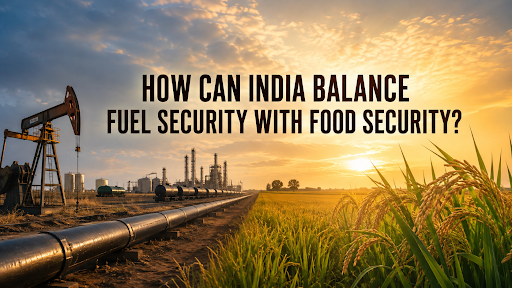
A lower sugar production estimate of 306 lakh tonnes and rising maize prices spurred debates on the food-versus-fuel trilemma, prompting demands for a thorough review of the ethanol feedstock policy.
What is the Ethanol Blended Petrol (EBP) Programme?
It is an initiative coordinated by the Ministry of Petroleum and Natural Gas (MoPNG) to blend agro-based ethanol into commercial motor fuel, reducing fossil fuel dependence, curbing carbon emissions, and providing remunerative markets for farmers.
India successfully achieved 20% ethanol blending in petrol (E20) during Ethanol Supply Year (ESY) 2025–26, advancing from less than 1.5% in 2013–14.
Feedstock Categorisation:
-
Sugar-based: Sugarcane juice, sugar syrup, B-Heavy molasses, and C-Heavy molasses.
-
Grain-based: Maize (corn), damaged food grains (DFG unfit for human consumption), and certified surplus rice from the Food Corporation of India (FCI).
-
Second-Generation (2G): Agricultural crop residue (rice straw, wheat stalk, bagasse, bamboo).
Why is Ethanol Important for India?
Cushioning High Crude Oil Import Vulnerability: India imports over 87% of domestic crude oil requirements. Indigenous ethanol creates an essential sovereign buffer against West Asian geopolitical supply disruptions.
Massive Foreign Exchange Savings: Ethanol blending has saved over ₹1.90 lakh crore in foreign exchange since 2014–15 and substituted more than 310 lakh tonnes of crude oil imports.
Timely Cash Flows for Sugarcane Farmers: Ethanol procurement by Oil Marketing Companies (OMCs) generated over ₹1.10 lakh crore in direct payments to sugar mills and distilleries, ensuring that 97% of sugarcane dues for 2025–26 were paid by August 20, 2026. (Source: PIB)
Environmental Decarbonisation: Displaces tailpipe carbon monoxide (CO) and hydrocarbon emissions, cutting over 50 million tonnes of greenhouse gas (GHG) emissions cumulatively.
What is the Food-versus-Fuel Conflict?
The Food-versus-Fuel conflict describes the structural economic and ethical dilemma where agricultural land, water, and food crops (sugarcane, maize, rice) are diverted toward bioenergy production, creating competing demands between human nutrition, livestock feed, and vehicle fuel tanks.
-
Direct Food Competition: Diverting sugarcane juice or food grains reduces retail food supplies, fueling domestic food inflation.
-
Animal Feed Competition: High diversion of maize to distilleries raises input costs for poultry feed, dairy cattle fodder, and egg production.
-
Resource Competition: Dedicating prime arable land and canal irrigation to water-intensive energy crops deprives high-protein pulses and oilseeds of essential acreage.
What is the Government’s Position?
|
What are the Major Problems with Sugarcane-Based Ethanol?
Severe Groundwater Depletion: Sugarcane requires 2,000 to 3,000 litres of water to produce 1 kg of sugar, causing critical aquifer stress in drought-prone Marathwada and Northern Karnataka. (Source: NITI Aayog)
Regional Geographical Imbalances: Over 80% of cane-based ethanol capacity is concentrated in just three states—Maharashtra, Uttar Pradesh, and Karnataka—increasing inter-state freight transport emissions.
Agricultural Monocropping: Continuous sugarcane cultivation degrades soil organic carbon and exhausts micro-nutrients.
High Sensitivity to Monsoon Volatility: Deficient monsoon rainfall immediately impairs cane crushing yields, disrupting contractual ethanol deliveries.
Why Has Sugar Become a Concern in 2026?
|
Maize as an Alternative Feedstock
Significantly Lower Water Footprint: Maize consumes nearly 80% less water than sugarcane and rice, thriving in semi-arid, rainfed agro-climatic conditions.
Higher Industrial Ethanol Yield: One tonne of maize yields approximately 380 to 400 litres of ethanol, alongside high-protein co-products like Distillers Dried Grains with Solubles (DDGS) used for livestock feed.
Crop Diversification Driver: Encourages farmers in Punjab, Haryana, and Western UP to diversify away from water-depleting paddy monocultures.
Urgent Need for Yield Expansion: India’s maize productivity (3.1 tonnes/hectare) remains far below leading global producers like the United States (11 tonnes/hectare), creating vast potential for productivity-led expansion rather than pure acreage diversion.
What are the Risks of Greater Maize-Based Ethanol?
|
What are the Major Challenges in India’s Ethanol Policy?
Rigid Statutory Blending Mandates: Fixed percentage targets force OMCs to procure feedstocks even during severe agricultural drought years, exacerbating food price shocks.
Feedstock Price Volatility: Unpredictable price swings between sugar molasses, broken rice, and maize complicate distillery capacity utilization.
Slow Commercialization of 2G Lignocellulosic Biofuels: High capital costs and enzymatic breakdown complexities delay the scale-up of non-food second-generation crop residue plants.
Automotive Engine Compatibility Hurdles: Older vehicular fleets require retrofitted fuel pumps and corrosion-resistant rubber components to run reliably on E20 blends.
Environmental Concerns Associated with Biofuel Feedstocks
|
What India Can Learn from Successful International Models
Case Study 1: United States' Corn-Ethanol Mandate (RFS) Lessons: The US Renewable Fuel Standard demonstrated that dedicating over 35% of national corn acreage to ethanol sparked massive livestock feed inflation, forcing policymakers to introduce flexible regulatory waivers during crop shortfall years.
Case Study 2: Brazil’s Market-Linked Flex-Fuel System: Brazil’s dual-output mills dynamically toggle between sugar and hydrous ethanol production based on daily international price parity, allowing market price signals to balance food and fuel supplies without rigid quotas.
Way Forward: Balancing Fuel Self-Reliance with National Food Security
Establish Food Security as the Non-Negotiable Primary Safeguard: Enact dynamic policy trigger mechanisms that automatically reduce or pause food-crop ethanol diversion whenever national buffer stocks fall below strategic safety thresholds.
Shift from Crop Diversion to Agricultural Productivity Expansion: Invest heavily in ICAR hybrid maize seed research, precision irrigation, and agronomic extension to double Indian maize yields from 3.1 to 6+ tonnes per hectare.
Grant Oil Marketing Companies (OMCs) Dynamic Feedstock Sourcing Flexibility: Replace rigid feedstock quotas with price-linked market mechanisms, allowing OMCs to purchase ethanol from the most economical and ecologically viable domestic sources.
Permit Direct Ethanol Imports as a Temporary Safety Valve: Allow tariff-free imports of fuel-grade ethanol during acute domestic agricultural supply shortfalls to maintain 20% blending without starving food markets or animal feed industries.
Accelerate Capital Subsidies for 2G Non-Food Biofuels: Provide enhanced Viability Gap Funding (VGF) and long-term 10-year off-take guarantees for commercial 2G lignocellulosic refineries utilizing paddy straw, wheat stubble, and bagasse.
Mandate 100% Micro-Irrigation for Sugarcane Cultivation: Link central ethanol procurement subsidies to mandatory drip irrigation adoption across sugarcane command areas under the Per Drop More Crop (PDMC) initiative.
Conduct a Periodic 360-Degree Comprehensive Biofuel Review: Establish an inter-ministerial council (Agriculture, Food, Petroleum, Water Resources) to evaluate the environmental, food price, and nutritional impacts of biofuel mandates on a bi-annual basis.
Conclusion
India’s pursuit of Atmanirbharta in energy must never compromise the constitutional imperative of food security; fuel self-reliance must be built on agricultural productivity gains, crop residue utilization, and flexible market-linked feedstock safeguards.
Source: INDIANEXPRESS
|
PRACTICE QUESTION Q. The rapid expansion of the Ethanol Blended Petrol (EBP) programme to 20% blending has strengthened national energy security, but it has brought the structural food-versus-fuel conflict to the forefront. Critically analyze. (15 Marks, 250 Words) |