Why In News?
Authorities in Abengourou, Ivory Coast, arrested nine Hakki Pikki Tribe Members from Hunsur taluk (Mysuru district).
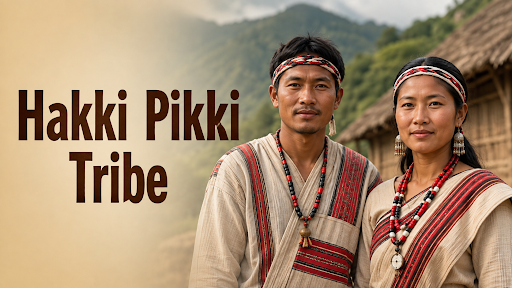
About Hakki Pikki
Origin and Migration: Historical accounts and research studies show that they are Kshatriyas (warrior communities) who trace ancestry to the legendary Mewar king, Rana Pratap.
-
Following his defeat, the community dispersed from Gujarat and Rajasthan, migrating south through Andhra Pradesh before settling in Karnataka.
Meaning of the Name: In Kannada, "Hakki" translates to "bird" and "Pikki" translates to "catcher".
Distribution: They primarily concentrate in Shivamogga, Davanagere, Mysuru, and Mandya districts of Karnataka. According to the 2011 Census of India, the Hakki Pikki population in Karnataka stands at 11,892 individuals.
Traditional Occupation: Their traditional economy centered on hunting, trapping, and selling wild birds alongside forest gathering.
Cultural Characteristics:
-
Language: They speak Vaagri (or Vaagribooli), which belongs to the Indo-Aryan family with Gujarati and Marwari influences, separating them from surrounding Dravidian-speaking groups.
-
Social Structure: They follow a matriarchal social structure, practicing endogamy and monogamy. Unlike major patriarchal societies, the groom’s family must pay a dowry (bride price) to the bride’s family.
-
Hair Symbolism: Cultural custom forbids the eldest son of a family from cutting his hair, serving as a marker for immediate community identification.
-
Lifestyle & Livelihood Transition: Enactment of the Wildlife Protection Act of 1972 criminalized bird catching and hunting. This legal restriction, alongside forest conservation policies, forced their transition to sedentary agricultural labor and forest product collection.
-
Traditional Ethnobotanical Knowledge: Women hold deep knowledge of native plants, identifying medicinal species and edible species to formulate herbal oils, cosmetics, and massage therapies.
Source: INDIANEXPRESS
|
PRACTICE QUESTION Q. Consider the following statements regarding the Hakki Pikki tribal community:
Which of the statements given above is/are correct? (a) 1 and 2 only (b) 2 only (c) 2 and 3 only (d) 1, 2 and 3 Answer: (b) Explanation: Statement 1 is incorrect: The Hakki Pikki tribe is a Scheduled Tribe (ST) in Karnataka but is NOT classified as a Particularly Vulnerable Tribal Group (PVTG). Statement 2 is correct: They follow a matriarchal structure, and marriage customs dictate that the groom and his family bear the wedding expenses and pay a dowry (bride price) to the bride's family. Statement 3 is incorrect: Their mother tongue is Vaagri, which belongs to the Indo-Aryan language family, not the Dravidian family. |