Why In News?
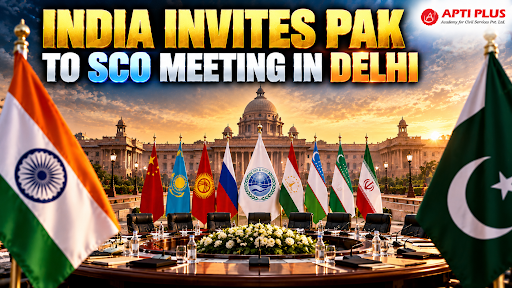
India extended an official diplomatic invitation to Pakistan to attend the inaugural Shanghai Cooperation Organisation (SCO) Civilisational Dialogue Forum in New Delhi.
What Is The SCO Civilisational Dialogue Forum?
Origin: The SCO Civilisational Dialogue Forum is a multilateral initiative proposed by Prime Minister Narendra Modi during the SCO Leaders' Summit in Tianjin in September 2025.
-
It aims to preserve, showcase, and deepen people-to-people links, historical connections, art, literature, and philosophical traditions across Eurasia.
Hosting Architecture: Jointly organized by the Ministry of Culture and the Ministry of External Affairs (MEA), the inaugural three-day forum is scheduled at the 16th-century site of Purana Qila in New Delhi from 20–22 November 2026.
Multilateral Protocol Obligations: Extending invitations to all full member states—including China, Russia, Iran, Belarus, Kazakhstan, Kyrgyzstan, Pakistan, Tajikistan, and Uzbekistan—is a structural obligation for India as the event host and does not signal a shift in bilateral diplomatic stance.
What Principles Defining India's Multilateral Engagement At SCO?
Decoupling Multilateral Engagements from Bilateral Disputes: India maintains a strict policy demarcation between multilateral institutional commitments under the SCO Charter and frozen bilateral relations with Pakistan.
-
While bilateral diplomatic channels remain constrained following the 22 April 2025 Pahalgam Terror Attack—which resulted in 26 fatalities—and the military response under Operation Sindoor, India continues active participation in regional groupings like SCO and BRICS.
Uncompromising Counter-Terrorism Stance: During the 25th Meeting of the SCO Council of Heads of Government (CHG) in Dushanbe, Tajikistan in October 2026, Defence Minister Rajnath Singh reiterated India’s firm stance that there can be no double standards in combating terrorism and demanding the complete dismantling of terrorist ecosystems.
Continuity in Regional Institutional Diplomacy: High-level institutional interactions have been maintained through targeted visits, such as External Affairs Minister S. Jaishankar’s visit to Islamabad in October 2024 for the SCO CHG meeting and SCO National Coordinator Alok Dimri’s visit in September 2026 under Pakistan’s rotating 2026–2027 SCO Chairmanship.
What Are Challenges In Multilateral Cultural Diplomacy?
Absence of Enforcement Mechanisms for Ceasefire Protocols: Multilateral cultural forums operate alongside persistent security frictions, where political commitments made at international summits lack legally binding frameworks to address cross-border violence.
-
Example: Pahalgam Terror Attack & Operation Sindoor Case Study, on 22 April 2025, cross-border terrorism caused 26 fatalities in Jammu & Kashmir, leading India to launch Operation Sindoor against terror infrastructure in Pakistan and PoJK, which resulted in the suspension of the Indus Waters Treaty and the closure of the Attari border crossing.
Bilateral Reciprocal Retaliation and Economic Freezes: Severe bilateral strain often restricts economic and diplomatic channels, limiting the broader operational impact of multilateral cultural summits.
-
Example: Indo-Pak Bilateral Trade and Airspace Suspension Model, following retaliatory measures in May 2025, leaving multilateral platforms like the SCO as the sole remaining avenue for institutional contact.
Geopolitical Asymmetry and Parallel Bloc Alliances: The effectiveness of consensus-building at the SCO is hampered when member states align with competing global geopolitical blocs, creating structural friction within regional security architectures.
-
Example: SCO Bishkek Declaration Consensus Failure Incident, differing strategic priorities regarding regional conflicts highlight the complexity of achieving unified security action across all 10 member states.
Way Forward For India's Policy Approach At SCO
Strengthening Institutional Norms on Counter-Terrorism: India must continue utilizing SCO platforms to push anti-terror mandates directly into multilateral declarations.
-
Example: 12th BRICS Parliamentary Forum Joint Declaration Model, chaired by Lok Sabha Speaker Om Birla, India integrated condemning the 22 April 2025 Pahalgam terrorist attack into the final joint text, establishing an institutional precedent for consensus-based condemnation of cross-border terrorism.
Leveraging Soft-Power Cultural Diplomacy via Heritage Sites: Employing cultural sites for international gatherings enhances regional soft-power projection without compromising hard-security stances.
-
Example: Civilisational Dialogue Initiative, hosting international delegations at New Delhi’s Purana Qila for thematic deliberations on shared Eurasian heritage allows India to lead regional cultural narratives.
Maintaining Strategic Autonomy in Multilateral Blocs: India’s foreign policy must balance engagements across regional forums like SCO and BRICS alongside partnerships with Western nations to safeguard its national interest and energy security.
-
Example: Multi-Vector Foreign Policy Framework, balancing strategic ties through domestic defence manufacturing under Atmanirbhar Bharat, energy sourcing, and adherence to international law guarantees credible strategic autonomy.
Conclusion
India balances its multilateral host duties and Eurasian soft power projection at the SCO while strictly maintaining its security stance against Pakistan-backed cross-border terrorism.
Source: THEHINDU
|
PRACTICE QUESTION Q. Discuss the strategic utility and limitations of cultural diplomacy as a soft-power tool in India's foreign policy architecture. 150 words |