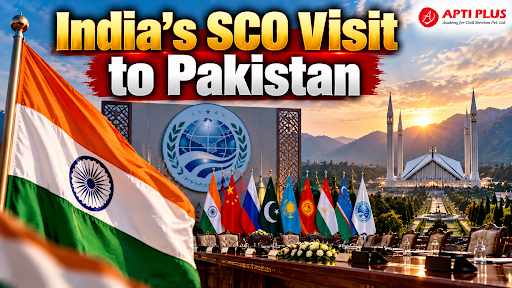
Why In News?
Additional Secretary in the Ministry of External Affairs (MEA), led a senior Indian delegation to Islamabad, Pakistan, for the Shanghai Cooperation Organisation (SCO) National Coordinators' Meeting.
What is the Shanghai Cooperation Organisation?
Origin: The Shanghai Cooperation Organisation (SCO) was formally established in 2001 in Beijing, evolving from the Shanghai Five border-management grouping founded in 1996.
Eurasian Multilateral Organisation: It is a permanent intergovernmental regional alliance spanning political, economic, and security domains across 10 member states representing over 40% of the global population.
Permanent Institutional Bodies: Headquartered in Beijing (SCO Secretariat), with its dedicated security organ—the Regional Anti-Terrorist Structure (RATS)—headquartered in Tashkent.
Security and Economic Mandate: Established primarily to combat the "Three Evils"—terrorism, separatism, and extremism—while expanding into trade, transport corridors, energy, and digital technology.
Regional Connectivity: Promotes Eurasian transit networks, economic integration, and multi-sectoral cooperation among Central and South Asian economies.
Counter-terrorism Cooperation: Facilitates joint intelligence sharing, standardized terrorist registries, and joint military exercises such as "Peace Mission" drills via RATS.
India’s Full Membership Since 2017: India (alongside Pakistan) acceded as a full member at the Astana summit in 2017, expanding the bloc's geographic footprint across South Asia.
Official Languages: At the Bishkek Summit in September 2026, English was formally adopted as the third official working language alongside Russian and Chinese.
What are India’s Key Interests in the SCO?
Regional Security: Engagement ensures India remains directly involved in Eurasian security architecture and counter-balances regional power dynamics.
Counter-terrorism Mechanisms: Leveraging SCO-RATS for intelligence exchange, tracking terror finance, and advocating zero tolerance against cross-border terrorism without double standards.
Connectivity & Transit Access: Advancing continental trade corridors to overcome overland transit restrictions imposed by Pakistan.
Transit and Trade Expansion: Finalizing common frameworks for regional economic wellbeing, transit agreements, and trade facilitation across Eurasian member states.
Energy Cooperation: Securing energy links with resource-rich Central Asian nations and participating in multilateral energy infrastructure discussions.
Central Asian Engagement: Deepening strategic, economic, and security ties with the Central Asian Republics (CARs)—Kazakhstan, Kyrgyzstan, Tajikistan, Uzbekistan, and Turkmenistan.
Digital Cooperation: Sharing India's Digital Public Infrastructure (DPI) expertise, healthcare initiatives, and fintech capabilities across Eurasia.
Cultural & Language Initiatives: Hosting civilisational dialogues (such as PM Narendra Modi's proposed forum in New Delhi) and utilizing English as the SCO's newly adopted working language.
Council of National Coordinators: Serves as the operational engine that coordinates policy and prepares agendas for major decision-making bodies like the Council of Heads of State (CHS).
What are the Major Challenges for India?
Cross-Border Terrorism: Persistent sponsorship of anti-India terror groups by Pakistan creates friction and limits functional trust within security frameworks.
India-Pakistan Trust Deficit: Frozen bilateral channels following the revocation of Article 370 and military confrontations hinder direct bilateral negotiations.
China-Pakistan Strategic Cooperation: The Sino-Pakistani strategic alignment—exemplified by satellite intelligence sharing during military crises—creates asymmetric pressure on New Delhi.
Competing Regional Interests: Divergent priorities between Western-focused strategies and anti-Western platforms pushed by Russia and China.
SCO Internal Differences: Lack of consensus on identifying terrorist entities leads the bloc into a "diplomacy of least resistance".
Connectivity Constraints: Pakistan's refusal to grant land transit access to India for Afghanistan and Central Asia hinders physical connectivity.
Kashmir-related Disputes: Attempts by Pakistan to introduce Kashmir or use cartographic misrepresentations in official SCO banners, maps, and portals.
Geopolitical Rivalries: Managing Line of Actual Control (LAC) border standoffs with China while maintaining a presence in Beijing-backed Eurasian platforms.
What are the Opportunities for India In SCO?
Central Asian Engagement: Consolidating direct strategic, economic, and security partnerships with landlocked Central Asian states.
Regional Connectivity Alternatives: Promoting transparent, sovereign trade networks like the International North-South Transport Corridor (INSTC) via Iran's Chabahar Port.
Trade Cooperation: Expanding commercial access to Eurasian markets and tapping into rising intra-SCO trade volumes through the SCO Business Council.
Energy Cooperation: Accessing uranium, oil, and natural gas reserves in Central Asia to support domestic industrial growth.
Counter-terrorism Coordination: Directing multilateral attention toward cross-border terrorism and enforcing institutional intelligence listings through RATS.
Diplomatic Communication: Utilizing the SCO's neutral framework to maintain situational awareness and minimum communication channels with Beijing and Islamabad.
Multilateral Crisis Management: Preventing multi-front escalations by preserving institutional contact during periods of regional flux.
People-to-People Cooperation: Fostering soft power through cultural exchanges, academic linkages, and civilisational forums.
What is the Way Forward?
Maintain SCO Engagement: Adhere to the diplomatic pragmatic rule that "if you are not at the table, you are on the menu" to ensure Indian interests are represented.
Keep Terrorism Central: Demand zero tolerance for terrorism and insist on standardized, non-discriminatory listings of cross-border terror groups in SCO-RATS.
Strengthen Central Asian Partnerships: Expand functional cooperation in digital public infrastructure, green energy, and pharmaceuticals with Central Asian nations.
Promote Regional Connectivity: Accelerate alternative, transparent trade routes like INSTC and Chabahar Port that respect national sovereignty.
Expand Trade and Transit Cooperation: Work through the SCO Business Council to reduce non-tariff barriers and streamline Eurasian customs procedures.
Use Multilateral Platforms for Communication: Keep communication channels open to prevent miscalculations without diluting firm bilateral stances.
Protect India’s Territorial Position: Exercise diplomatic vigilance over all SCO documents, maps, and statements to counter any unauthorized references to PoK or Aksai Chin.
Strengthen Counter-terrorism Cooperation: Operationalize joint intelligence sharing and real-time database coordination via RATS.
Maintain Strategic Autonomy: Preserve a flexible, multi-aligned foreign policy posture that balances Indo-Pacific maritime partnerships with Eurasian continental ties.
Separate Multilateral Engagement from Bilateral Disputes: Fulfill institutional obligations as an SCO member state while holding firm on preconditions for bilateral normalization with Pakistan.
Conclusion
India's pragmatic participation in the Shanghai Cooperation Organisation reinforces its strategic autonomy, enabling New Delhi to safeguard Eurasian connectivity and counter-terrorism interests while insulating multilateral institutional commitments from frozen bilateral ties.
Source: INDIAN EXPRESS
|
PRACTICE QUESTION Q. Evaluate the structural challenges posed by the China-Pakistan Economic Corridor to India's territorial sovereignty, and suggest policy measures to enhance alternative Eurasian connectivity frameworks. 150 words |