Why In News?
The Mulugu Collector postponed the proposed Singareni Collieries opencast coal mining project near the UNESCO World Heritage-listed Ramappa Temple
About Ramappa Temple
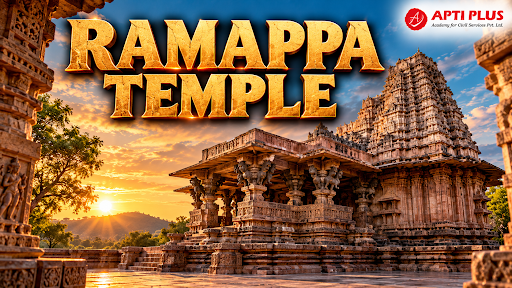
The Kakatiya Rudreshwara (Ramappa) Temple is a 13th-century monument located in Palampet village, Mulugu district, Telangana.
Inscribed as India's 39th UNESCO World Heritage Site in July 2021, the shrine stands as an outstanding testament to medieval Indian structural engineering, artistic brilliance, and hydrological planning.
Origin: Constructed around 1213 AD under the Kakatiya Dynasty, the temple was commissioned by Recherla Rudra, a general under King Ganapati Deva, and is dedicated to Lord Shiva (Ramalingeswara).
Unique Sculptor Byline: Uniquely in Indian temple architecture, the monument is named after its chief sculptor and craftsman, Ramappa, rather than the presiding deity or patron king.
The "Triple T" Concept: The complex reflects the Kakatiya regional planning framework connecting Temple, Town, and Tank. It sits adjacent to Ramappa Lake, a 13th-century earthen reservoir.
Engineering & Earthquake Resilience
The temple is renowned for three major engineering innovations that enabled it to endure over eight centuries of seismic activity and natural weathering:
-
Confined Sandbox Base Isolation: Foundation pits were excavated to a depth of 3 metres and filled with a compacted mixture of clean river sand, powdered granite, jaggery (unrefined sugar), and Haritaki (Terminalia chebula). This sand cushion acts as an earthquake shock absorber, dissipating seismic energy during ground tremors.
-
Porous "Floating" Bricks: Superstructure (vimana/shikhara) is built using lightweight bricks made by blending clay with sawdust, chaff, and natural gum. When fired in kilns, the organic materials burned away, leaving microscopic air pockets that reduced the brick density to 0.9 g/cm³—allowing them to float on water. This reduced the superstructure's dead weight, preventing the heavy upper load from crushing the sandbox base.
-
Iron Dowel Joinery: Structural stone blocks in the walls, pillars, and ceilings were drilled with perforations and joined using poured molten iron dowels. This created an interconnected monolithic stone skeleton that moves as a single unit during earthquakes without joint dislodgement.
Artistic and Sculptural Features
-
Exquisite Carvings: Built over a 40-year period, the temple features polished dolerite and sandstone sculptures, including slender dancing bracket figures (Madanikas), sun-reflecting roof pillars, and interior columns depicting scenes from Indian epics.
-
Acoustic Precision: The entrance to the sanctum sanctorum includes a stone-carved flute that produces clear musical notes when struck.

Source: THEHINDU
|
PRACTICE QUESTION Q. The historic Ramappa Lake, built during the Kakatiya period, functions on which traditional regional planning principle? (a) Panchayatan System (b) Triple T Concept (c) Dravida-Nagara Hybrid Enclosure (d) Water-Fortress System Answer: (b) Triple T Concept Explanation: Kakatiya rulers developed heritage complexes based on the "Triple T" principle, interconnecting the Temple (Rudreshwara), Town (Palampet), and Tank (Ramappa Lake) |