Why In News?
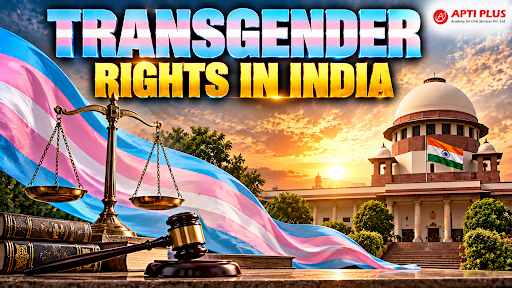
The Supreme Court sought a response from the Union Government on a Public Interest Litigation (PIL) filed by Women's Declaration International India (WDII).
Key Concerns Raised in the Plea
The petition argues that replacing biological sex with gender identity across official documentation dilutes statutory and constitutional rights exclusive to biological women. Key areas highlighted include:
-
Reservations: Impact on women's political reservations and representation (such as in panchayats and local bodies).
-
Prison & Custodial Spaces: Gender-based accommodation arrangements and safety in correctional facilities.
-
Sports: Participation and fairness in women's sporting competitions.
-
Criminal Investigations: Statutory safeguards and procedures reserved for female victims or suspects during police investigations.
What Is The Legal Conflict Between Gender Self-Identification And Biological Sex Protections?
The constitutional conflict centers on the clash between individual gender self-determination under Article 21 and state-sponsored affirmative action for biological women under Article 15(3).
-
The Supreme Court in National Legal Services Authority (NALSA) vs Union of India (2014) interpreted "sex" under Article 15(1) to include gender identity, invalidating invasive surgical prerequisites for legal gender affirmation.
-
Petitioners representing women's groups contend that biological sex is an immutable physical reality that forms the baseline for statutory protections, whereas gender identity reflects an internal psychological self-perception.
-
The legal dispute questions whether trans women (assigned male at birth) who transition officially can claim entry into female-segregated public spaces, women's sports categories, and gender-exclusive statutory protections.
-
Out of an estimated population of over 4.8 lakh transgender persons, only about 30,000 identity certificates have been issued formally.
How Has The Statutory Framework Evolved From NALSA (2014) To The Transgender Persons Amendment Act, 2026?
Decisional Autonomy Regime (2014–2017): The NALSA (2014) ruling established gender self-determination under Articles 14, 19(1)(a), and 21, later reinforced by the nine-judge bench in Justice K.S. Puttaswamy vs Union of India (2017) regarding personal and informational privacy.
Transgender Persons (Protection of Rights) Act, 2019: Section 4(2) recognized self-perceived gender identity for a "transgender certificate," but Section 7 mandated a certificate of Sex Reassignment Surgery (SRS) issued by a Chief Medical Officer (CMO) for recognition as male or female.
Transgender Persons (Protection of Rights) Amendment Act, 2026: Amended Section 2(k) to narrow the transgender definition strictly to socio-cultural groups (such as hijras, kinnars, jogtas) and intersex individuals, deleting the right to self-perceived identity and re-establishing mandatory State Medical Board evaluations.
Statutory Decoupling of Sexual Abuse: The Bharatiya Nyaya Sanhita (BNS), 2023 defines rape under Section 63 as an exclusively female-victim offense carrying a minimum punishment of 10 years, whereas sexual offenses against transgender persons under Section 18(d) of the Transgender Persons Act, 2019 attract a maximum imprisonment of only 2 years.
What Are The Core Constitutional Questions Before The Supreme Court Bench?
Substantive Equality vs Formal Non-Discrimination: The bench is adjudicating whether the fundamental guarantee of equality under Article 14 permits the automatic extension of biological sex-based welfare benefits to self-identified women without formal legislative classification.
Efficacy of Article 15(3) Safeguards: Courts must determine if reserving legislative seats in Panchayati Raj Institutions (PRIs) under Article 243D and the 106th Constitutional Amendment Act (Nari Shakti Vandan Adhiniyam, 2023) permits trans women to contest on female-reserved ballots.
Procedural Safeguards in Criminal Law: Statutes prohibit the arrest of women after sunset and mandate that personal searches or recording of statements be performed solely by female officers; the Court is examining the operational feasibility and safety of applying these mandates to trans women with male anatomy.
Preservation of Female-Only Spaces: Conflict directly impacts sex-segregated facilities, including ward allocation in prisons, access to public toilets, college hostels, and specialized shelters.
What Are The Challenges In Balancing Gender Rights?
Erosion of Female-Specific Affirmative Measures: Absence of distinct legal boundaries allows overlapping claims on affirmative action quotas, reducing targeted opportunities for biological women.
-
Example: Anjali Guru Sanjana Jaan vs State of Maharashtra (2021), the Bombay High Court permitted a trans woman to contest a village panchayat seat designated under female-general reservation under Article 243D, highlighting the absence of distinct statutory categories.
Physical Disparities and Competitive Fairness in Sex-Segregated Arenas: Integrating transitioned individuals into biological female categories raises concerns regarding competitive fairness and physical safety in sports and defense bodies.
-
Example: Anamika vs State of Kerala (2022), the Kerala High Court permitted a trans woman athlete to participate in a district-level women's judo championship due to the lack of an independent transgender competition tier.
Systemic Economic Marginalization and Ineffective Welfare Boards: Over 92% of transgender persons in India remain excluded from formal economic participation, while state welfare boards remain largely non-functional.
-
Example: Jane Kaushik vs Union of India (2025), the Supreme Court rebuked institutional apathy, holding that failure to provide workplace reasonable accommodation and affirmative action reduces statutory protections to a dead letter.
Mechanisms To Resolve The Rights Conflict Between Both Groups
Institutionalize Horizontal Reservation Across Public Employment: Establish compartmentalized horizontal reservations for transgender persons rather than merging them into biological female quotas under Article 15(3).
-
Example: Karnataka Civil Services (General Recruitment) Amendment Rules (2021), Karnataka successfully notified a 1% horizontal reservation for transgender persons across each caste category (SC, ST, OBC, General), preventing quota dilution for biological women
Adopt Objective Segregated Categories in Specialized Arenas: Establish three distinct administrative tiers (Male, Female, Open/Transgender) for contact sports, prison accommodation, and correctional facilities, balancing dignity with bodily safety.
-
Example: Prison Statistics India Guidelines (2020), the National Crime Records Bureau (NCRB) created a separate "Transgender" gender demographic category across prison intake records to prevent cross-housing safety risks.
Harmonize Criminal Law and Penal Disparities: Amend Section 18 of the Transgender Persons Act to align penalties for sexual assault against trans persons with rape provisions under Section 63 of the Bharatiya Nyaya Sanhita, 2023.
-
Example: Yogyakarta Principles Plus 10 (YP+10, 2017), International human rights standards mandate equal penal remedies for gender-based violence without creating lower sentencing tiers for marginalized identities.
Conclusion
Resolving the conflict between gender self-determination and biological women's statutory rights demands an intersectional, differentiated legal architecture that upholds Article 21 personal dignity while preserving Article 15(3) affirmative protections.
Source: THEHINDU
|
PRACTICE QUESTION Q. With reference to the legal framework governing transgender persons in India, consider the following statements:
Which of the statements given above is/are correct? (a) 1 and 2 only (b) 2 and 3 only (c) 3 only (d) 1, 2, and 3 Answer: (b) 2 and 3 only Explanation: Statement 1 is incorrect: In the landmark judgment of National Legal Services Authority (NALSA) vs Union of India (2014), the Supreme Court held that self-determination of gender identity is an integral part of personal autonomy and dignity under Articles 14, 19, and 21 of the Indian Constitution. The Court explicitly ruled that gender identity recognition is not contingent upon mandatory medical interventions, including Sex Reassignment Surgery (SRS) or hormonal therapy. Statement 2 is correct: The National Council for Transgender Persons is a statutory body constituted under Section 16 of the Transgender Persons (Protection of Rights) Act, 2019 to advise the central government, monitor policies, and redress grievances. Statement 3 is correct: In 2021, Karnataka amended the Karnataka Civil Services (General Recruitment) Rules, 1977, becoming the first state in India to grant a 1% horizontal reservation for transgender individuals across General, SC, ST, and OBC categories in state government public employment. |