THE INDIAN EXPRESS: ICJ's Rohingya verdict is not enough (Nov 21)
-
Landmark-Genocide-Ruling – ICJ finds Myanmar guilty of genocide and of violating the 1948 Genocide Convention over its 2016-17 military campaign. It is the first time a state has been so held. The case was brought by The Gambia. Statelessness-Roots – The 1982 Citizenship Law rendered most Rohingya stateless. The 2017 "clearance operations" in northern Rakhine involved mass killings and sexual violence, driving 7,00,000+ into Bangladesh.
-
Specific-Intent-Test – Genocide requires proof of specific intent (dolus specialis). In the 2007 Bosnia v Serbia case, the ICJ held Serbia failed to prevent the Srebrenica genocide (1995) but did not commit it. In the Rohingya case, it held genocidal intent was the only reasonable inference from the evidence. Gaza-Spillover – The ruling may shape South Africa v Israel (Gaza) pending before the ICJ.
-
Enforcement-Gap – Only the UNSC can enforce the verdict, but Russia and China, who arm and diplomatically shield the junta, hold veto power. The outcome may remain a moral victory.
-
Multilateralism-Under-Attack – On the day of the verdict, the US, Russia and China called for UN reform and said the ICC and similar bodies must not abuse jurisdiction. Host-Country-Fatigue – Bangladesh (~1.2 million Rohingya) has not formally recognised them as refugees and restricts movement and employment. Aid is shrinking and camp conditions are worsening. Malaysia is sending victims back and plans to resettle 10,000 in Turkey. India has carried out expulsions.
-
Way-Forward – Countries should pressure Myanmar to implement the court's orders on internal investigations, restitution and compensation.
GS-II: Examine the significance of the ICJ's genocide ruling against Myanmar. Why is enforcing international court verdicts difficult, and what does it imply for India's Rohingya policy? (15M)
THE INDIAN EXPRESS: Both government and industry have to catch up (Nov 21)
-
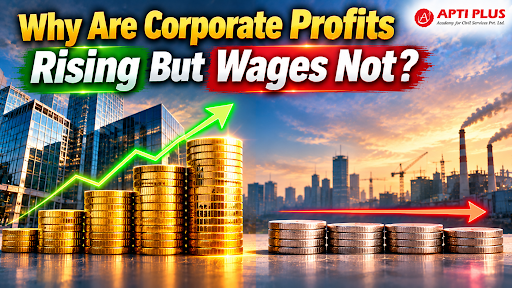
PM-Criticises-India-Inc – Addressing FICCI, the PM said industry did not pass on the benefits of ease of doing business and lower taxes. He cited the ₹12 lakh income tax exemption and the corporate tax cut from 30% to 22%. Stagnant-Wages-and-Jobs – Firms have not raised salaries or employment. The PM described their attitude as "you do it, we will see". Long-Term-Vision-Deficit – Industry is not planning for Viksit Bharat 2047, not studying export demand trends, and underusing FTAs.
-
Repeated-Govt-Complaint – In Sept 2022, FM Sitharaman likened India Inc to Hanuman unaware of his strength, noting firms stayed on the sidelines despite tax cuts and PLI schemes.
-
Economic-Survey-2025-Evidence – The Survey noted corporate profits at a 15-year high while wage growth lagged.
-
Editorial-Prescription – Industry must build productivity and efficiency, expand capacity and target new markets. The Centre and states must pursue deeper reforms and deregulation, ensure policy certainty and build infrastructure to attract global capital.
GS-III: Why have tax cuts and incentives not translated into higher private investment and wages? Suggest measures to improve the government-industry partnership for inclusive growth. (15M)
THE HINDU: Three to tango – Trump, Xi, Putin trilateral summit (Nov 21)
-
First-Trilateral-Summit – The first-ever US-China-Russia summit was held in Shenzhen on Nov 19. It reflects a changing global order and the leaders' wish to stay engaged in an unpredictable world.
-
Nuclear-Arms-Control-Push – New START (US-Russia) expired in Feb 2026. Trump wants China included in talks. The declaration states that "a nuclear war cannot be won and must never be fought", and the leaders agreed to start trilateral nuclear talks.
-
Leaders'-Motives – Trump seeks warhead reduction talks, Xi wants recognition as a peer competitor to the US, and Putin gets a seat at the high table after Western isolation over Ukraine.
-
Yalta-Analogy-Limits – Unlike Yalta (1945), this is not a summit of war victors. It is about great powers setting terms of engagement.No-Breakthrough – There was no progress on nuclear arms reduction, non-proliferation or Ukraine, and no roadmap.
-
Sustainability-Doubt – The "Shenzhen spirit" may not survive a change of US President with a different approach to Russia and China. UN-Reform-Inclusivity – The call for UN reform is welcome, but it must include rising middle powers such as India, South Africa and Brazil.
-
Stability-Value – The framework could bring predictability to great-power relations, important since two of the Big Three are fighting wars.
-
Way-Forward – Draw up a clear roadmap with realistic objectives. Otherwise the summit risks being a diplomatic photo-op.
GS-II: Evaluate the outcomes of the Shenzhen trilateral summit for nuclear arms control and the global order. Why must UN reform include middle powers like India? (15M)