Why In News?
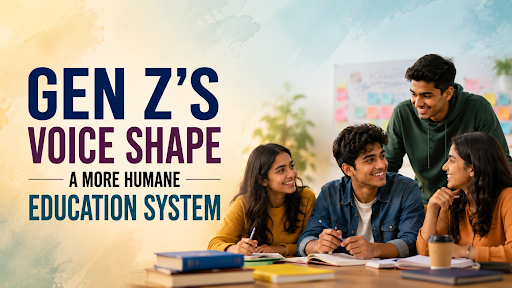
Massive student protests challenge the state's exam-centric machinery, targeting administrative vulnerabilities, frequent paper leaks, and immense psychological pressure on candidates.
What is Meant by a "Humane Education System"?
Public Good: Treats education as a public good that upholds equality, dignity and the Right to Education (Article 21A) while promoting SDG-4 (Quality Education).
-
India has 14.67 lakh schools, 24.72 crore students and 1.03 crore teachers. (Source: UDISE+)
Holistic Evaluation: Shifts from marks and one-time exams to competency-based, continuous and multidisciplinary assessment through projects, portfolios and experiential learning, as recommended by NEP 2020.
Student Well-being: Prioritises mental health, creativity, life skills and socio-emotional learning alongside academic excellence, in line with NEP 2020.
Inclusive & Equitable Learning: Ensures equal opportunities for girls, PwDs, socio-economically disadvantaged groups and rural learners.
Future-Ready Education: Integrates AI, digital literacy, financial literacy, climate education and entrepreneurship to prepare learners for Industry 4.0.
Flexible Learning: Encourages multiple entry-exit, Academic Bank of Credits (ABC) and lifelong learning.
Why Gen Z Demands Educational Reform
Excessive Examination Pressure: High-stakes examinations encourage rote learning, coaching dependence and fail to adequately assess creativity, critical thinking and problem-solving.
Mental Health Crisis: Competitive examinations contribute to stress, anxiety and burnout, demanding institutional counselling and wellness support.
Employability Gap: Despite over 4.5 crore students in higher education, employers continue to report skill mismatches, increasing demand for AI, vocational and industry-linked education.
Demand for Accountability: Students seek encrypted digital question papers, AI-enabled proctoring, strict anti-paper leak laws and regulation of coaching institutes.
Demand for Competency-Based Learning: Preference for application-oriented learning, research, innovation and experiential education over memorisation.
AI & Future Skills: Greater emphasis on AI, coding, data science, cybersecurity, green skills and digital ethics.
Flexible Learning Pathways: Demand for multidisciplinary education, online learning, micro-credentials and multiple entry-exit.
Greater Student Voice: Seeks participation in curriculum design, examination reforms and university governance.
Equity & Accessibility: Calls for reducing the digital divide, language barriers and socio-economic inequalities in education.

Challenges Faced by Indian Education System
Examination-Centric Learning: The one-test-fits-all model prioritises memory over analytical ability, contrary to the competency-based assessment envisioned under NEP 2020 and PARAKH.
Unequal Access: Regional, gender and socio-economic disparities continue despite improvements in enrolment. Secondary GER increased to 71.7% in 2025–26, indicating progress but also the need for better retention. (Source: UDISE+)
Digital Divide: Unequal access to internet, devices and digital infrastructure limits equitable learning, especially in rural and remote areas.
Learning Outcome Gap: Foundational literacy, numeracy and critical thinking remain weak despite higher enrolment, highlighting the need for quality-focused reforms.
Teacher Capacity: Continuous teacher training in AI, digital pedagogy and competency-based education remains inadequate.
Limited Student Participation: Students have limited involvement in curriculum development, assessment reforms and institutional governance.
Weak Mental Health Support: Many institutions lack professional counsellors, wellness centres and structured socio-emotional support systems.
Skill Mismatch: Weak integration of industry, vocational education and apprenticeships reduces graduate employability.
Language & Regional Disparities: Balancing mother-tongue education with global competitiveness remains a policy challenge.
Governance & Accountability: Examination leaks, weak grievance redressal and inconsistent regulatory oversight reduce trust in the education system.

Major Challenges in Implementing Educational Reform
Balancing Excellence & Well-being: Maintaining academic rigour while reducing examination stress remains difficult. NEP 2020 advocates holistic assessment, but implementation requires systemic reforms.
Reducing Examination Stress: Decentralised and competency-based assessments require trained evaluators, robust moderation systems and institutional capacity, which remain uneven across States.
Bridging the Employability Gap: Weak academia-industry linkages and slow curriculum reforms hinder alignment with AI, digital and green economy skill requirements.
Ensuring Equitable Access: Regional, socio-economic and linguistic disparities may widen if decentralisation is not supported by adequate safeguards and funding.
Integrating Technology: Digital assessments risk excluding students lacking internet access, devices and digital literacy, particularly in rural areas.
Teacher Preparedness: Teachers require continuous training in competency-based pedagogy, AI-enabled learning and digital assessment.
Resource Constraints: Limited infrastructure, smart classrooms and ICT facilities affect effective implementation.
Centre-State Coordination: Education being a Concurrent List subject requires strong policy coordination and financial support across governments.
Measures to Build a Humane Education System
Shift Towards Competency-Based Learning: Implement PARAKH, project-based assessment, portfolios, internships and multidisciplinary admissions as envisaged in NEP 2020.
Strengthen Mental Health Support: Establish school counsellors, wellness centres, peer-support systems and teacher training on adolescent mental health under MANODARPAN and school well-being initiatives.
Enhance Student Participation: Institutionalise student councils, curriculum feedback and participatory governance to make education more learner-centric.
Improve Employability: Expand internships, apprenticeships, industry-academia partnerships, vocational education and AI/digital skills, as emphasised in the Economic Survey 2025–26.
Promote Inclusive & Equitable Education: Strengthen Samagra Shiksha, PM SHRI Schools, scholarships and assistive technologies to bridge socio-economic, gender and disability gaps.
Leverage Technology Responsibly: Expand DIKSHA, APAAR ID, adaptive learning platforms and secure digital examination systems while ensuring data privacy and accessibility.
Strengthen Teacher Capacity: Scale up NISHTHA and continuous professional development programmes for digital and competency-based teaching.
Evidence-Based Governance: Use UDISE+, PARAKH, NAS and ASER data for continuous monitoring, learning outcome tracking and policy improvement.
Regulate Coaching Ecosystem: Strengthen regulation of coaching centres through transparent fee norms, grievance redressal and strict compliance with student safety standards.
Conclusion
India must transition from high-stakes, exam-centric testing to a humane, competency-based education system, as aligned with NEP 2020 and PARAKH, to better foster creativity, critical thinking, and student well-being.
Source: THEHINDU
PRACTICE QUESTIONQ. "India's demographic dividend can be realised only through an education system that is inclusive, humane and future-ready." Discuss. 250 words |