Why In News?
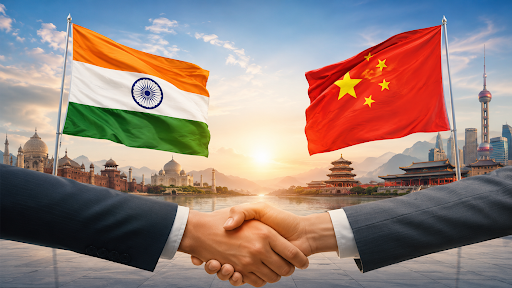
In Manila, Indian External Affairs Minister S. Jaishankar met Chinese Foreign Minister Wang Yi, stating that border peace is a prerequisite for normal ties and stable relations are essential for a multipolar Asia and world.
What is Meant by a Multipolar Asia and a Multipolar World?
Multipolar World: A global system distributes power among several major nations—including the US, China, India, Russia, and the EU—rather than concentrating control under one or two superpowers, thereby preventing unilateral global dominance.
Multipolar Asia: India rejects any hierarchical Asian order where China acts as the sole hegemon, asserting that a true multipolar world requires a multipolar Asia where nations share power equally and maintain strategic autonomy.
Why are India–China Relations Strategically Important?
Two Largest Asian Powers: India and China house the world's largest populations and drive massive economic growth, directly shaping the geopolitical trajectory of the "Asian Century" and global stability.
Regional Stability: Peaceful bilateral relations prevent destabilizing arms races and protect smaller South Asian neighbors from regional conflicts across the Indo-Pacific.
Global Economic Significance: Bilateral trade reached $151.10 billion in FY 2025/26, with China acting as a critical supplier of machinery and raw materials for Indian and global manufacturing.
Multilateral Collaboration: Both nations champion the developing world and coordinate policies on climate change, trade, and global governance within BRICS, SCO, and the G20.

What Were the Key Messages from Jaishankar's Meeting with Wang Yi?
Prerequisite of Border Peace: India demands absolute peace and tranquility along the Line of Actual Control (LAC) as the non-negotiable foundation for normalizing ties.
The Three Mutuals: A stable relationship relies strictly on mutual respect, mutual interest, and mutual sensitivity to foster a multipolar Asia and world.
Economic Rectification: India demands fair market access to correct the massive trade imbalance and calls for predictable supply chains to safeguard domestic industries.
Gradual Normalisation: Following the Kazan leadership meeting in October 2024, both nations welcome the resumption of direct flights, the Kailash Mansarovar Yatra, and border trade.
What are the Major Challenges in India–China Relations?
Boundary Dispute: Despite military disengagement at Depsang and Demchok in October 2024, heavy troop deployments and deep mutual mistrust persist along the Line of Actual Control (LAC).

Indo-Pacific Competition: China expands its naval footprint in the Indian Ocean via the "String of Pearls" strategy, prompting India to strengthen ties with the US, Japan, and Australia through the Quad alliance.
Unsustainable Trade Deficit: India's trade deficit with China exceeded $112 billion in FY 2025/26, creating a severe economic imbalance.
Sovereignty Violations: The China-Pakistan Economic Corridor (CPEC), a key component of China's alliance with Pakistan, directly violates Indian sovereignty by passing through Pakistan-occupied Kashmir (PoK).
Supply Chain Vulnerabilities: India relies heavily on China for green technology, battery components, and Active Pharmaceutical Ingredients (APIs), especially as China controls over 80% of global solar module manufacturing.
Why are Stable India–China Relations Important for India?
Resource Optimization: Peaceful borders allow India to redirect vital resources toward domestic development and economic growth rather than preparing for a two-front war.
Industrial Growth: Indian manufacturers require cost-effective Chinese components to scale up the "Make in India" initiative successfully.
Supply Chain Resilience: Predictable ties protect India's electronics, solar, and automotive sectors from sudden supply shocks, supported by India's policy allowing up to 10% passive Chinese ownership.
Global Climate Action: Joint cooperation at the UNFCCC enables both nations to lead global negotiations on urban resilience, green finance, and disaster management.
Strategic Autonomy: Managing ties with China peacefully preserves India's strategic autonomy, allowing robust engagement with Western partners without joining subordinate military alliances.
What Measures Can Strengthen India–China Relations?
Respect Border Pacts: Both nations must strictly respect the 2024 disengagement pacts and reject unilateral attempts to alter the status quo along the LAC.
Empower Diplomatic Channels: India and China must accelerate boundary negotiations by fully utilizing the SR and WMCC frameworks.
Provide Market Access: China must grant fair, non-discriminatory market access to Indian IT services, pharmaceuticals, and agricultural products.
Enhance Military Communication: Armed forces must strengthen confidence-building measures and transparent communication to prevent tactical misunderstandings.
Expand Track 1.5 and 2 Dialogues: Both countries must collaborate on clean energy transitions and disaster-resilient infrastructure through informal and academic exchanges.
Facilitate People-to-People Ties: Normalizing the visa regime, expanding direct flights, and ensuring smooth operations of the Kailash Mansarovar Yatra will rebuild cultural trust.
Share Trans-border Water Data: Resuming transparent hydrological data sharing for trans-boundary rivers like the Brahmaputra ensures effective flood management.
Advocate for the Global South: Jointly demanding reforms in the UN Security Council and the IMF secures a stronger voice for developing nations.
Depoliticize Supply Chains: Implementing clear foreign direct investment guidelines, such as India's March 2026 policy tweaks, enables safe technology and capital flows.
Conclusion
A stable, mutually respectful India-China partnership remains the indispensable bedrock for securing a balanced multipolar Asia and an equitable multipolar world.
Source: thehindu
|
PRACTICE QUESTION Q. "Stable India–China relations are essential not only for bilateral interests but also for the emergence of a multipolar Asia and a balanced global order." Discuss. 250 words |