Why In News?
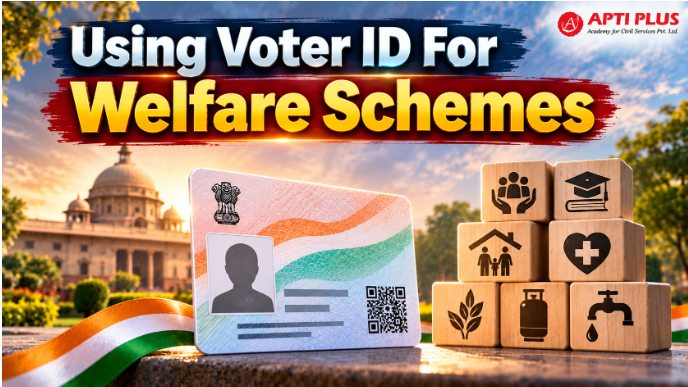
The Union Panchayati Raj Minister announced a proposed shift to use biometric authentication paired with Electors Photo Identity Card (EPIC) numbers instead of Aadhaar as the primary basis for processing beneficiary payments.
What Was Proposed?
The Initial Remarks
-
Questioning Aadhaar: At a national workshop on the People's Plan Campaign 2026–27, the minister argued that Aadhaar enrolment is widely available and that cards can be obtained too easily, making it less reliable as the main identifier for payments.
-
Voter ID Plus Biometrics: He said beneficiaries of financial assistance under the Ministry of Panchayati Raj schemes would need to provide their EPIC number along with mandatory biometric authentication.
About EPICAn EPIC stands for Electors Photo Identity Card number, commonly known as a Voter ID number.
|
The Clarification
-
Limited Scope: The minister later said the arrangement concerns the Pradhan Mantri Viksit Gram Swaraj Yojana, which provides training and guidance to panchayat representatives and others linked to local government.
-
Aadhaar Retained: He clarified that identities would be verified through EPIC numbers alongside Aadhaar-based biometric authentication, not by replacing Aadhaar altogether.
-
Stated Aim: He said the goal is to ensure benefits reach legitimate recipients directly, without intermediaries misusing the system.
What Remains Unclear
-
No Universal Rule Announced: The minister's remarks did not name all affected schemes, set an implementation date or establish a nationwide change in policy.
-
Other Ministries: Major cash-transfer schemes for agriculture, housing and social security are run by other ministries, where Aadhaar-based systems remain in place.
EPIC vs Aadhaar
|
Elector’s Photo Identity Card (EPIC) |
Aadhaar |
|
|
Full Form |
Elector’s Photo Identity Card (Commonly known as the Voter ID Card). |
Aadhaar (Meaning "Foundation"). |
|
Issuing Authority |
Election Commission of India (ECI), an independent constitutional body under Article 324. |
Unique Identification Authority of India (UIDAI), a statutory body under MeitY. |
|
Legal Framework |
Representation of the People Act, 1950 & 1951 read with Registration of Electors Rules, 1960. |
Aadhaar Act, 2016 (Targeted Delivery of Financial and Other Subsidies, Benefits and Services). |
|
Primary Purpose |
To establish electoral identity, facilitate voting, and prevent impersonation during elections. |
To facilitate targeted delivery of government benefits, subsidies, and digital identity verification. |
|
Eligibility |
Indian Citizens only who are aged 18 years or above. |
All Residents of India (including foreign nationals) who have resided in India for 182 days or more in the preceding year. |
|
Identification Format |
A 10-digit alphanumeric unique identifier. |
A 12-digit random numeric unique identification number. |
|
Data Embedded |
Demographic details, photograph, constituency, and polling station info. |
Demographic data along with core biometric data (iris scans and fingerprints). |
|
Proof of Citizenship? |
No. While only citizens can register, a high court ruling clarified that Voter ID itself is not conclusive absolute proof of citizenship. |
Strictly No. It explicitly acts only as a proof of identity and residence, not nationality or citizenship. |
What Is The Legal And Constitutional Framework?
Elections
-
Article 326: Elections are based on universal adult suffrage: every citizen aged 18 or above can vote unless disqualified by law.
-
Election Laws (Amendment) Act, 2021: Amended the Representation of the People Act, 1950 to allow voluntary linking of Aadhaar with electoral rolls to remove duplicate entries.
-
Voluntary Linking: The Election Commission told the Supreme Court in 2023 that providing Aadhaar is not mandatory for voter registration.
Welfare Delivery
-
Aadhaar Act, Section 7: Allows the government to require Aadhaar for subsidies, benefits and services funded from the Consolidated Fund of India.
-
Puttaswamy (Aadhaar) Judgment (2018): The Supreme Court upheld Aadhaar for welfare schemes and PAN linkage, but struck down its mandatory use by private companies. It also said no one should be denied benefits for failing authentication.
-
Right To Privacy: K.S. Puttaswamy vs Union of India (2017) declared privacy a fundamental right under Article 21.
-
Right To Food: In PUCL vs Union of India (2001), the Supreme Court treated the right to food as part of Article 21, which later led to the National Food Security Act, 2013.
Data Protection
-
DPDP Act, 2023: The Digital Personal Data Protection Act, 2023 governs how personal data is collected and used, including by government agencies.
Why Use Voter IDs For Beneficiaries Identification?
Arguments In Favour
-
Stronger Verification: Using two identifiers, EPIC plus Aadhaar biometrics, may make it harder to create fake or duplicate beneficiaries.
-
Curbing Middlemen: The government argues that tighter checks can stop intermediaries from siphoning off benefits.
-
Relevance For Panchayat Schemes: For schemes aimed at elected panchayat representatives, voter registration is directly relevant, as these representatives are part of the electoral system.
-
Concerns About Aadhaar Fraud: Some officials argue that weaknesses in Aadhaar enrolment have allowed fake documents in certain cases.
Concerns Over Using Voter IDs for Welfare Delivery
Different Purposes, Different Populations
-
Not Everyone Can Have A Voter ID: Welfare schemes cover children, some non-citizen residents and others who are not eligible to vote. EPIC covers only adult citizens on the electoral roll.
-
Identity vs. Entitlement: An identity document only verifies a person. Making voter registration a condition for benefits would effectively change who is entitled.
Risk Of Exclusion
-
Deletions From Rolls: If electoral roll errors or deletions affect welfare access, people could lose benefits through no fault of their own.
-
Example: During the 2025 Special Intensive Revision in Bihar, over 65 lakh names were removed from the draft electoral roll. The Supreme Court ordered the Election Commission to publish the names and reasons and to accept Aadhaar and EPIC for objections.
Blurring Electoral And Welfare Systems
-
Separation Of Functions: The Election Commission, a constitutional body under Article 324, manages electoral rolls independently, while welfare is run by ministries. Linking them may blur this separation.
-
Fear Of Political Misuse: Critics fear voter data could be used to target or exclude groups. The government rejects these claims.
Privacy And "Function Creep"
-
Function Creep: Using an ID for purposes beyond its original intent, known as function creep, raises privacy concerns.
-
Database Linking: Linking voter and welfare data could create detailed profiles of citizens.
What Are The Key Challenges?
Exclusion Of Vulnerable Groups
-
Those Without EPIC: Children, migrants registered elsewhere, homeless people, some transgender persons and people missing from rolls may lack valid voter IDs.
-
Authentication Failures: Even Aadhaar-based systems have excluded people due to biometric or network failures.
-
Example: In 2017, reports from Jharkhand linked a child's death from hunger to the cancellation of her family's ration card for not linking it with Aadhaar. The case highlighted the human cost of rigid identity requirements.
Errors In Electoral Rolls
-
Duplicate And Wrong Entries: Electoral rolls have faced issues such as duplicate EPIC numbers and wrong deletions.
-
Migrants: Migrant workers registered in their home villages may struggle to access benefits where they live.
Legal And Constitutional Questions
-
Basis In Law: The Aadhaar Act provides a specific legal framework for welfare use. There is no equivalent law that clearly authorises using EPIC as a welfare identifier.
-
Puttaswamy Tests: Any linking must meet the legality, necessity and proportionality tests laid down by the Supreme Court.
Privacy And Data Security Risks
-
Data Leaks: Linking large databases increases the risk of breaches and misuse.
-
Global Lessons: National ID systems without strong safeguards face legal challenges.
-
Example: In 2021, Kenya's High Court declared the rollout of its Huduma Namba digital ID unlawful because it was implemented without a proper data protection impact assessment
Political Polarisation And Trust Deficit
-
Erosion Of Trust: Disputes over electoral rolls and welfare linkages can reduce public trust in both elections and welfare systems.
-
Policy Confusion: Conflicting statements create uncertainty among beneficiaries and officials.
Administrative Burden
-
Extra Paperwork: Requiring multiple IDs can add hurdles for poor and less-literate beneficiaries.
-
Capacity Gaps: Panchayats and local offices may lack the staff and equipment for multiple verification steps.
Weak Grievance Redressal
-
Slow Remedies: People wrongly denied benefits often face slow, complicated complaint processes.
-
No Offline Alternative: Without fallback options, technical or documentary problems can lead to denial of essential support.
What Is The Way Forward?
Keep Electoral And Welfare Systems Separate
-
Clear Boundaries: Electoral registration should not become a condition for welfare entitlements, as welfare covers many people who cannot vote.
-
Protect ECI's Role: Respect the Election Commission's independent control over electoral rolls under Article 324.
Ensure A Clear Legal Basis
-
Legislate, Don't Improvise: Any new identification requirement for welfare should be backed by clear law and notified rules, not announced informally.
-
Meet Constitutional Tests: Follow the Puttaswamy standards of legality, necessity and proportionality.
Offer Multiple, Flexible ID Options
-
Choice Of Documents: Allow beneficiaries to use any of several valid IDs, such as Aadhaar, EPIC, ration card or MGNREGA job card.
-
No Denial For Authentication Failure: Provide offline alternatives when biometrics or networks fail, as the Supreme Court emphasised.
Strengthen Data Protection
-
Implement The DPDP Act Fully: Apply the DPDP Act, 2023 strictly to government databases.
-
Impact Assessments: Conduct privacy impact assessments before linking databases.
-
Learn From Global Practice: Trusted digital ID systems depend on strong safeguards.
-
Example: Estonia's digital ID system lets citizens see which officials accessed their data and why, building public trust through transparency.
Improve Electoral Roll Accuracy Transparently
-
Transparent Revision: Publish deletion lists with reasons and allow easy objections, as the Supreme Court directed during the Bihar SIR.
-
Inclusive Registration: Run special drives for migrants, women, transgender persons and marginalised groups.
Fix Leakages Through Better Systems
-
Targeted Audits: Tackle fake beneficiaries through social audits, field verification and data analytics, rather than broad new requirements.
-
Example: Social audits under MGNREGA, pioneered in Andhra Pradesh and Rajasthan, have exposed fraud through community verification of records without excluding genuine workers.
Build Trust Through Dialogue And Grievance Redressal
-
Consultation: Discuss major identity policy changes with States, the Election Commission, Parliament and civil society.
-
Fast Grievance Systems: Create quick, accessible complaint mechanisms, with time limits for restoring wrongly denied benefits.
-
Clear Communication: Issue official clarifications quickly to prevent confusion among beneficiaries.
Conclusion
The debate over using voter IDs for welfare centres on a basic distinction: an identity document should help verify people, not decide who deserves support. Supporters see stronger verification as a way to curb fraud, while critics fear exclusion, privacy risks and the blurring of electoral and welfare systems. A fair approach would keep the two systems separate, rest on clear law, offer flexible ID options, protect data and ensure that no eligible person is denied their entitlements.
Source: TIMESOFINDIA
|
PRACTICE QUESTION Q. An identity document should verify a person, not determine entitlement. Discuss in the context of using voter IDs for welfare delivery. (10 Marks, 150 Words) |