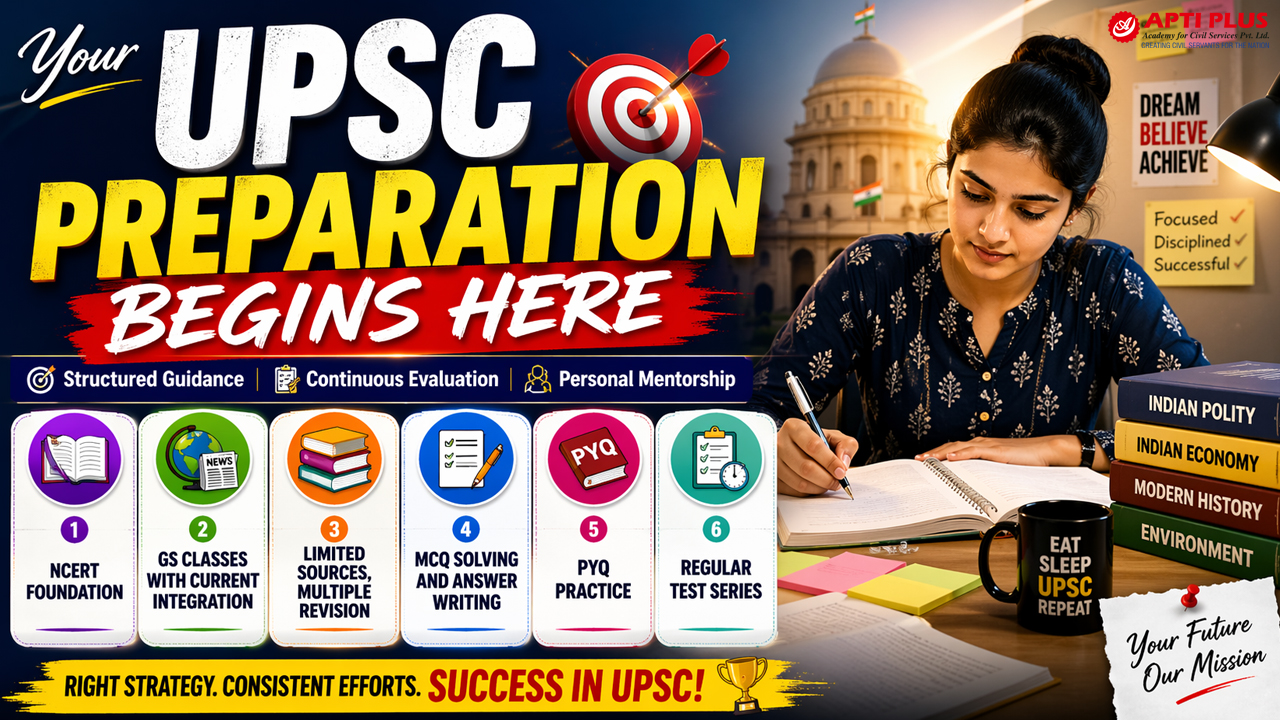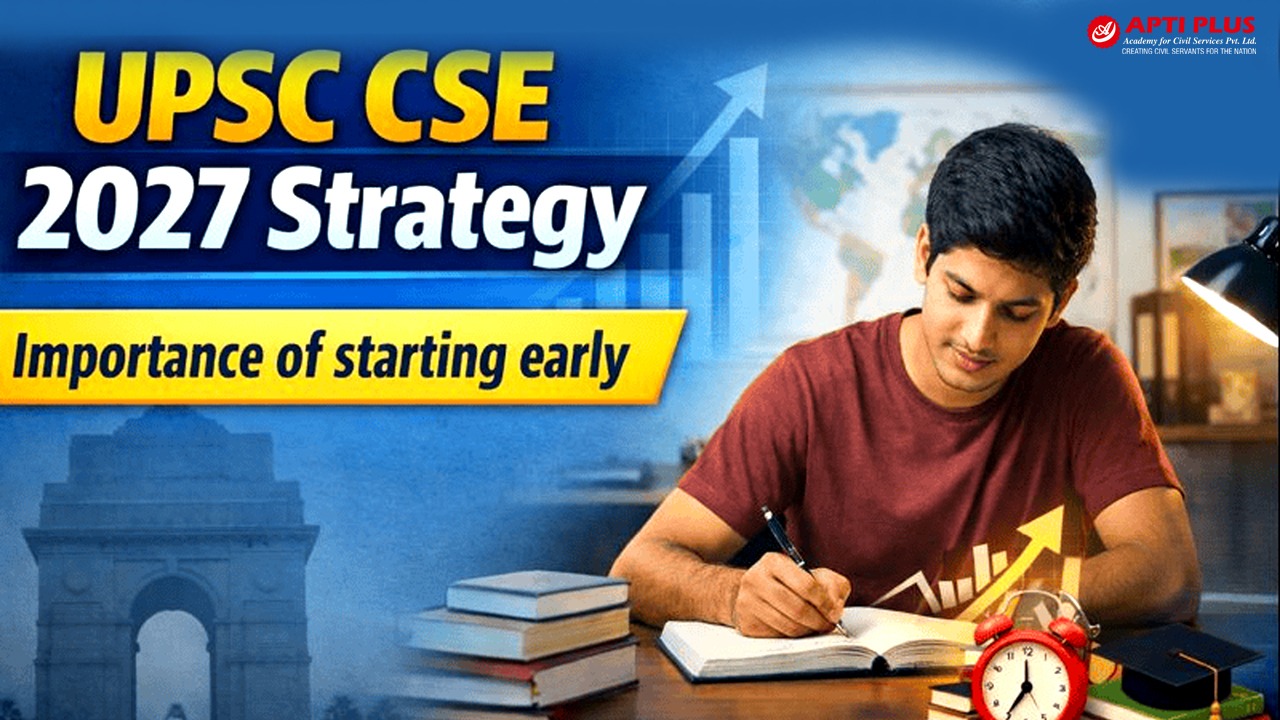
The UPSC CSE is considered the toughest exam in India. Every year, lakhs of students try for only a few hundred seats. This makes UPSC a test of time, planning and steady hard work. For students who are aiming for UPSC CSE 2027, the most important question is not which book to read first, but when to start. If you are from Kolkata or Bhubaneswar and want to crack UPSC in your first attempt, early preparation becomes your biggest strength.
UPSC CSE 2027 Preparation: Understanding the Scale of Competition
Every year, around 8–10 lakh aspirants register for UPSC CSE. Out of them, only about 4–5 lakh appear for Prelims. Nearly 12–15 thousand reach Mains, around 2–3 thousand face the Personality Test and finally only about 900–1,000 candidates are selected.
This means the success rate is barely 0.1–0.2%.
With such tough competition, UPSC 2027 preparation strategy cannot depend on last-minute coaching or short crash courses. What really helps is regular study over time, proper revision, guided answer writing and strong mentorship.
UPSC Syllabus 2027: Why It Demands Early and Systematic Preparation
The UPSC syllabus is very large and deep. Subjects like Polity, Economy, History, Geography, Ethics, Science & Technology, Environment, Optional Subject, Essay and Current Affairs need deep understanding, repeated revision and regular writing practice.
Just reading is not enough.
Retention, analysis and clear expression are equally important. This is why UPSC foundation courses, 2-year programmes and early-start batches are becoming the choices of UPSC CSE 2027 and 2028 aspirants.
Early preparation gives enough time for NCERT foundation building, understanding PYQs, linking current affairs, answer writing practice, mock test feedback and optional subject completion.
UPSC CSE 2027 Strategy: Stage-Wise Approach
Stage 1 – Foundation Building (2026): The Smart Base Phase
This phase is the most powerful differentiator in UPSC CSE 2027 preparation. Most aspirants rush into advanced books before clearing fundamentals … and that’s where they fall behind.
What High-Performing Aspirants Actually Do
-
Layered Reading Rather Than Linear Reading:
- Begin with NCERTs (Class 6–12) for History, Geography, Polity, Economics, Science & Tech and Culture.
- Instead of skimming these books, annotate and revise them at least twice before moving to advanced texts. Toppers emphasise that NCERTs are the real foundation … the advanced books only deepen what NCERTs introduce.
-
Build Your Integrated Notes Early:
As you read, create notes that connect static topics with current affairs even at this stage … e.g., relate Budget highlights to Indian Economy concepts you study in NCERTs.
-
Newspaper Reading With Purpose:
Daily reading of The Hindu or Indian Express isn’t just ritual … it’s context building. Successful aspirants read with a question-driven mindset: ask “why does this news matter for UPSC?” and note implications in your GS and Ethics notes.
-
PYQs Start Early:
Right from Stage 1, integrate Previous Year Questions (PYQs). Don’t wait for “later stages” … analyzing PYQs helps you understand what UPSC actually asks rather than what you think UPSC should ask.
-
Early Answer Writing Initiation:
Even light answer writing (1–2 questions daily) signals your brain to think in UPSC style … structured answer format (Introduction, Body, Conclusion) … and avoid the “rote info dump” most aspirants fall into.
APTI PLUS’s 1-Year Integrated Programme becomes powerful in Stage 1 because it aligns your UPSC, WBCS and OPSC foundations simultaneously, saving time and preventing siloed study later.
Common Mistake Aspirants Make: Starting advanced books (like Laxmikanth or Spectrum) before slowing down to master NCERTs.
Stage 2 – Consolidation (2026): The Performance Build-Up Phase
Once fundamentals are solid, this phase transforms “knowledge” into “exam-ready understanding”.
Competitor Insights: What Toppers and Institutions Emphasise
-
Revision First, Discovery Later:
High performers and coaches consistently plan multiple revisions right after the first round of reading. Revision isn’t just re-reading … it’s self-testing and note refinement.
-
Selective Resource Strategy:
Instead of collecting dozens of books, toppers use limited but deep resources. Quality over quantity prevents confusion and enhances retention.
Typical sequence many successful aspirants favour:- NCERT (revised)
- Standard references (like Laxmikanth, Spectrum, Ramesh Singh)
- PYQ compilations
- Monthly compilations by trusted publishers
-
Structured Mock Integration:
Begin topic-wise Prelims test drills right in this phase to gauge understanding. Don’t wait for full syllabus completion. Early testing reveals gaps and builds exam temperament.
-
Note Consolidation Instead of Proliferation:
Your notes must evolve … what you wrote in Stage 1 should be refined, reorganised and interlinked with current affairs, exams and PYQs in this stage.
-
Optional Stabilisation:
One major difference between successful academy strategies and average self-study is when to choose optional. Competitors recommend:
- Explore 2–3 options (both overlap with GS and interest-based)
- Attend demo lectures or modules
- Finalise the one with the best guidance quality
APTI PLUS uses demo evaluations and mentor discussions to help aspirants choose right and early, eliminating wasted months of backtracking.
Stage 3 – Prelims & Mains Sharpening (2026–2027): The Zero Error Phase
This phase is where most aspirants panic; high calibre aspirants execute.
Strategic Techniques Toppers Use (Not Common Advice)
-
30–40 Mock Tests Before Prelims:
Top aspirants often solve this number of full mock tests before Prelims … not 5–10. This builds speed, accuracy, MCQ strategy, elimination skills and confidence.
-
Grade-Based Revision Cycles:
Divide your syllabus into A/B/C categories:
- A: high-weight, high-frequency topics (Polity, Economy basics)
- B: moderate weight but scoring with examples
- C: niche topics that need only selective revision
Target A topics first and revise them repeatedly.
-
Integrated Static + Current Strategy:
Simply reading current affairs isn’t enough. Top strategies link every news to the static syllabus … not as facts, but as examples, analysis, cause-effect insights … for both Prelims and Mains.
-
Answer Banks & Thematic Answers:
Create thematic answer banks (Climate change, Governance, Economy reforms, Social justice) so your Mains answers have ready, refined content with examples, data, government schemes and critical analysis.
-
Mock Review & Gap Mapping:
For each mock test:
- Document mistakes
- Find recurring weak areas
- Revise that topic within 48 hours
This interval review prevents repeated errors … a strategy top coaching mentors insist on.
Competitive Optional Subject Strategy for UPSC 2027
Optional subject is not just a Mains segment … it is often a score differentiator.
Strategic Mistakes Most Aspirants Make
- Choosing optional by popularity rather than fit
- Ignoring overlap with GS papers
- Jumping into optional with weak guidance
Toppers & Competitor Strategies
Top performers recommend:
- Interest + Overlap: Choose a subject you find intellectually engaging and overlaps with GS topics. This saves revision time.
- Quality Mentorship: Join specialised optional coaching where mentors have proven track records, not random lecture series.
- Balanced Workload: Allocate specific hours daily/weekly for optional from early Phase 2 … not late.
- Matrix for Selection: Evaluate optional on:
- your interest
- syllabus overlap
- availability of good mentors
- resources & test series quality
Using such a matrix improves success probability significantly.
Current Affairs Strategy
A major gap in most aspirant strategy is treating current affairs as “information” rather than material for thought and Mains answers. Successful aspirants:
- read daily The Hindu or Indian Express with a theme-based frame
- map current issues to static topics immediately
- make micro-notes instead of long pages of notes
- revise these micro-notes weekly
- use PYQ-driven filters … if a topic hasn’t come in last 10 years, deprioritize unless important
This issue-based current affairs technique is widely recommended by toppers and academy strategies alike.
Enroll in Best UPSC CSE Test Series for 2027 & 2028
A strong UPSC CSE test series is vital for success. The best UPSC test series for 2027 and 2028 should include prelims practice questions, full-length mains tests, sectional tests, essay writing tests and detailed feedback. A good test series strengthens confidence, improves accuracy, sharpens time management and helps you identify weak areas early. Combining a quality test series with regular study and early preparation builds real exam readiness and boosts your chances of success in both UPSC CSE 2027 and 2028.
The NISHCHAY Prelims Test Series and UTKRISHTI Mains Test Series for UPSC CSE 2027 are built around high-quality, UPSC-standard questions curated and reviewed by UPSC toppers and senior mentors. Each test is followed by detailed model answers and explanations
Answer Writing
Advanced UPSC strategy requires:
- Constructive frameworks for each GS paper
- Enhancing answers with examples, government schemes, data, ethics linkages
- Using pre-structured templates
- Practising under strict time conditions
- Peer review + mentor evaluation
Toppers repeatedly cite answer writing as the defining skill that separates top ranks from near misses.
Interview Stage Strategy … More Than Personality
Top interview performance comes from:
- Regular mock interviews
- Staying updated till D-day
- Revisiting your DAF with deep self-reflection
- Practising with varied panel styles
- Maintaining calm, not ego
Mental Resilience and Discipline … Tactics Successful Aspirants Follow
The long UPSC journey demands mental toughness. Among proven strategies:
- Disciplined schedules (8 hours focused study with breaks) outperform erratic long hours.
- Regular exercise, meditation and social breaks improve retention and reduce burnout.
- Positive mindset and consistency are as crucial as academic strategy.
This is why top aspirants treat UPSC as a multi-year marathon, not a sprint.
What Makes Our 1-Year UPSC Integrated Classroom Programme the Best Choice
At APTI PLUS, the 1-Year Integrated Classroom Programme is designed by keeping in mind the common syllabus of UPSC, WBCS and OPSC. Instead of joining separate courses, aspirants get complete preparation in one programme, saving time and cost.
The strength of this programme lies in expert faculty and strong mentorship. Aspirants receive guidance from UPSC, WBCS and OAS toppers, retired officers, senior Delhi-based faculty and subject experts with 25+ years of experience.
More than 850 hours of classroom teaching cover everything from NCERT basics to advanced GS and optional topics.
Current affairs are regularly updated and recorded classes help students stay on track. A strong test system supports learning, with 5000+ prelims questions, 30+ mains tests, essays and expert feedback.
Answer writing is given high priority with regular practice and enrichment sessions to help students write clear, structured and high-scoring answers.
Daily Workbook practice with Samiksha at the end makes learning practical and exam-focused from the very first day.
Success Stories That Prove Early Preparation Works
Rajdeep Ghosh, an APTI PLUS classroom student, secured AIR 789 in UPSC CSE 2024 and Rank 72 in WBCS 2022 in the same year.
Ritika Rath, another classroom student, secured AIR 48 in UPSC CSE 2024.
Both started their preparation early and followed a disciplined strategy with APTI PLUS guidance. Their journeys clearly show that UPSC rewards long-term effort, not last-minute study.
UPSC 2027 Preparation Strategy: What Early Starters Do Differently
Students who start early study in a planned way. They complete NCERTs calmly, revise books many times, practice hundreds of Mains answers, take multiple mock tests, develop interview maturity and improve through mistakes.
Late starters struggle to finish the syllabus, while early starters focus on refinement, revision and value addition. This is why early preparation for UPSC CSE 2027 is strongly recommended by toppers and mentors.
Best IAS Coaching in Kolkata and Bhubaneswar: Why Location No Longer Limits Success
Earlier, many aspirants believed they had to go to Delhi for UPSC coaching. Today, this is no longer true. Students now get Delhi-level faculty, hybrid learning and topper mentorship in their own cities. APTI PLUS IAS Coaching in Kolkata and Bhubaneswar provide experienced faculty from Delhi, classroom UPSC coaching, hybrid online–offline UPSC courses, UPSC foundation batches for 2027 and 2028, mentorship by UPSC toppers, structured study plans, Prelims and Mains answer-writing practice and interview guidance. Preparing from your home city saves money, time, stress and energy. Most importantly, it gives more time to study, which is the real key to success in UPSC.
In final words.. UPSC CSE 2027: Start Early, Choose Right, Stay Ahead
If you are serious about UPSC CSE 2027 or 2028, the best decision is to start now.
Early preparation improves understanding, revision, answer writing and interview readiness.
With APTI PLUS IAS Coaching in Kolkata and Bhubaneshwar, aspirants get strong guidance without leaving their home city.
The earlier you start, the stronger your foundation becomes and the stronger your foundation, the higher your chances of success.
Seats for UPSC 2027 batches are limited. Join APTI PLUS IAS Coaching in Kolkata or Bhubaneswar today and turn your early preparation into a success story like Rajdeep Ghosh or Ritika Rath!