UPSC CSE 2025 Results Out 🎉 Congrats to our achievers: AIR 100 Sattwik Satyakam Devta, AIR 217 Ankit Agrawal & more. Proud of all successful WBCS 2023 students, including Manami Sarkar (Rank 32) & Pranito Baidya (Rank 43). 🔔New UPSC, Integrated ,OPSC & WBCS Batch starts 10th June @Kolkata & 3rd June @Bhubaneswar🔔

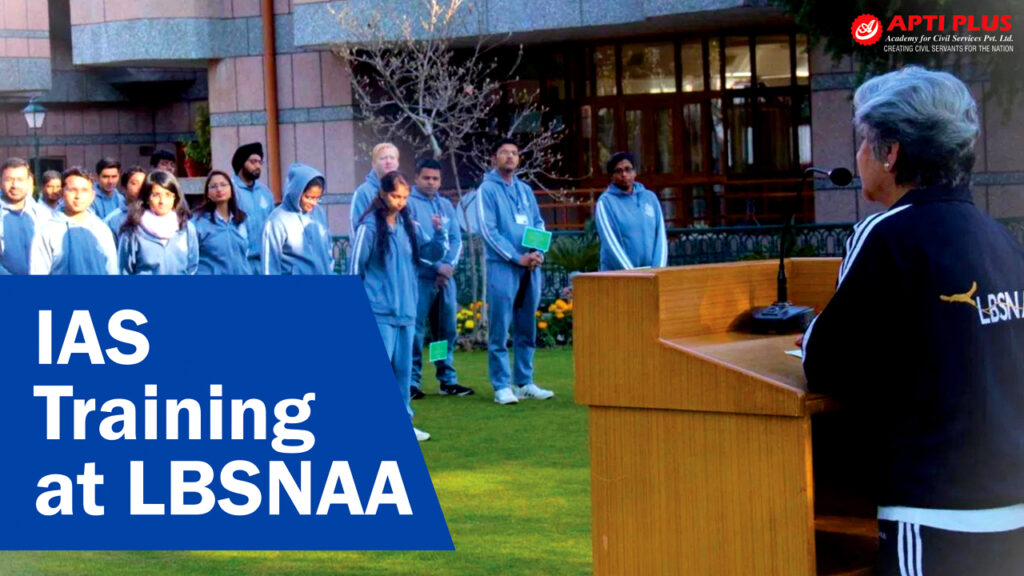
IAS TRAINING AT LBSNAA

IAS TRAINING AT LBSNAA

What is LBSNAA and why is it important? LBSNAA (Lal Bahadur Shastri National Academy of Administration) in Mussoorie is India’s top training institute for civil services. It is run under the Department of Personnel & Training (DoPT), Government of India and headed by a Director, who is of the rank of Secretary to the Government of India. It conducts a Foundation Course for new officers of All India Services, Indian Foreign Service, Group ‘A’ services and even Royal Bhutan Service. After the Foundation Course it gives professional training for IAS officers and Royal Bhutan Service members. It also organizes Mid-Career Training Programmes (MCTPs) for IAS officers, Induction Training for State Civil Service officers promoted to IAS and various workshops and seminars on governance and policy. Training Needs Assessment The Academy regularly updates training programmes through committees and study groups. Some key committees include: UC Agrawal Committee (1984):Focused on problem-solving and creative thinking. Ramesh-Lahiri-Patnaik Committee (1996):Updated training syllabus. Surindernath Committee (2003):Suggested using appraisal reports for training needs. Yugandhar Committee (2003):Improved in-service training. V.V. Ayyar Committee (2007):Recommended syllabus changes. K. Alagh Committee (2009):Suggested major reforms in mid-career training. Kiran Aggarwal Committee (2014):Suggested cadre allocation reforms and course improvements. LBSNAA constantly improves its courses based on expert advice, officer feedback, and government needs, ensuring officers are trained to serve the nation effectively. Duration of IAS Training Training for a new IAS officer usually spans about two years, and is divided into clear parts. These are run by the Academy and the Department of Personnel & Training (DoPT). Here is the simple sequence you will typically follow: Foundation Course (FC)– multi-service, multi-disciplinary start. IAS Phase I at LBSNAA – classroom + study tours. District Training in your cadre (state/UT) – learning by doing. IAS Phase II at LBSNAA – sharing field experiences and advanced inputs. In-service learning continues including Mid-Career Training Programme (MCTP) later in your career. Note: Exact calendars can vary by batch and year; LBSNAA publishes training calendars that show dates, durations, and course names. Training Phases in Detail Foundation Course (FC) Duration: ~15–16 weeks. Includes trainees from IAS, IPS, IFS (Forest), IRS, and other services. Subjects: basics of Public Administration, Law, Economics, Indian Constitution and Management. Activities: group work, physical training, cultural events, trekking and village visits. Aim: Build a shared identity as civil servants. IAS Phase I Training Duration: ~12 weeks academic + 7 weeks Bharat Darshan. Subjects: Law, Economics, ICT, Management, Indian Constitution, Public Administration, Behavioral Sciences, and regional language proficiency. (Approx. 400 teaching hours). Bharat Darshan: A nationwide study tour covering nearly 20,000 km. Trainees meet leaders, visit PSUs, NGOs, border areas, and projects. Highlights include: Meeting the President of India. One-week assignment at the Lok Sabha Secretariat in Delhi. Co-curriculars: treks, literary festivals, theatre workshops, inter-service cultural meets (SANGAM). Zonal Days: Batchmates showcase the culture and food of their allotted cadres. District Training Duration: ~1 year in the officer’s allotted cadre (state/UT). Trainees work with Collectors, SDMs, BDOs, and Tehsildars. Tasks: handle land records, revenue collection, law and order duties, social schemes, and village studies. Purpose: Learn the ground realities of governance—how policies impact citizens. IAS Phase II Training Duration: ~2 months back at LBSNAA. Activities: Reflection on district training experiences. Case studies on governance and law & order. Sessions on policy design, ethics, finance, and technology. Seminars with experts. Aim: Prepare officers for sub-divisional postings(as SDO/ACM). Assistant Secretaryship (Central Posting) Duration: ~13 weeks. Conducted in Delhi. Trainees work in Central Government Ministries as Assistant Secretaries under Joint Secretaries. Purpose: Give officers early exposure to national-level policymaking before returning to their states. Mid-Career Training Programme (MCTP) After some years in service IAS officers attend Mid-Career Training at different seniority levels. MCTP provides updated knowledge on policy, public finance, leadership, technology and sectoral issues. It may include domestic and international components depending on the phase and policy at that time. The programme is structured and mandatory as per Government policy. Daily Routine at LBSNAA A day at the Academy is tightly structured to instill discipline. 6:00 AM: Physical Training (yoga, running, horse-riding, or sports) at Polo Ground. 7:30–9:00 AM: Breakfast & preparation. 9:30 AM–4:00 PM: Six classroom sessions (each 55 minutes). Subjects include economics, law, history, political science, management, ICT. 5:00–7:30 PM: Sports and riding activities. Evening: Cultural events, debates, or film screenings. Weekends: Treks, river rafting, rock climbing, paragliding, or excursions. Facilities and Support Classrooms & Academic Buildings Equipped with modern audio-visual tools, video conferencing, and recording. Major blocks: Aadharshila: Classrooms, computer lab. Dhruvshila & Gyanshila: Faculty offices, classrooms. Karmashila: Lecture halls, officers’ mess, library, lounge. Hostels & Housing Hostels: Ganga, Kaveri, Narmada(double rooms, central heating, TV, phone). Guest Houses: Kalindi (visiting faculty). Executive hostels: Valley View, Happy Valley, Silverwood, Mahanadi for Mid-Career Training Programme. Sports & Fitness Facilities for cricket, football, volleyball, squash, badminton, yoga, and gym. Special training: horse-riding, rock climbing, shooting, archery, trekking. Library Gandhi Smriti Library: 1.65 lakh books, 5000 CDs/DVDs, 300 periodicals, 38 newspapers. What do IAS probationers receive? During probation and training IAS officers draw pay under the IAS (Pay) Rules, 2016. The entry level is Pay Matrix Level 10 (basic pay ₹56,100 per month) plus allowances as admissible. Actual in-hand pay will be lower due to deductions (e.g., mess/hostel charges, income tax, etc.). Exact take-home varies by batch orders and deductions, so rely on your joining instructions and pay bill. Important: Many websites quote a specific in-hand number. Those are estimates and can change with allowances or deductions. The official part you can depend on is the pay level and basic pay under the Pay Rules. Rules that guide your training and probation Training and probation are governed by official rules and instructions. Some key references include: Article 311 of the Constitution of India protects civil servants from unfair dismissal or demotion. Officers cannot be removed without an inquiry and a chance to defend themselves, except in cases like criminal conviction or threats to state security. IAS (Probation) Rules, 1954– These define the probation period of IAS officers. Probationers are under the control of the Director, and failure in exams, poor performance, or lack of discipline can lead to removal. IAS Probationer’s Final Examination Regulations, 1955– These cover exams during training. The Director decides the dates and rules of the exams. Do PT training instructions and calendars—show courses, durations, and expectations (e.g., leave during training is restricted by joining instructions).

100 Years of Union Public Service Commission (UPSC): Centenary Celebrations 2025-2026
UPSC Centenary celebrations

The Union Public Service Commission (UPSC) is India’s premier recruiting agency. UPSC centenary celebrations are starting from 1st October 2025 as the body will mark 100 years of its commitment to merit and public service. Since its establishment on 1st October 1926, UPSC has stood as a symbol of transparency, fairness and meritocracy. It has recruited the finest minds to serve the nation. UPSC’s centenary celebrations: 100 Years of Service The year-long celebrations (to be held between Oct 2025 – Oct 2026) will feature a range of events. This will include the release of a special centenary logo and tagline, new initiatives and reforms that will shape the Commission’s future. UPSC also plans to actively involve its employees in the celebrations, reflecting its inclusive approach. Origin and Evolution of Union Public Service Commission (UPSC)   The origins of UPSC go back to the Government of India Act, 1919 and the Lee Commission (1924) recommendations that led to the creation of the Public Service Commission in 1926. In 1937, it became the Federal Public Service Commission. And finally, it assumed its present name, the Union Public Service Commission, with the adoption of the Constitution of India on 26th January 1950. Over the decades, UPSC has conducted one of the world’s most rigorous recruitment processes. And it has selected candidates solely on the basis of merit, integrity and capability. Key Achievements of the UPSC in last century Over the past century, UPSC’s achievements highlight its importance as one of the strongest constitutional institutions of the country. Merit-Based Recruitment: Selects the best candidates for All India and Central Services through fair, rigorous exams. Impartial & Independent: Functions as a constitutional body free from executive or legislative pressure. Transparency & Fair Play: Builds trust with transparent, unbiased recruitment processes. Advisory Role: Guides government on promotions, appointments, and disciplinary matters. Modernization: Adopts new methods and IT tools to improve efficiency. Support to States: Assists state governments in specialized recruitment schemes. Institutional Integrity: Remains a trusted pillar of India’s democratic and administrative framework. What UPSC’s 100 Years Mean for Aspirants? For aspirants, this centenary is not just a celebration. Rather, it is a reminder of the prestige, credibility and national importance of the Civil Services Examination (CSE). Clearing this examination opens the doors to the most respected careers in the country-the Indian Administrative Service (IAS), Indian Police Service (IPS), Indian Foreign Service (IFS) and other elite services that shape India’s governance and development. However, over 10 lakh aspirants apply for UPSC CSE every year, but only around 1000 succeed. So, cracking UPSC requires not just hard work but also the right exam strategy, expert mentorship, best UPSC test series and structured guidance. How to Start UPSC Preparation as a Beginner? Starting the UPSC journey could feel overwhelming, but the right approach builds a strong foundation. Beginners should focus on clarity of basics, disciplined study and gradual expansion of resources. Begin with NCERT books (Class 6–12) for History, Geography, Polity, Economy and Science. Move on to standard UPSC books like Laxmikant (Polity), Spectrum (History) and Ramesh Singh (Economy). Build a habit of reading newspapers daily (The Hindu/Indian Express) and following reliable current affairs sources. For instance, The IAS Gazette monthly magazine provided by APTI PLUS Academy has helped many toppers in their preparation (in their own words). Practice answer writing early to develop analytical skills. Take mock tests and test series to assess preparation and improve accuracy. Stay consistent with a realistic study planner and revise regularly. Join a good UPSC coaching Institute for the best direction and guidance while preparing. APTI PLUS is also celebrating UPSC’s 100 Years with a vision to deliver Civil Servants for the next century As UPSC enters its 100th year, APTI PLUS Academy for Civil Services proudly joins in celebrating this historic occasion. While UPSC is completing a century of service, APTI PLUS is honouring the milestone by reaffirming its mission to mentor the next generation of civil servants. In this spirit of excellence and service, APTI PLUS continues to uphold its legacy of guiding aspirants with unmatched dedication and results. Recognized as the best IAS coaching in Kolkata, APTI PLUS has consistently guided aspirants with: The best affordable UPSC test series trusted by aspirants nationwide. Join India’s Most Trusted UPSC Test Series – Register Now. Classroom and online programs that blend conceptual clarity, answer writing and current affairs. Personalized mentorship to cater to each aspirant’s specific needs. A proven track record of producing top-ranking IAS, IPS and IFS officers. Guidance from some of the best UPSC faculty members from Delhi and other parts of India, who bring years of experience, deep subject expertise and a passion for teaching to help aspirants succeed. A to Z high quality study materials, books and resources for UPSC – curated by domain experts. Final Words As UPSC celebrates its 100 years of service, aspirants must draw inspiration from this milestone. The Commission’s centenary is not just about the past but it is also about preparing for the future of governance and public service in India. With the right guidance from APTI PLUS Academy aspirants can confidently step into this legacy and become part of the next generation of nation-builders. Start your UPSC journey with APTI PLUS – Enroll Now. FAQs on UPSC Centenary and Civil Services Exam 1. Why is UPSC celebrating its centenary? UPSC is marking 100 years since its establishment in 1926 as the Public Service Commission. The centenary is both a celebration of its legacy and a vision for the next century. 2. What role does UPSC play today? UPSC conducts recruitment examinations for central government services, including the prestigious Civil Services Examination (CSE), which selects officers for IAS, IPS, IFS and other elite services. 3. How should I start UPSC preparation as a beginner? Start with NCERTs, then move to standard books. Build a strong foundation before going deeper. 4. How many attempts are allowed in the UPSC CSE? General Category: 6 attempts up to 32 years OBC: 9

Moral Thinkers and Philosophers from India and the World

Moral Thinkers and Philosophers from India and the World

Philosophers from India Chanakya Chanakya, also known as Kautilya and Vishnugupta, was the esteemed author of the Arthashastra, an influential political treatise from ancient India. This seminal work laid out detailed principles of statecraft, economic policy, and military strategy. A key historical figure, Chanakya was instrumental in the rise of Chandragupta Maurya, aiding him in the establishment of the Mauryan Empire. He served as the chief advisor to both Chandragupta and his son Bindusara. In addition to his role as a royal advisor, Chanakya was a renowned teacher, strategist, philosopher, and economist. His philosophy emphasized that the king is a mirror of the state, representing and embodying the society he governs. He advocated for a governance model where the welfare of the people was the king’s ultimate objective. Chanakya believed in spirituality alongside material governance and asserted that justice must be swift and fair. He proposed strict but just measures punishing the wicked while ensuring the innocent were protected. In his Arthashastra, Chanakya offered guidance on practical social organization. For example: Religious austerities should be undertaken by one, Learning by two, Singing by three, Travel by four, Agriculture by five, War by many. Mahatma Gandhi Mahatma Gandhi, a deeply spiritual leader, believed profoundly in the presence and supremacy of God. His inner faith became a source of strength throughout his life, enabling him to confront injustice and lead a movement for India’s freedom. To Gandhi, Truth (Satya) was the manifestation of God, a concept he explored in his autobiography, My Experiments with Truth. For him, truth was not merely verbal honesty, but a principle that governed all areas of life. He advocated that the divine could be realized through three fundamental principles: Truth Non-violence (Ahimsa) Goodness Gandhi viewed Truth and Ahimsa as inseparable truth as the goal and non-violence as the means. His commitment to these values shaped his approach to nation-building. Gandhi envisioned a self-reliant India (Swaraj) rooted in decentralized governance, comprising autonomous villages. He sharply criticized Western civilization, labeling it materialistic and morally vacuous, and rejected British parliamentary democracy, calling it a “chattering shop.” In Hind Swaraj, he called for the revival of spiritual and moral values over blind modernization. Gandhi’s concept of Ram Rajya, or divine rule, emphasized inner transformation as a prerequisite to societal reform. His belief in social integration, spiritual awakening, and love for humanity formed the foundation of his moral vision. He also believed in active non-violence, defining it as: “The complete absence of ill will against all that lives… It is pure love… It is conscious suffering.” According to Gandhi, non-violence is not for the weak but is the weapon of the strong, nurturing virtues such as: Patience Tolerance Self-sacrifice Sympathy Swami Vivekananda Swami Vivekananda was a visionary philosopher, spiritual leader, and social reformer who made significant contributions to India’s cultural and intellectual awakening. His key works include: Vedanta Philosophy Karma Yoga (1896) Raja Yoga (1896) Vivekananda emphasized that in the Indian context, religion must serve as the language of politics. He believed that the upliftment of marginalized communities could be achieved through education and religious instruction. A proponent of social justice and equality, Vivekananda was one of the earliest Indian thinkers to espouse socialist ideals. He advocated for the satisfaction of material needs and the eradication of oppression, while also stressing spiritual growth. His thoughts were deeply rooted in: The Upanishads The Bhagavad Gita Advaita Vedanta Vivekananda’s educational philosophy centered around: Man-making Character-building Assimilation of ideas He described education as: “The manifestation of the perfection already in man.” For Vivekananda, religion was: “The manifestation of the Divinity already in man.” He prioritized purity, simplicity, and chastity, and advocated for the moral and religious empowerment of women, emphasizing that their education should be grounded in spirituality and character development. He also championed patriotism, human dignity, and international fraternity, aiming to instill national pride and social cohesion in Indian society. Gautama Buddha Buddha’s teachings form the core of Buddhism, which encourages individuals to seek the Middle Path (Madhyam Marg) avoiding the extremes of indulgence and severe asceticism. At the heart of Buddhism are: The Four Noble Truths: Dukkha – Life involves suffering. Samudaya – There is a cause for suffering. Nirodha – Suffering can be ended. Magga – There is a path to end suffering. The Eightfold Path (Ashtangika Marga): Right View Right Intention Right Speech Right Action Right Livelihood Right Effort Right Mindfulness Right Concentration Buddha emphasized individual responsibility for one’s happiness and taught that inner peace could be attained through ethical living and meditation. He also laid down Five Precepts (Panchashila) for ethical conduct: Abstain from violence Abstain from stealing Abstain from sexual misconduct Abstain from false speech Abstain from intoxicants These principles serve as the moral foundation for both monastics and lay practitioners. Adi Shankaracharya Adi Shankaracharya was a revered Indian philosopher and theologian who lived during the 8th century CE. He played a pivotal role in reviving Hinduism and expounding the philosophy of Advaita Vedanta. Born in Kaladi, Kerala, on the banks of the Periyar River, Shankaracharya’s central tenet was the non-dualistic unity of the soul (Atman) and the Supreme (Brahman). Core Teachings: Advaita Vedanta: Advocates for the ultimate oneness of the self and God. The observed diversity in the world is an illusion (maya) caused by ignorance (avidya). Supreme Reality: Only Brahman is ultimately real; the individual soul is transient and part of that universal consciousness. Key Contributions: Founded four Mathas (monasteries) in Sringeri, Dwaraka, Puri, and Joshimath to propagate Advaita philosophy. Authored over 116 works, including: Brahma Sutra Bhashya Bhagavad Gita Bhashya Vivekachudamani Saundaryalahari Manisha Panchakam Kanakadhara Stotram His works sought to revive Vedic knowledge and unify Hindu traditions, while also affirming the spiritual supremacy of knowledge over ritualism. Shri Krishna Shri Krishna, a pivotal figure in the Mahabharata, is revered for his teachings in the Bhagavad Gita, a timeless spiritual discourse delivered to Arjuna on the battlefield of Kurukshetra. Central Teachings of the Gita: Pravritti (Path of Action) and Nivritti (Path of Renunciation) are two legitimate

HOW AGE OF DISCOVERY REDEFINED INDIA

HOW AGE OF DISCOVERY REDEFINED INDIA

The discovery of America & that of a passage to East Indies by Cape of Good Hope are two greatest & most important events recorded in history of mankind. Adam Smith, The Wealth of Nations What Drove Age of Discovery? Age of Discovery spanning 15th to 17th centuries was one of most transformative periods in world history marking beginning of sustained European exploration & overseas expansion. Its primary motive was not merely curiosity but commerce a desperate European need for spices such as black pepper, cloves, nutmeg & cinnamon which were crucial for preserving food in pre refrigeration era & for their medicinal & culinary uses. The trigger was fall of Constantinople to Ottoman Turks in 1453 which cut off traditional land based trade routes to East forcing European powers to seek a sea route to India & Southeast Asia origin of these exotic & high-value commodities. Portugal due to its favorable geographic position on Atlantic coast & its early investments in maritime navigation under Prince Henry Navigator emerged as pioneer of this new maritime order. APTI PLUS UPSC Coaching in Kolkata provides structured as well as comprehensive history modules helping IAS aspirants easily grasp timelines, important events & their importance like those involving East India Company & Mughal relations. Portugal First to Arrive, First to Colonize In 1498 Vasco da Gama guided by a Gujarati pilot Abdul Majid reached Calicut (modern day Kozhikode, Kerala) establishing first direct sea link between Europe & India. This monumental voyage marked beginning of European colonial ambition in East. Portuguese quickly transitioned from trade to conquest. By 1503 they had established their first fortified factory in Cochin. In 1510 under Afonso de Albuquerque they captured Goa from Sultan of Bijapur making it capital of Portuguese India. Portuguese Settlements Year Location Significance 1503 Cochin First factory & base in India 1510 Goa Headquarters of Portuguese rule 1531 Diu Strategic naval outpost in Gujarat 1534 Bassein (Vasai) Acquired from Bahadur Shah of Gujarat 1535 Daman Another key port on west coast Notable Governors Francisco de Almeida (1505 to 1509) As first Governor & Viceroy Almeida emphasized naval supremacy through his Blue Water Policy aimed at controlling Indian Ocean without extensive territorial engagement. He defeated combined Ottoman, Egyptian & Gujarati navies in Battle of Diu (1509) securing Portugal naval dominance. Afonso de Albuquerque (1509 to 1515) Considered real architect of Portuguese power in East Albuquerque expanded territorial control to Goa, Malacca & Hormuz. He forged alliances, suppressed social practices like Sati, encouraged intermarriage with local women & actively promoted Christianity. Nuno da Cunha (1529 to 1538) Shifted Portuguese capital from Cochin to Goa. Acquired Bassein from Sultan of Gujarat strengthening control over Konkan coast. Legacy Introduced crops such as potatoes, chillies, tomatoes, cashew, pineapples & tobacco. Laid foundations for Catholic Christianity in India especially in Goa. Set up first printing press in Indian languages. Brought European architectural styles particularly Baroque seen in Goan churches. Yet Portugal limited manpower, rigid control from Lisbon, religious intolerance (Goa Inquisition) & annexation by Spain (1580) led to their decline culminating in their naval defeat by British at Battle of Swally (1612). With its expert-curated notes & crisp summaries APTI PLUS UPSC Coaching enables aspirants to retain complex details such as farmans, treaties, trade concessions critical for Prelims as well as Mains. Dutch Commercial Titans Without Imperial Ambition Formed in 1602 Dutch East India Company (VOC) was world first multinational corporation & stock trading company. The Dutch aimed to dominate spice trade & establish factories along Indian coast to source saltpetre, indigo & textiles. Dutch Settlements Location Current State Notes Pulicat Tamil Nadu First Dutch factory (1610) Masulipatnam Andhra Pradesh Early trading base Surat Gujarat Competitive trade hub Chinsurah West Bengal Bengal’s Dutch stronghold Cochin Kerala Temporarily held from Portuguese Nagapattinam Tamil Nadu Became headquarters later Despite their strong presence Dutch prioritized Southeast Asia (Indonesia) after Treaty of Breda (1667) & began withdrawing from India especially after their defeat in Battle of Bedara (1759) by British. Danish Quiet Traders, Quieter Exit Danish East India Company formed in 1616 was a minor player with limited territorial or commercial influence. Danish Ports Tranquebar (1620) in Tamil Nadu Their major base, focused on trade & missionary work. Serampore (1755) in Bengal A peaceful trading station. Nicobar Islands Temporarily under Danish control. Unable to compete with larger powers Danes sold all their Indian holdings to British in 1845. French  Late Arrivals, Brief Contestants Compagnie des Indes Orientales founded in 1664 under Jean-Baptiste Colbert aimed to establish France as a maritime colonial power in East. Key Settlements Surat (1668), Masulipatnam (1669), Chandernagore & Pondicherry (1674). François Martin established Pondicherry as French headquarters. Joseph François Dupleix governor of Pondicherry sought to dominate Indian politics through local alliances during Carnatic Wars. But French ambitions were crushed by British in Battle of Wandiwash (1760). The Treaty of Paris (1763)allowed France to retain trading rights but without military control. Major Years Year Event/Development Details 1664 Formation of Compagnie des Indes Orientales Founded by Louis XIV on advice of Finance Minister Colbert; state-controlled, unlike private English Co. 1668 1st French factory in India Established at Surat by François Caron 1669 2nd factory (1st on East Coast) Established at Masulipatam by Mercara 1673 Chandernagore acquired Acquired from Shaista Khan, Mughal Governor of Bengal 1674 Trading center established at Pondicherry François Martin became 1st Governor (1674–93; 1697–1706) 1693 Pondicherry captured by Dutch 1697 Pondicherry returned to French As per Treaty of Ryswick 1720 French East India Company reconstituted 1720–1742 Governors Lenoir & Dumas revived French power Occupied Mahe (1725), Yanam (1723), Karaikal (1739) 1742 Dupleix became Governor of Pondicherry Shift from trade to imperial ambition 1744–1761 Series of conflicts with British Fought in SE India & Bengal 1761 Battle of Wandiwash British decisively defeated French 1763 Treaty of Paris Pondicherry & other settlements returned to France 1954 Integration of French enclaves with India Pondicherry, Karaikal, Yanam, Mahe & Chandernagore French Governors & Officials in India Name Tenure/Period Role/Contribution François Martin 1674–1693; 1697–1706 First Governor of Pondicherry; laid foundation of French settlement in India. Lenoir c. 1720–1730s Reconstituted French company; helped revive French power in India. Dumas c. 1730s–1742 Expanded French possessions; occupied Yanam, Mahe & Karaikal. Joseph François Dupleix 1742–1754 Governor of Pondicherry; shifted focus from trade to imperial expansion; rival of British. Count de Lally (Thomas Arthur de Lally) 1756–1761 Sent by France

WILDLIFE SANCTUARIES OF INDIA FOR PRELIMS 2025
WILDLIFE SANCTUARIES OF INDIA FOR PRELIMS 2025

What is a Wildlife Sanctuary? UPSC Civil Services Preliminary Exam often tests aspirants on environmental & ecological hotspots with Wildlife Sanctuaries & National Parks being a recurring topic. In backdrop of climate change, biodiversity loss & increased conservation efforts a number of sanctuaries have become particularly significant for UPSC Prelims 2025. This article by APTI PLUS UPSC Coaching outlines wildlife sanctuaries of India their locations & why they matter. A wildlife sanctuary is a designated protected area that aims to conserve & safeguard biodiversity including flora, fauna & ecological systems. These regions possess significant ecological, biological, geological & zoological value often rich in species diversity & morphological features. These are established primarily to protect, conserve & promote natural reproduction & expansion of wildlife. While these areas may include forest reserves they typically exclude territorial waters. They offer a safe & secure habitat for animals making sure a healthy & undisturbed life recognizing their vital role in maintaining ecological balance. These sanctuaries often feature towering mountain ranges, dense forests & flowing rivers providing a thriving habitat with sufficient food & water sources for wildlife. People residing within sanctuary limits may in some cases be granted specific rights. Sanctuaries are created to either protect existing wildlife populations or to aid in their growth by improving or preserving surrounding natural environment. National Park vs Wildlife Sanctuary vs Biosphere Reserve vs Conservation Reserve Feature National Park Wildlife Sanctuary Biosphere Reserve Conservation Reserve Definition A protected area reserved for wildlife where no human activity is allowed. A protected area where animals & plants are safe & limited human activities may be allowed. A large area that includes protected zones as well as human settlements & buffer zones. An area near forests or sanctuaries conserved with community involvement. Purpose To protect ecosystems, flora & fauna in their natural state. For protecting endangered species & their habitats. To promote conservation, research & sustainable use of resources. In order to create a link between local people & conservation efforts. Human Activity Strictly prohibited (no grazing, no private ownership). Limited activities allowed like grazing, firewood collection with permission. Some activities allowed in buffer zones, but core area is protected. Managed with help of local people; eco-friendly activities may continue. Boundaries Clearly defined & fixed by government. Not always fixed; can change with time. Includes core, buffer & transition zones. Typically lies between national parks/sanctuaries & inhabited areas. Governing Law Wildlife Protection Act, 1972 Wildlife Protection Act, 1972 Programme under UNESCO’s Man & Biosphere (MAB) initiative + Indian policies Amendment to Wildlife Protection Act, 2002 Ownership Rights No private rights allowed. Some private land rights can exist (regulated). Mixed land use is permitted depending on zone. Owned by government but managed with community input. Scientific Research & Tourism Allowed under strict regulation. Allowed with permission. Encouraged for research & education. Mostly for conservation awareness & community-based tourism. Examples Jim Corbett National Park (Uttarakhand), Kaziranga NP (Assam) Periyar Wildlife Sanctuary (Kerala), Bhadra WLS (Karnataka) Nilgiri Biosphere Reserve, Sundarbans Biosphere Reserve Sariska Conservation Reserve (Rajasthan), Nangal Wildlife Sanctuary (Punjab) International Recognition Can be declared as World Heritage Sites by UNESCO. Usually not internationally recognised unless part of a larger reserve. Recognised under UNESCO’s MAB programme. Rarely has international recognition, more local. Total in India (approx.) 106 National Parks 573 Wildlife Sanctuaries 18 Biosphere Reserves (12 under UNESCO) 100+ Conservation Reserves (& increasing) Wildlife Sanctuaries in India In India wildlife sanctuary is a legally protected area where wildlife is shielded from human threats such as hunting, poaching & habitat destruction. The primary objective is conservation of biodiversity & protection of endangered species. Under Wild Life (Protection) Act of 1972 state governments are empowered to declare certain ecologically significant areas as wildlife sanctuaries. These areas are typically of notable geomorphological, ecological & natural importance. According to International Union for Conservation of Nature (IUCN) wildlife sanctuaries fall under Category IV protected areas. As of now India has 573 wildlife sanctuaries collectively covering an area of 123762+ square kilometers which constitutes approximately 3.76% of country total land area. Through expert faculty, detailed study materials & mock tests APTI Plus IAS Coaching in Bhubaneshwar equips students with necessary knowledge & analytical skills to excel in environment & ecology section of UPSC exam ensuring a deeper understanding of global & national biodiversity hotspots. Wildlife Sanctuaries in News Wildlife Sanctuary State/UT Notable Event / Update Thanthai Periyar Wildlife Sanctuary Tamil Nadu Declared as 18th wildlife sanctuary in Tamil Nadu (Erode district). Poba Wildlife Sanctuary Assam Declared from reserve forest; focus on eco-restoration. Rehekuri Blackbuck Sanctuary Maharashtra Eco-tourism development planned. Mhadei Wildlife Sanctuary Goa To be declared a tiger reserve after SC directive. Omkareshwar Wildlife Sanctuary Madhya Pradesh Newly approved sanctuary (614.07 sq km). Jahangarh Wildlife Sanctuary Madhya Pradesh Declared (6.3 sq km in Sheopur district). Hollongapar Gibbon Wildlife Sanctuary Assam Oil exploration halted due to ecological sensitivity. Eturunagaram Wildlife Sanctuary Telangana 1 lakh trees uprooted due to wind damage. Sajjangarh Wildlife Sanctuary Rajasthan Major forest fire incident reported. Sagreshwar Wildlife Sanctuary Maharashtra Significant deer population growth. Gautala Autramghat Wildlife Sanctuary Maharashtra Tiger ‘Walker II’ captured on camera traps. Chambal Wildlife Sanctuary MP/UP/Rajasthan Proposed boundary change; eco-concerns raised. Mukundra Hills Wildlife Sanctuary Rajasthan Proposed changes to sanctuary boundary. Narayan Sarovar Wildlife Sanctuary Gujarat Highlighted for chinkara & desert ecosystem. Bhagwan Mahavir Wildlife Sanctuary Goa Largest WLS in Goa; in ecological focus with Mollem National Park. Barda Wildlife Sanctuary Gujarat Jungle Safari (Phase-1) launched near Kapurdi. Ratapani Wildlife Sanctuary Madhya Pradesh Declared a tiger reserve; previously WLS since 1976. Mansingh-Deo Wildlife Sanctuary Maharashtra Notified as new WLS for tiger connectivity; 42nd PA in Maharashtra. Veerangana Durgavati Wildlife Sanctuary Madhya Pradesh Declared a tiger reserve; former WLS. Rollapadu Wildlife Sanctuary Andhra Pradesh In focus for Great Indian Bustard conservation. Siruguppa Great Indian Bustard Sanctuary Karnataka Declared to protect critically endangered GIB. Bheemunipatnam Wildlife Sanctuary (Proposed) Andhra Pradesh Proposed under AP Wildlife Action Plan; coastal biodiversity. Sita Mata Wildlife Sanctuary Rajasthan In spotlight for proposed tiger corridor. Kanyakumari Wildlife Sanctuary Tamil Nadu Survey for tribal livelihood & eco-development inside WLS.

INDIAN FOREIGN POLICY

INDIA FOREIGN POLICY

How did Indian Foreign Policy begin? Indian foreign policy is like a set of rules that guide how country interacts with other nations. Just like we make friends in school & follow certain rules to maintain good relationships India also follows certain principles to maintain peaceful & beneficial relationships with other countries. Let us explore how Indian foreign policy evolved, what its main objectives are & how it has shaped Indian position in world. In this regard APTI PLUS UPSC coaching equips aspirants with in depth analysis & expert guidance on Indian foreign policy making sure clear understanding of its historical evolution & contemporary relevance. Before India became independent in 1947 its leaders already started thinking about how India should interact with other countries. In 1932 Indian National Congress created a foreign policy department. Jawaharlal Nehru who later became Indian first Prime Minister was chairman & Ram Manohar Lohia was secretary. The world is connected in many ways & no country can remain completely isolated. India has always believed in being actively involved in global affairs not just for its own benefit but also for well being of all people across world. Goals of Indian Foreign Policy Protecting Indian Borders & Independence After struggling for many years to gain independence from British rule India wanted to making sure that no foreign power could control its decisions again. That is why India adopted policies like non alignment (not joining military groups led by big powers) & peaceful cooperation with other countries. Promoting Peace & Security India believes that peace in world is necessary for development. It has always supported disarmament (reducing weapons) & has avoided joining military alliances that could lead to conflicts. Economic Growth In 1947 India was a newly independent country that needed to grow quickly. Instead of taking sides in global conflicts India chose to focus on its own development. It built relationships with different countries to get financial resources & technology. Ending Colonialism & Racial Discrimination India was once a colony so it has always supported countries that fought for their independence. It also stood against racial discrimination specially in South Africa where apartheid (racial segregation) was a serious issue. Protecting Indians Living Abroad Many people of Indian origin live in different countries. Indian foreign policy makes sure that their rights & interests are protected. With APTI PLUS best Coaching for UPSC aspirants receive well structured study materials & current affairs updates that help them connect theoretical concepts with real world geopolitical developments. Main Principles of Indian Foreign Policy India follows certain principles while dealing with other countries. These are even mentioned in Constitution of India under Article 51. Some of key principles are Promoting international peace & security Building friendly relations with other countries Respecting international laws Settling disputes peacefully These principles have helped India establish itself as a responsible & trustworthy nation. Panchsheel One of most important part of Indian foreign policy is Panchsheel which means Five Principles in Sanskrit. These principles were first signed in an agreement between India & China in 1954 & later became foundation of Indian relations with other countries. The five principles of Panchsheel are Respect for each other borders & sovereignty Countries should not interfere in each other territorial matters. Non aggression Countries should not attack each other. Non interference Every country should be free to make its own decisions without outside interference. Equality & mutual benefit All countries should be treated equally & help each other grow. Peaceful coexistence Countries should live peacefully without conflicts. These principles were later included in Bandung Declaration in 1955 when leaders from Asian & African countries met to discuss world peace & cooperation. Indian Non Alignment Policy After World War II world was divided into two major power groups One led by United States (USA) The other led by Soviet Union (USSR) Many countries joined either of these groups. However India chose to remain non aligned meaning it did not join any of these military alliances. India Non-Aligned Movement (NAM) allowed developing countries to stay independent & not get caught in conflicts between big powers. The first NAM summit was held in 1961 in Belgrade & since then it has played a major role in international relations. India also hosted Seventh NAM Summit in 1983 in New Delhi where it focused on development, disarmament & Palestine issue. APTI PLUS IAS Academy Kolkata improves answer writing skills through regular Mains focused test series & personalized feedback enabling aspirants to frame well articulated responses on India diplomatic strategies. Is Non Alignment Still Relevant Today? Some people wonder if Non Aligned Movement is still useful specially after Cold War ended & Soviet Union collapsed. However world still faces challenges & NAM continues to be important because It helps prevent any one country from becoming too powerful. It gives developing countries a platform to raise their concerns. It promotes cooperation among countries in Global South. It supports discussions on important global issues like climate change & economic reforms. Thus even today NAM remains important in global politics. Indian Stand Against Colonialism, Imperialism & Racism Since India itself was ruled by a foreign power for many years it strongly opposes colonialism (when powerful countries control weaker ones). In 1946 India raised issue of Apartheid (racial segregation in South Africa) at United Nations (UN). India also supported independence of Indonesia by organizing Asian Relations Conference. In 1986 India helped set up Africa Fund to fight against colonial rule in African countries. India has always stood against injustice & supported independence movements of many nations. Indian Role in Settling International Disputes One of core principles of Indian foreign policy is to solve disputes peacefully. India believes in political solutions rather than military action. It helped resolve Korean conflict. It supported peace efforts in Palestine & Middle East. It believes in solving border issues with Pakistan & China through talks. India is also against foreign military interventions in other countries. Instead it promotes discussions & negotiations to resolve conflicts. Indian Support for United Nations (UN) India is a strong supporter of United Nations & respects international laws. India has contributed troops to UN peacekeeping missions in war-affected areas. In 1988

MISSILES OF INDIA

MISSILES OF INDIA

What is Indian missile system? Indian missile arsenal includes both ballistic & cruise missile systems with large strategic & tactical importance. Over decades India has developed these systems through various missile programs most notable being Integrated Guided Missile Development Program. These advancements reinforce Indian commitment to maintaining regional stability, deterrence & great power status in Asia Pacific region. APTI PLUS IAS Coaching in Kolkata equips IAS aspirants empowering them to tackle complex subjects like security issues  & excel in dynamic & evolving civil services exam. What is a missile? A missile is a guided airborne ranged weapon that is self-propelled using either a jet engine or a rocket motor. Missiles consist of five main components Guidance System that determines missile path using inertial, satellite or radar-based navigation. Targeting System that identifies & locks onto intended target using electronic, optical or infrared sensors. Flight System that controls aerodynamic stability & trajectory through fins, thrusters or vector control. Engine (Propulsion System) that provides necessary thrust either via solid, liquid or hybrid fuel technology. Warhead is destructive payload which may include conventional explosives or nuclear material. Key Features of Indian Missile Systems Indian missile programs emphasize indigenous technology, rapid response, high accuracy & formidable lethality. Precision & Accuracy Indian missiles utilize advanced guidance technologies such as inertial navigation systems, GPS, radar homing & optical seekers for pinpoint accuracy. Agni V & BrahMos have demonstrated high precision consistently hitting targets with minimal collateral damage. Quick Deployment & Readiness Most Indian missiles use solid fuel allowing for faster launch preparation & reaction time. Agni & Prithvi missiles mounted on transport erector launcher vehicles can be launched in under 15 minutes making sure of rapid response capabilities. High Lethality & Extended Range Indigenous propulsion systems grant extended range & powerful warheads increasing strike capability. BrahMos with its supersonic speed (Mach 2.8 to 3) is one of deadliest cruise missiles globally capable of evading enemy defences & inflicting massive damage. For more such articles, visit IAS GYAN Indian successful missile programs Missile Program Features Key Products Integrated Guided Missile Development Program (IGMDP) Launched in 1983 under DRDO, completed in 2008. Aimed at developing indigenous missile systems for India’s defensive & offensive needs. Focused on creating a comprehensive range of missiles for armed forces. Prithvi, Akash, Nag, Trishul, Agni (1, 2, 3) BrahMos Aerospace Joint Venture Established in 1998 as a joint venture between India’s DRDO & Russia’s NPO Mashinostroyenia. Developed one of world’s fastest supersonic cruise missiles. BrahMos Supersonic Cruise Missile Indian Ballistic Missile Defence (BMD) Program Started in 1999 to develop an anti-ballistic missile system. Consists of a two-tiered system for missile interception Endo atmospheric interception (within Earth’s atmosphere). Exo atmospheric interception (outside Earth’s atmosphere). Prithvi Air Defence (PAD) / Pradyumna Interceptor, Advanced Air Defence (AAD) / Ashwin Interceptor Independent Missile Development Projects Began in 2008, post IGMDP, focusing on next generation missile technologies. Includes long-range, nuclear capable & hypersonic missile development. Agni series (Agni IV, Agni V, Agni P), K Series (Sagarika/K 15, K 4, K 5, K 6), Hypersonic Technology Demonstrator Vehicle (HSTDV   under development) Types of Missiles in India Missiles based on their speed Type of Missile Speed (Mach Number) Description Examples Subsonic Missile Less than Mach 1 (< 1,235 km/h or < 767 mph) Travel slower than speed of sound. Typically low altitude missiles, making them harder to detect. Generally used for short- range attacks. U.S. Harpoon (anti-ship missile) Indian Prithvi (short-range ballistic missile) Supersonic Missile Mach 1 to Mach 5 (1,235 – 6,175 km/h or 767 – 3,836 mph) Travel faster than sound but slower than Mach 5. High speed impact with greater penetration power. Reduced reaction time for enemies. Used in tactical & strategic warfare. Russian Iskander (tactical ballistic missile) Indian BrahMos (supersonic cruise missile) Hypersonic Missile Above Mach 5 (> 6,175 km/h or > 3,836 mph) Travel at hypersonic speeds, at least five times speed of sound. Extremely maneuverable & hard to intercept. Can be glide vehicles or scramjet powered cruise missiles. Used for long-range strategic strikes. China’s DF ZF (hypersonic glide vehicle) Russia’s Avangard (hypersonic glide missile) Indian Shaurya/Sagarika (Max speed – Mach 7.5) APTI PLUS UPSC Coaching in Bhubaneshwar provides comprehensive guidance & strategic insights helping IAS aspirants navigate complex topics like cybersecurity ensuring they are well prepared for evolving demands of civil services exam. Missiles based on trajectory Type of Missile Description Examples Ballistic Missiles Follow a ballistic (arched) trajectory. Powered only during boost phase, then follow an unpowered free fall flight towards target. Generally used for long-range strategic attacks. India’s Agni series (Agni I to Agni VI) India’s Prithvi series (Prithvi I, II, III) Hypersonic Glide Vehicles (HGVs) A type of ballistic missile that attains hypersonic speeds (Mach 5+) during re entry phase. Unlike traditional ballistic missiles, HGVs can maneuver to avoid interception. China’s DF 17 (HGV mounted missile) Russia’s Avangard (boost glide system) India is in “Technology Demonstration” stage for HGVs Cruise Missiles Guided missiles designed to stay within atmosphere for their entire flight. Maintain a constant speed & fly at low altitudes to avoid radar detection. Used for precision strikes on terrestrial or naval targets. India’s Nirbhay (subsonic cruise missile) India’s BrahMos (supersonic cruise missile) Subsonic Cruise Missiles Travel at less than Mach 1 (slower than sound). Typically long-range & used for stealth attacks. U.S. BGM 109 Tomahawk (long-range subsonic cruise missile) India’s Nirbhay Supersonic Cruise Missiles Travel at speeds between Mach 1 & Mach 5. Faster & harder to intercept than subsonic missiles. Used for high speed precision strikes. India Russia BrahMos (fastest supersonic cruise missile, Mach 2.8 3) Hypersonic Cruise Missiles Powered by scramjet engines, enabling speeds above Mach 5. Capable of evading missile defense systems. Still in development phase in India. Russia’s 3M22 Zircon (Mach 8+ hypersonic cruise missile) India’s BrahMos II (under development, based on Zircon, expected to reach Mach 8+) Fractional Orbital Bombardment System (FOBS) Uses low Earth orbit for warhead delivery. Instead of following a predictable ICBM trajectory, it can approach targets from unconventional angles, avoiding

NUTRIENT CYCLES

NUTRIENT CYCLES

What is a Nutrient Cycle? The nutrient Cycle also known as Biogeochemical Cycle is an ecological process that involves movement of major nutrients through Earth ecosystems. It is responsible for maintaining continuity & stability of environment by ensuring availability of nutrients that support life processes. The cycle connects living (biotic) & non-living (abiotic) components contributing to ecosystem stability & productivity. The balance of these cycles is important for ecological sustainability & health of planet. This article by APTI PLUS UPSC Coaching details into concept of nutrient cycle, its importance, types & discussions of specific cycles such as Carbon Cycle, Nitrogen Cycle, Water Cycle (Hydrological Cycle), Phosphorus Cycle & Sulphur Cycle. Types of Nutrient Cycles Gaseous Nutrient Cycle The Atmosphere serves as primary reservoir for these nutrients. Important gaseous nutrient cycles include Carbon Cycle, Nitrogen Cycle, Water Cycle (Hydrological Cycle). Sedimentary Nutrient Cycle Earth crust serves as primary reservoir for these nutrients. Important sedimentary nutrient cycles include Phosphorus Cycle, Sulphur Cycle. These cycles differ in way nutrients are stored & move through ecosystem with gaseous cycles being faster & sedimentary cycles often taking longer due to slower movement of nutrients through rocks & soil. Carbon Cycle Carbon Cycle describes movement of carbon through Earth Atmosphere, biosphere, oceans & lithosphere. Carbon is key element in organic compounds & is essential for life. The carbon cycle helps regulate concentration of carbon dioxide in Atmosphere & plays role in climate regulation. Key Steps of Carbon Cycle Photosynthesis Plants, algae & some bacteria take in carbon dioxide from Atmosphere & convert it into glucose using sunlight through photosynthesis. This carbon is then stored in plant tissues. Respiration Organisms including plants, animals & microbes release carbon back into Atmosphere through respiration. During respiration glucose is broken down to release energy & CO2 is a byproduct released into Atmosphere. Decomposition When plants & animals die decomposers (bacteria, fungi) break down organic matter releasing carbon in form of CO2 & methane into Atmosphere or soil. Combustion The burning of fossil fuels (coal, oil, natural gas) & biomass (wood, agricultural residues) releases large amounts of CO2 into Atmosphere. This accelerates buildup of greenhouse gases contributing to climate change. Ocean Uptake & Release Oceans play a important role in carbon cycle by absorbing carbon dioxide from Atmosphere & storing it in form of dissolved carbonates. Marine organisms also use carbon to form shells & skeletons which eventually become part of ocean floor. Sedimentation Over long periods carbon in dead organisms & shells can become buried in sediments eventually forming fossil fuels (coal, oil, natural gas) or becoming part of limestone rock formations. Phosphorus Cycle Phosphorus Cycle describes movement of phosphorus through Earth biosphere & lithosphere. Unlike nitrogen & carbon, phosphorus does not have a major gaseous phase & primarily exists in rocks & minerals. Key Steps of Phosphorus Cycle Weathering of Rocks Phosphorus is released from rocks & minerals through weathering (physical & chemical breakdown of rocks). This phosphorus then enters soil as phosphate ions that plants can absorb. Absorption by Plants Plants take up phosphate from soil & incorporate it into their tissues. Herbivores in turn absorb phosphorus by eating plants. Transfer through Food Chain Phosphorus moves through food chain as animals consume plants & other animals. Phosphorus is essential for DNA, RNA & energy molecules like ATP. Decomposition When plants & animals die decomposers break down their organic matter releasing phosphorus back into soil in form of phosphate. Sedimentation Phosphorus not taken up by organisms or dissolved in water can be deposited as phosphate in sediments often in marine environments. Over geological time, this phosphorus may become part of new rocks. Runoff Phosphorus can also be washed into rivers & oceans through runoff from agricultural fields, sewage & industrial waste. This can lead to nutrient pollution in water bodies, causing issues like eutrophication. Much like how nutrient cycles continuously replenish resources APTI PLUS IAS Academy in Kolkata refreshes & adapts study materials to keep aspirants up to date with latest syllabus changes & exam trends. Sulphur Cycle Sulphur Cycle describes movement of sulphur through environment. Sulphur is component of proteins & vitamins & plays an important role in regulating Earth climate & health of ecosystems. Key Steps of Sulphur Cycle Volcanic Emissions & Decomposition Sulphur is released into Atmosphere through volcanic eruptions, geothermal vents & decomposition of organic matter (like dead plants & animals). This sulphur is primarily in form of sulphur dioxide which can form sulfuric acid in Atmosphere. Absorption by Plants Plants absorb sulphur in form of sulphate ions from soil which is then used to form amino acids & other important molecules. Transfer through Food Chain Animals obtain sulphur by eating plants or other animals. Sulphur is a component of proteins & enzymes. Decomposition & Mineralization When plants & animals die decomposers break down sulphur containing compounds & release sulphur back into soil in form of sulphate ions. Emission of Hydrogen Sulphide Some bacteria in soil & wetlands reduce sulphate to hydrogen sulphide gaseous form of sulphur. H2S can escape into Atmosphere & contribute to acid rain. Sedimentation Sulphate ions from rainwater & other processes can be deposited in ocean & on land becoming part of sedimentary rock layers. Oxygen Cycle Oxygen Cycle describes movement of oxygen through Atmosphere, biosphere & lithosphere. Oxygen is essential for respiration in most living organisms & is also involved in various chemical processes including combustion. Key Steps of Oxygen Cycle Photosynthesis Oxygen is produced as a byproduct of photosynthesis. Plants, algae & cyanobacteria take in carbon dioxide & release oxygen into Atmosphere. Respiration Animals, plants & microorganisms take in oxygen for respiration process in which glucose is broken down to release energy producing carbon dioxide & water as byproducts. Decomposition When organisms die decomposers break down their organic matter using oxygen releasing carbon dioxide & other gases in process. Combustion Burning of organic matter (like fossil fuels & biomass) consumes oxygen & produces carbon dioxide, water vapor & heat. Ozone Formation & Depletion In stratosphere ozone is formed

BIODIVERSITY HOTSPOTS

Biodiversity Hotspots

What are Biodiversity Hotspots? Biodiversity hotspots are among most critical & biologically rich regions on Earth. These areas are characterized by an extraordinary concentration of endemic species that are not found anywhere else on  planet coupled with significant habitat loss which increases their vulnerability to environmental threats.  Concept of biodiversity hotspots was first proposed by Norman Myers in 1988 & it has since become a key criterion in global conservation efforts. To fully understand biodiversity hotspots we need to delve into their ecological, geographical & socio-economic aspects. APTI Plus UPSC Coaching offers targeted guidance in mastering complex topics like biodiversity conservation. Definition & Criteria for Biodiversity Hotspots A biodiversity hotspot is a biogeographic region that: Has at least 1,500 species of vascular plants as endemics (species that occur nowhere else on Earth). Has lost at least 70% of its original habitat (often through human activity such as deforestation, urbanization & agriculture). These criteria reflect  dual importance of protecting regions that are both biologically unique & under severe threat. Global Hotspot framework established by Conservation International includes 36 hotspots covering around 2.3% of Earth land surface but supporting 50% of world plant species & 43% of bird, mammal, reptile & amphibian species. Characteristics of Biodiversity Hotspots Richness in Endemism Endemism refers to species that are native to & found only in a specific geographical area. Higher  endemism means more critical it is to protect  area. Some hotspots have extremely high levels of plant endemism with species adapted to specific ecological niches (such as tropical rainforests, savannahs or mountain ranges). Example: Madagascar one of  world most famous hotspots is home to over 90% of its plant & animal species being endemic including  lemurs, baobabs & unique reptiles such as  chameleons. Biodiversity Value: These regions are like natural laboratories offering key insights into evolutionary processes, ecological relationships & adaptations. Their biodiversity is vital not just for ecological balance but also for practical applications in fields like medicine, agriculture & biotechnology. Habitat Loss Habitat destruction is threat to biodiversity in these hotspots. Over exploitation of natural resources for agriculture, logging, urbanization & mining among other factors has resulted in massive habitat fragmentation & loss. Tropical Rainforests: These forests particularly in places like  Amazon, Sundaland & Central Africa have been drastically reduced by agriculture, logging & illegal trade leading to  decline of several species. Coral Reefs: Coral reef hotspots like  Great Barrier Reef are under threat from ocean acidification, climate change & destructive fishing practices. Ecological Importance Biodiversity hotspots often correspond with biomes (large ecological areas) such as rainforests, grasslands & savannahs which provide numerous ecosystem services: Pollination: Hotspots like Amazon Rainforest & Indo-Burma are critical for pollination of plants including many food crops. Carbon Sequestration: Forests in Congo Basin & Southeast Asia act as carbon sinks playing key role in regulating Earth climate. Water Regulation: Wetlands in hotspots such as  Mediterranean Basin &  Amazon help to regulate water cycles & prevent floods. Major Biodiversity Hotspots Himalayas (India, Nepal, Bhutan, China) Richness:  Himalayas are considered one of world most biodiverse regions. They are home to numerous endemic species like  Himalayan blue poppy, snow leopards & red pandas. Ecological Value:  region serves as water source for millions of people feeding major river systems such as Indus, Ganges & Brahmaputra. Threats: Deforestation for agriculture, climate change & infrastructure development pose threats to  flora & fauna of  region. Sundaland (Indonesia, Malaysia, Brunei) Richness: islands of Borneo & Sumatra are hotspots of tropical rainforest biodiversity home to unique species like orangutan, Sunda pangolin & Sumatran tiger. Ecological Value: These forests are crucial for region air quality, act as habitats for migratory species & provide economic benefits like timber & medicinal plants. Threats:  conversion of rainforests into oil palm plantations, illegal logging & mining are major causes of habitat destruction. Amazon Rainforest (South America) Richness:  Amazon is  world largest tropical rainforest, rich in species such as Jaguar, Poison dart frogs & Harpy eagles. Ecological Value: It generates 20% of  world oxygen & stores carbon playing vital role in climate regulation. Threats: Deforestation due to agriculture, cattle ranching & logging as well as climate change are reducing this hotspot integrity at an alarming rate. Indo-Burma (Vietnam, Laos, Cambodia, Thailand, Myanmar) Richness: Known for its incredible biodiversity this hotspot is home to species such as  Indochinese tiger, Yangtze giant softshell turtle & bamboo lemur. Ecological Value:  hotspot includes vast wetlands & forests that regulate local climate & water systems. Threats: Poaching, illegal trade, deforestation for agriculture & hydropower development have affected its biodiversity. Madagascar Richness: Nearly 90% of species in Madagascar are endemic making it one of  most biologically unique places on Earth. Ecological Value: Madagascar forests help maintain soil fertility & provide water for its agriculture. Threats: Slash & burn agriculture, deforestation & hunting of endemic species are major threats. Mediterranean Basin (Europe, North Africa, Western Asia) Richness:  Mediterranean Basin is hotspot for plant endemism with unique species like  Mediterranean monk seal & Spanish imperial eagle. Ecological Value: This hotspot is essential for pollination, agriculture (especially olive cultivation) & supports fisheries. Threats: Urbanization, agricultural intensification & climate change are accelerating degradation in this hotspot. Through expert faculty, detailed study materials & mock tests APTI Plus IAS Coaching in Bhubaneshwar equips students with necessary knowledge & analytical skills to excel in  environment & ecology section of  UPSC exam ensuring a deeper understanding of global & national biodiversity hotspots. Conservation Efforts Efforts to conserve these hotspots include a combination of scientific research, protected area creation & sustainable practices. Protected Areas: Governments & NGOs often establish national parks, biosphere reserves & nature reserves to protect ecosystems & prevent further habitat destruction. Amazon has several protected areas such as Jaua-Sarisariñama National Park though illegal encroachment is still a challenge. International Agreements: Global conservation frameworks like  Convention on Biological Diversity (CBD),  International Union for Conservation of Nature (IUCN) &  United Nations Environment Programme (UNEP) promote  protection of biodiversity hotspots through treaties, funding & policies. Community Involvement: Empowering local communities in sustainable farming & eco tourism can help reduce human pressures on biodiversity hotspots while providing economic benefits to those communities. Restoration Projects: Habitat restoration projects, such as reforestation & wetland rehabilitation, aim to bring back damaged ecosystems & create corridors for wildlife movement. Monitoring & Research: biodiversity monitoring & scientific research are critical to assessing  state of hotspots & implementing conservation strategies.

Download UPSC Sample Evaluated Copy


This will close in 0 seconds

Download UPSC Comprehensive Syllabus


This will close in 0 seconds

Download UPSC Admission Brochure


This will close in 0 seconds

Download Sample Prelims Test Series WBCS 2024


This will close in 0 seconds

Download UPSC Sample Daily Test


This will close in 0 seconds

Download OPSC Admission Brochure


This will close in 0 seconds

OPSC Daily Test Sample


This will close in 0 seconds

OPSC Comprehensive Syllabus


This will close in 0 seconds

Download WBCS Daily Mains Writing Sample


[contact-form-7 id="efd6f9f" title="WBCS form 2"]

This will close in 0 seconds

Download WBCS 2025 New Micro Syllabus


[contact-form-7 id="2b7c858" title="WBCS form 3"]

This will close in 0 seconds

Download WBCS Admission Brochure


This will close in 0 seconds

WBCS Prelims Test Series Schedule


This will close in 0 seconds

Download OPSC Sample Evaluated Copy


This will close in 0 seconds

fee UPSC


This will close in 0 seconds

WBCS fee


This will close in 0 seconds

OPSC Fee


This will close in 0 seconds

All India UPSC Prelims Test Series 2026


This will close in 0 seconds

All India UPSC Mains Test Series 2026


This will close in 0 seconds

Odisha OPSC OAS Prelims Test Series 2025


This will close in 0 seconds

Download Abhyuday Admission Brochure


This will close in 0 seconds

Download Utkrishti 360 Admission Brochure


This will close in 0 seconds

Odisha OPSC OAS Mains Test Series 2025


This will close in 0 seconds