Why In News?
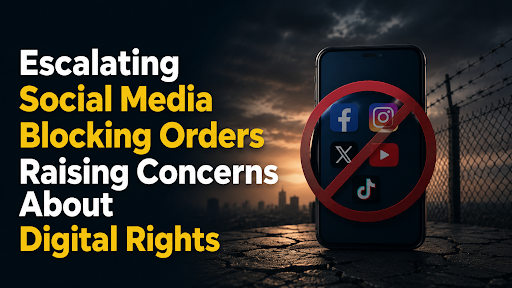
The government issued 1.95 lakh automated social media blocking orders via the Sahyog portal between March and July 2026, bypassing human review to enforce rapid takedowns during student protests.
What Is the Sahyog Portal?
Sahyog Portal is an I4C (Indian Cyber Crime Coordination Centre) platform under the Ministry of Home Affairs that enables government agencies to send notices to online intermediaries for removal or disabling of unlawful content.
It facilitates notices under Section 79(3)(b) of the Information Technology Act, 2000, which enables removal/disabling of access to information used for unlawful acts.
The portal centralises and expedites notice issuance to intermediaries, replacing fragmented communication with a structured digital enforcement mechanism.
Sahyog is part of I4C's broader cybercrime ecosystem, which includes the National Cyber Crime Reporting Portal, Samanvaya, Pratibimb and cyber-forensic infrastructure.
MHA also states that Sahyog supports enforcement involving Virtual Digital Asset service providers, including secure disclosure, asset freezing/tracking and communication of competent-authority orders.
Karnataka High Court upheld the portal's validity, calling it "an instrument of public good"; this ruling is now under appeal before a Division Bench, and the matter stands transferred to the Supreme Court.
What Is the Legal Framework for Online Content Blocking?
Section 69A: The IT Act permits blocking of public access on grounds including sovereignty, security, public order and prevention of cognisable offences.
Blocking Rules, 2009: The Rules require a Designated Officer, notice/hearing, written reasons and Review Committee scrutiny, creating procedural safeguards against arbitrary blocking.
Article 19(2): Section 69A’s grounds substantially correspond to Article 19(2) restrictions, linking online-content regulation with constitutionally recognised speech limitations..
Section 79: Intermediaries receive safe-harbour protection for third-party content, subject to statutory conditions and due diligence requirements.
Section 79(3)(b): The provision concerns loss of safe harbour when an intermediary fails to remove unlawful material after obtaining legally recognised actual knowledge, but its operation has been judicially narrowed.
Key Judicial Safeguard: Shreya Singhal held that Section 79(3)(b) should be read to require a court order or government notification under Section 69A, preventing intermediaries from independently deciding what constitutes unlawful content.
Why Is Excessive Blocking a Concern?
Chilling Effect: Unexplained takedowns can encourage self-censorship among journalists, activists and satirists, weakening Article 19(1)(a) protections.
Opacity: Strict confidentiality of blocking requests and actions, making independent scrutiny of executive censorship difficult.
Procedural Dilution: Section 69A of IT Act normally requires a Designated Officer, committee scrutiny, written reasons and review, so bypassing these safeguards can weaken due process
Overblocking: Bulk URL-based takedowns can remove legitimate speech alongside unlawful content, particularly where officials make limited case-specific assessments.
Localised Discretion: Expanding takedown initiation across numerous government agencies can create uneven standards and accountability gaps unless requests are centrally audited.
Executive Dominance: Section 69A contains institutional safeguards precisely because blocking affects fundamental rights; Shreya Singhal emphasised that intermediary discretion should not replace legally authorised blocking processes.
Limited Transparency: When affected users cannot easily access blocking orders, their ability to challenge executive action under Article 226 becomes practically weaker
Political Speech: Restrictions on protest coverage, satire or criticism can create a disproportionate impact on democratic discourse, particularly when the underlying blocking rationale is not disclosed.
Constitutional Risk: Excessive blocking can shift online regulation from targeted restriction to preventive censorship, conflicting with the narrow tailoring expected under Articles 19(1)(a) and 19(2).

What Are the Arguments in Favour of Blocking?
National Security: Blocking can disrupt online radicalisation, hostile propaganda and cyber-enabled threats; 9,845 URLs were blocked by MeitY till October 2024, including radical content.
Public Order: Section 69A permits blocking where online content threatens public order or incites cognisable offences, providing a rapid tool during communal or security-sensitive situations.
Incitement Prevention: Timely takedown can prevent content directly facilitating violence, communal mobilisation or extremist recruitment, particularly when online dissemination is rapid.
Cybercrime Control: Sahyog enables faster notices to intermediaries for removing links or information used to commit unlawful acts, strengthening I4C-led cybercrime response.
Fraud Prevention: I4C’s wider ecosystem had shared 32.08 lakh Layer-1 mule accounts, with transactions worth ₹25,698 crore declined by June 2026, showing the value of coordinated digital intervention.
Protection of Children: Rapid removal can limit circulation of child sexual-abuse material and exploitative content, where delay can multiply victimisation and re-uploading.
Phishing & Malware: Blocking malicious URLs can disrupt phishing, malware distribution and fraudulent digital infrastructure before they reach large numbers of users.
Platform Accountability: Section 79(3)(b) enables appropriate government agencies to issue notices for unlawful information, making intermediaries part of the cybercrime-response architecture.
Speed of Enforcement: Sahyog specifically aims to expedite intermediary notices, addressing the mismatch between rapidly spreading harmful content and traditionally slower enforcement processes.
Balanced Principle: Blocking is legitimate when specific, evidence-based and legally authorised, but speed must remain subject to proportionality, transparency and constitutional safeguards.
Way Forward
Necessity & Proportionality: Apply Puttaswamy and Anuradha Bhasin principles so blocking is necessary, targeted and least restrictive, rather than a default enforcement response.
Reasoned Orders: Preserve the Section 69A standard of written reasons, hearing and review, particularly where takedown affects protected speech.
Independent Oversight: Create periodic review by an authority institutionally separate from the originating agency, reducing risks of executive self-review and arbitrary blocking.
Appeal Mechanism: Give creators and platforms a rapid mechanism to challenge takedowns and seek restoration, with urgent review for journalistic and political content.
Targeted Blocking: Prefer specific URLs/posts/content over whole accounts or pages unless broader restriction is demonstrably necessary and proportionate.
Political Speech: Apply a higher threshold before restricting criticism, satire, protest reporting and political commentary, distinguishing them from direct incitement.
Transparency Report: Publish aggregate statistics on notices, categories, agencies, compliance and successful appeals, while protecting genuinely sensitive information.
Audit Trail: Require every Sahyog notice to record the issuing authority, statutory provision, factual basis, content identified and review status, enabling post-facto accountability.
Uniform Protocol: Create standardised decision templates and legal training for nodal officers, particularly as Sahyog operates across a large multi-agency enforcement network.
Emergency Safeguard: Allow expedited blocking for imminent threats, but mandate time-bound post-decisional review so emergency powers do not become permanent restrictions.
Platform Due Process: Give intermediaries clear legal criteria for distinguishing mandatory orders from requests, reducing uncertainty over Section 79 safe-harbour compliance.
Parliamentary Scrutiny: Require periodic reporting to Parliament on blocking volumes, legal grounds and review outcomes, strengthening democratic oversight.
Conclusion
India's fast-expanding, portal-driven content-blocking regime trades procedural safeguards for speed, making an authoritative constitutional ruling on due process and proportionality in online censorship both urgent and overdue.
Source: INDIANEXPRESS
|
PRACTICE QUESTION Q. "Speed in content moderation cannot come at the cost of due process." Examine this statement in the context of India's expanding online content-blocking mechanisms. (150 words) |