Why In News?
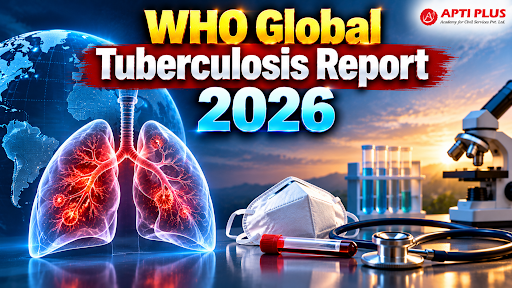
The World Health Organization (WHO) released the Global Tuberculosis Report 2026, showing a 38% fall in India's TB deaths since 2015 but withholding India's incidence estimate.
What Is The WHO Global Tuberculosis Report?
-
Publisher: It is published every year by the WHO and tracks the global Tuberculosis (TB) burden, diagnosis, treatment, financing and research.
-
Benchmarks: Progress is measured against the End TB Strategy milestones for 2025, which seek a 50% fall in incidence and a 75% fall in deaths from the 2015 level.
-
Final Goals: The 2030 goals are an 80% fall in incidence and a 90% fall in deaths. They are aligned with Sustainable Development Goal (SDG) 3.3.
World Health Organization (WHO)
|
What Are The Key Findings Of The Global Tuberculosis Report 2026?
Global Findings
-
Burden: An estimated 10.6 million people developed TB and 1.1 million died of it in 2025. This included 5.7 million men, 3.7 million women and 1.2 million children and young adolescents.
-
Progress Against Milestones: Deaths fell 35% and incidence fell 14% since 2015. The 2025 milestones of 75% and 50% were missed, and the first mortality milestone was reached five years late.
-
Detection Gap: Only 8.4 million of the 10.6 million cases were diagnosed, leaving about 2.2 million undiagnosed or unreported. Just 59% of newly diagnosed patients were tested with a WHO-recommended rapid test, against a 2027 target of 100%.
-
Drug-Resistant TB: About 3.7 lakh people had rifampicin-resistant TB, and only 42% received treatment. Uptake of the six-month regimen rose from 18% in 2024 to 42% in 2025.
-
Financing: Domestic TB funding rose 14% to US$ 5.6 billion between 2024 and 2025, while international funding fell by a similar amount. Research funding was US$ 1.2 billion in 2023, less than a quarter of the US$ 5 billion annual target for 2027.
India-Specific Findings
-
Mortality: The TB death rate fell 38% from 28 to 18 per lakh population between 2015 and 2025, against a global fall of 35%. India still accounted for about 23% of global TB deaths.
-
Cases And Deaths: India notified 25.3 lakh cases in 2025 against 26.18 lakh in 2024. TB-related deaths stood at 2.63 lakh against just over 3 lakh in 2024.
-
Treatment Outcomes: The treatment success rate for drug-susceptible TB is 94%.
-
Incidence Estimate Withheld: WHO has kept India's incidence figures under review until a 2025 district-level sentinel survey in 50 districts is finalised. Revised estimates are expected in early 2027.
-
Earlier Trend: India's incidence had fallen 21%, from 237 to 187 per lakh population, between 2015 and 2024. Treatment coverage had risen from 53% to 92% over the same period.
-
Elimination Target Missed: India remains short of the 2025 milestone of a 75% fall in deaths. Its national goal of ending TB by 2025 was also missed.
About Tuberculosis (TB)Tuberculosis (TB) is a contagious bacterial infection caused by Mycobacterium tuberculosis that primarily attacks the lungs, though it can also affect other parts of the body such as the brain, spine, and kidneys. Types of TB Conditions
Treatment and Prevention
|
Initiatives Taken By Government For TB Elimination In India
-
National TB Elimination Programme (NTEP): NTEP runs under the National Health Mission and follows the National Strategic Plan 2017-25, which aims to end TB by 2025. About 96% of programme funding is now met from domestic resources.
-
TB Mukt Bharat Abhiyaan: The 100-day campaign began in December 2024 in 347 high-priority districts across 33 States and Union Territories. It was extended to all districts after March 2025, and a further intensified campaign began in March 2026.
-
Intensified Screening: Over 25 crore people have been screened, with more than 11 crore chest X-rays and 3 crore molecular tests. This detected 48.64 lakh TB cases, including about 14.97 lakh asymptomatic cases. (Source: PIB)
-
Technology-Led Diagnosis: Artificial Intelligence (AI)-enabled portable digital chest X-ray devices and rapid molecular tests are used for screening and diagnosis. The Ni-kshay digital platform tracks screening, diagnosis and treatment of every patient.
-
Ni-kshay Poshan Yojana: It gives Direct Benefit Transfer (DBT) nutritional support to every TB patient during treatment. The assistance was raised from ₹500 to ₹1,000 per month in 2024.
-
Ni-kshay Mitra Initiative: Launched in 2022, it lets individuals, institutions and corporates adopt TB patients and provide food baskets and support. It builds community ownership of treatment.
-
TB-Free Panchayat Certification: A total of 67,933 Panchayats were declared TB-free in 2025, against 46,118 for 2024. This brings local governments into the effort.
-
Community Outreach: JOSH Teams bring together government officials, National Cadet Corps (NCC) cadets and MY Bharat volunteers for local outreach. More than 1.7 lakh Ayushman Arogya Shivirs have covered over 1.20 lakh high-risk villages in the second phase. (Source: PIB)
-
Sentinel Surveillance: India is building a district-level sentinel system covering 300 clusters across 50 districts. It tracks TB disease and infection trends at the population level.
What Are The Key Challenges In Eliminating TB In India?
Weak Surveillance And Missing Data
-
Incidence Gap: India's estimated incidence is missing from the 2026 report. Without it, the number of people still undiagnosed cannot be measured.
-
Reliance On Old Surveys: India's estimates rested on national prevalence surveys of 1955-58 and 2020-21. A fresh national survey was replaced by a 50-district sample.
-
Annual Report Not Released: The annual India TB Report, usually published around World TB Day with State-wise figures, has not been updated since 2024. This limits public scrutiny of district performance.
Drug-Resistant TB Treatment Gap
-
Largest Treatment Gap: India has the widest gap in the world between estimated and treated rifampicin-resistant TB cases. Untreated patients keep transmitting resistant strains.
-
Long Regimens And Drop-Outs: Longer and toxic regimens lead to dropouts, relapse and treatment failure. Shorter all-oral regimens must reach every district.
Undernutrition And Co-Morbidities
-
Nutritional Risk: About 9.6 lakh new TB cases worldwide in 2025 were attributable to undernutrition. Poor nutrition also slows recovery and raises relapse risk.
-
Diabetes Burden: Undernutrition and diabetes are the leading TB risk factors in the South-East Asia Region. Together they add nearly 8.5 lakh new cases every year.
High Costs And Dependence On Private Care
-
Catastrophic Costs: About 44% of TB-affected families in the South-East Asia Region face catastrophic costs. The End TB Strategy aims to bring this to zero.
-
Private First Contact: Nearly 60% of people with TB symptoms in India first seek care from private providers. Gaps remain in notification, adherence and affordability there.
-
Out-Of-Pocket Spending: Patients often pay for services that are free in public facilities. This delays care and raises the risk of discontinuing treatment.
Shrinking International Funding
-
Global Funding Gap: Global TB funding was only US$ 5.9 billion in 2024, against the target of US$ 22 billion a year by 2027.
-
Loss Of Donor Support: The US Agency for International Development (USAID), once the largest bilateral donor, committed US$ 406 million to TB in 2024. This was roughly one-third of international funding.
-
Projected Impact: Modelling shows that long-term donor cuts could cause up to 2 million extra deaths and 10 million extra cases between 2025 and 2035.
Stigma And Losses In The Care Cascade
-
Stigma: Fear of discrimination keeps many patients from testing and treatment. Community participation remains limited in several regions.
-
Loss To Follow-Up: Patients are lost at every step from testing to completion of treatment. Relapse and death after treatment add to the loss.
Over-Ambitious Targets And Weak Accountability
-
Early Deadline: India set its own TB elimination goal for 2025, five years ahead of the SDG deadline of 2030. The latest national update has reverted to the SDG target.
-
Notifications Versus Real Decline: The fall in notified cases does not by itself prove a fall in incidence. Elimination claims need validated incidence data.
What Is The Way Forward For Ending TB In India?
Credible Data And Transparency
-
Finalise The Survey: The 2025 sentinel survey across 300 clusters must be validated against the 2020-21 national prevalence survey. Revised incidence estimates can then be published by early 2027.
-
Restore Annual Reporting: The annual India TB Report with State and district data should resume every March. Public data allows independent checks of progress.
-
Periodic Prevalence Surveys: Regular national surveys should replace gaps of several decades between estimates. This keeps India's numbers comparable with WHO models.
Closing The Drug-Resistant TB Gap
-
Universal Drug-Susceptibility Testing: Every diagnosed patient should get a rapid molecular test, in line with the WHO target of 100% coverage by 2027. This finds resistance before treatment starts.
-
Shorter Oral Regimens: The all-oral six-month regimen should be available in every district with uninterrupted drug supply. It lowers dropouts and the cost of treatment.
Nutrition And Co-Morbidity Care
-
Timely Nutrition Support: Ni-kshay Poshan Yojana payments should reach patients in the first month of treatment. Linking them with the Public Distribution System can add food security.
-
Integrated Screening: Every TB patient should be screened for diabetes, HIV, anaemia and tobacco or alcohol use. Treating these risk factors cuts relapse and deaths.
Financial Protection For Patients
-
Zero Catastrophic Costs: Free diagnosis, drugs and travel support should be assured in practice, not only on paper. This is the End TB Strategy goal for affected households.
-
Insurance Convergence: Ayushman Bharat Pradhan Mantri Jan Arogya Yojana can cover hospitalisation and co-morbidity care of TB patients. Wage-loss support can protect poor families during treatment.
Stronger Private Sector Partnership
-
Universal Notification: Every private provider should notify cases through the Ni-kshay platform and report treatment outcomes. Incentives under the TB Mukt Bharat Abhiyaan can be tied to timely reporting.
-
Permanent Partnerships: Long-term public-private partnerships should provide referral, sample transport and free tests through private clinics. Standard treatment guidelines must apply everywhere.
Sustained Financing And Research
-
Domestic Funding: Rising domestic financing, which grew 14% globally in 2025, shows countries can offset donor cuts. India can protect gains by keeping its high domestic funding share.
-
New Tools: Faster investment in new vaccines, point-of-care tests and shorter regimens is needed to end TB by 2030. The BCG vaccine alone does not stop adult transmission.
Community Ownership And Stigma Reduction
-
Local Leadership: Panchayats, Ni-kshay Mitras and patient support groups can track every patient until cure. TB-free certification gives local bodies a clear goal.
-
Awareness Campaigns: Sustained communication should show that TB is curable and not a reason for social exclusion. Cured patients can act as community champions.
Conclusion
India has cut TB deaths faster than the world, but the missing incidence estimate, the drug-resistant TB gap and the 2025 target missed show that the task is unfinished. Credible data, nutrition, financial protection and sustained funding will decide whether TB elimination is reached.
Source: THEHINDU
|
PRACTICE QUESTION Q. Consider the following statements regarding the WHO Global Tuberculosis Report 2026:
Which of the statements given above are correct? (a) 1 only (b) 1 and 2 only (c) 2 and 3 only (d) 1 and 3 only Answer: (d) Explanation: Statement 1 is correct: According to the WHO Global Tuberculosis Report 2026 (released in November 2026), India's TB mortality rate fell by 38% between 2015 and 2025 (from 28 to 18 deaths per lakh population), exceeding the 35% global decline over the same period. Statement 2 is incorrect: The WHO withheld India's 2025 TB incidence estimate rather than publishing a fresh one. It is under review alongside the 2020–21 National TB Prevalence Survey and new sentinel surveillance data from 50 representative districts collected in 2025, with revised estimates expected in early 2027. Statement 3 is correct: The WHO End TB Strategy set 2025 milestones of a 75% reduction in TB deaths and a 50% reduction in TB incidence compared with 2015 levels. |