Why In News?
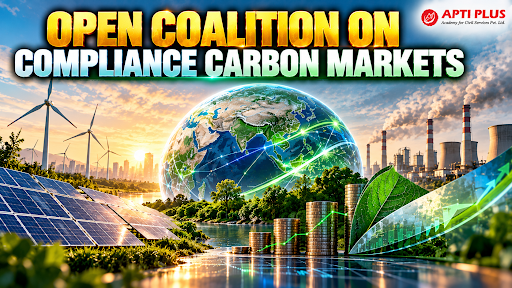
The Open Coalition on Compliance Carbon Markets (OCCCM) adopted its first work plan at a meeting in Wuhan (China) to improve coordination among national compliance carbon markets.
What Is the Open Coalition on Compliance Carbon Markets (OCCCM)?
Origin: Launched in May 2026, the coalition is chaired by Brazil, with the European Union and China serving as co-chairs.
Objective: The OCCCM provides a platform for countries to improve the compatibility of their domestic compliance carbon markets through technical cooperation and common approaches.
Participating Countries: Other members include Germany, New Zealand, Canada, France, Norway, Singapore, Türkiye and the United Kingdom.
International Observers: Organisations such as the United Nations Development Programme (UNDP), United Nations Environment Programme (UNEP) and the World Bank's Partnership for Market Implementation participate as observers.
Carbon Pricing Cooperation: The coalition facilitates the exchange of knowledge on emissions trading systems (ETS) and carbon taxes.
Monitoring and Verification: It promotes cooperation on Monitoring, Reporting and Verification (MRV) systems and methods for measuring greenhouse gas emissions.
Carbon Accounting and Offsets: Its work includes developing compatible carbon accounting methods and exploring standards for the cross-border use of carbon offsets.
Non-Binding Framework: The OCCCM does not impose emission-reduction targets or require members to adopt specific domestic policies. Its main purpose is technical coordination and market interoperability.
India's Carbon Credit Trading Scheme (CCTS)
Legal Foundation: The CCTS operates under the Indian Carbon Market (ICM) framework, enabled by the Energy Conservation (Amendment) Act, 2022. It supports India's Nationally Determined Contributions (NDCs) and the target of achieving net-zero emissions by 2070.
Difference from the PAT Scheme: The Perform, Achieve and Trade (PAT) scheme rewarded improvements in energy efficiency through Energy Saving Certificates (ESCerts). The CCTS focuses on reducing greenhouse gas emissions through sector-specific emission-intensity targets.
Covered Industries: The initial framework includes emission-intensive sectors such as aluminium, cement, chlor-alkali, pulp and paper, iron and steel, fertilisers, petroleum refineries, petrochemicals and textiles.
Thermal Power Sector: Despite its significant contribution to India's emissions, thermal power has not yet been brought under the CCTS compliance mechanism described in the source material.
Emission-Intensity Approach: India follows a baseline-and-credit model that sets limits on greenhouse gas emissions per unit of production. Companies can increase output while reducing the emissions associated with each unit.
Compliance Mechanism: Industries covered by the scheme receive binding emission-intensity targets. Entities that outperform their targets can earn tradable Carbon Credit Certificates (CCCs), while those that fall short must purchase eligible certificates or face applicable penalties.
Offset Mechanism: Entities outside the mandatory compliance framework can register eligible emission-reduction projects under the voluntary offset mechanism and generate credits in accordance with applicable rules.
Why Should India Consider Joining the OCCCM?
Influence Global Standards: Participation would give India an opportunity to contribute to international discussions on carbon accounting, emissions measurement and verification.
Respond to Global Carbon Pricing: More than 50 countries use carbon pricing mechanisms. Early engagement could help India prepare its industries for the wider use of carbon markets.
Improve Market Compatibility: Cooperation could help India align selected aspects of its domestic carbon market with international systems. In the long term, compatible markets may create opportunities for eligible Indian projects to access overseas buyers.
Protect Export Competitiveness: The European Union's Carbon Border Adjustment Mechanism (CBAM) links the carbon intensity of certain imports to additional compliance costs. Better carbon accounting and reliable emissions data could help Indian exporters demonstrate their environmental performance.
Strengthen International Negotiations: Participation would allow India to raise the concerns of developing countries in technical discussions on carbon market design, accounting standards and the treatment of emission reductions.
What Risks Could India Face by Joining the OCCCM?
Common but Differentiated Responsibilities: International market alignment could weaken the practical recognition of Common But Differentiated Responsibilities and Respective Capabilities (CBDR-RC) if developing countries face similar compliance burdens despite differences in resources and historical emissions.
Carbon Protectionism: Common standards could create additional barriers for developing-country exporters if countries use carbon accounting requirements to justify restrictive trade measures.
Loss of Domestic Policy Flexibility: Prematurely linking India's developing carbon market with mature systems, such as the EU Emissions Trading System, could restrict India's ability to design policies suited to its economic conditions.
Higher Compliance Costs for MSMEs: Strict MRV requirements could increase the financial and administrative burden on Micro, Small and Medium Enterprises (MSMEs), particularly in energy-intensive sectors.
Carbon Market Integrity: Weak baselines, unreliable emissions data and non-additional credits could undermine genuine emission reductions. Carbon leakage, where production and emissions shift to another jurisdiction, could further reduce the environmental benefits.
How Can India Strengthen Its Domestic Carbon Market?
Improve MRV Capacity: The Bureau of Energy Efficiency (BEE) should strengthen the quality and independence of Accredited Carbon Verification Agencies (ACVAs). Reliable monitoring, reporting and verification systems are essential for maintaining confidence in Indian Carbon Credit Certificates.
Protect Workers and Small Businesses: Provide technical assistance, affordable finance and targeted support to workers and MSMEs affected by industrial decarbonisation. A just transition should protect livelihoods while encouraging cleaner production.
Develop Stronger Emission Targets: Gradually strengthen emission-intensity benchmarks as industrial capacity and measurement systems improve. Any move towards absolute emissions caps should consider sectoral conditions, development needs and India's climate commitments.
Integrate Climate and Trade Policies: The Ministry of Commerce and Industry and the Ministry of Environment should coordinate export policy with industrial decarbonisation measures. Steel, aluminium and other export-oriented sectors need targeted support to meet international carbon requirements.
Build MSME Capacity: Provide financial and technical assistance to help smaller firms adopt carbon accounting tools, measure emissions and comply with carbon market requirements without facing disproportionate costs.
Safeguard Climate Equity: India should promote transparent accounting, fair access to carbon finance and recognition of different national circumstances in international carbon market cooperation.
Conclusion
India's Carbon Credit Trading Scheme advances industrial emission cuts via market incentives. Joining the OCCCM could shape global standards and ready exporters for carbon trade rules. Yet, India must maintain policy autonomy, assist MSMEs, and preserve climate equity while building market credibility.
Source: THEHINDU
|
PRACTICE QUESTION Q. With reference to the Open Coalition on Compliance Carbon Markets (OCCCM), consider the following statements:
Which of the statements given above are correct? (a) 1 and 2 only (b) 1 and 3 only (c) 2 and 3 only (d) 1, 2, and 3 Answer: (b) Explanation: Statement 1 is correct: The Open Coalition on Compliance Carbon Markets (OCCCM) was officially constituted and launched in May 2026 in Florence, Italy, through an initiative led by Brazil, the European Union, and China. Statement 2 is incorrect: The OCCCM is a voluntary, non-binding collaborative platform. It does not mandate or enforce a uniform global carbon price or impose binding mitigation/emission-reduction targets on its member nations. It respects diverse domestic approaches (such as emissions trading schemes and carbon taxes) and aims for interoperability rather than uniform pricing. Statement 3 is correct: The core mandate of the coalition centers on technical coordination and alignment, specifically standardizing Monitoring, Reporting, and Verification (MRV) frameworks, developing common carbon accounting methodologies, and establishing criteria for the potential use of high-integrity offsets across compliance carbon markets. |